Suiza

La clasificación de los donantes incluye las transferencias entre organismos de las Naciones Unidas, que son la principal fuente de ingresos del UNFPA en general.

1

Effective 1 January 2022, UNFPA adopted a new revenue recognition policy; however, for the purposes of this website, information is presented based on previous policy to allow comparability of information across different years.

2024 | Inicio
Estadísticas globales de donantes

Noticias

Noticias
SHISELWENI, Swaziland – More than one in five adults in Swaziland are HIV-positive, according to the most recent data, and the rates are highest among women. Despite these dangers, young people – and young women in...
10 Octubre 2017 Leer la historia

Netherlands

La clasificación de los donantes incluye las transferencias entre organismos de las Naciones Unidas, que son la principal fuente de ingresos del UNFPA en general.

1

Effective 1 January 2022, UNFPA adopted a new revenue recognition policy; however, for the purposes of this website, information is presented based on previous policy to allow comparability of information across different years.

2024 | Inicio
Estadísticas globales de donantes

Noticias

Noticias
HÊVIÉ, Benin – En las comunidades rurales de Benin, donde las carreteras en mal estado y las largas distancias suelen interponerse entre los pacientes y la atención médica que les salva la vida, las motoambulancias...
09 de septiembre de 2025 Leer la historia
Noticias
PROVINCIA DE BOCAS DEL TORO, Panamá – «No ofrecemos una atención especial para las mujeres», lamentó Jakelyn Chiu, madre soltera de tres hijos de la provincia de Bocas del Toro, en Panamá. «Aquí, en este distrito, no...
29 Agosto 2025 Leer la historia
Noticias
FRANJA DE GAZA, Territorio Palestino Ocupado - «¿Dónde está el mundo que no ve lo que nos está pasando a nosotros y a nuestros hijos? Todas las familias del mundo tienen hijos», declaró Inas, que vive en un campamento...
25 Agosto 2025 Leer la historia

Finlandia

La clasificación de los donantes incluye las transferencias entre organismos de las Naciones Unidas, que son la principal fuente de ingresos del UNFPA en general.

1

Effective 1 January 2022, UNFPA adopted a new revenue recognition policy; however, for the purposes of this website, information is presented based on previous policy to allow comparability of information across different years.

2024 | Inicio
Estadísticas globales de donantes

Noticias

Noticias
NACIONES UNIDAS, Nueva York – En todo el mundo se están librando guerras contra los sistemas creados para proteger a la población civil: los trabajadores sanitarios, los hospitales, los centros de salud y las...
18 Agosto 2025 Leer la historia
Noticias
Campamento de Farchana, CHAD – «Esta mañana he llegado muy temprano al centro de salud para una cita prenatal, pero ya llevo varias horas esperando», declaró Amina al UNFPA, la agencia de las Naciones Unidas para la...
31 Julio 2025 Leer la historia
Historia fotográfica
24 Julio 2025 Leer la historia

Noticias

La ayuda de dinero en efectivo es un salvavidas para las supervivientes de la violencia de género en la República de Moldova

calendar_today27 Julio 2023

Un equipo que trabaja en un espacio seguro móvil en la República de Moldova proporciona servicios de salud reproductiva y de prevención y respuesta a la violencia de género a personas en zonas de difícil acceso. © UNFPA Moldova
1

Noticias

El UNFPA apuesta por la femtech para concienciar sobre la menstruación en Burkina Faso y la República de Moldova

calendar_today24 Agosto 2023

Participantes prueban sus nuevos relojes IMMI en el marco de un programa piloto de seis meses en la República de Moldova. © UNFPA Moldova
1

Noticias

Cómo un espacio seguro de la República de Moldova ofrece educación sexual integral a refugiados romaníes que huyen de Ucrania

calendar_today17 Agosto 2023

Sahin Rădiță, coordinador del espacio seguro de Chișinău, capital de la República de Moldova, asegura que para los jóvenes romaníes, «Nuestros servicios son bien recibidos y, además, necesarios». © UNFPA Moldova
1

Noticias

Paso a paso: cómo una superviviente del terremoto de Siria reconstruyó su vida

calendar_today04 Agosto 2023

Najwa Bikdash, de 52 años, reside en el vecindario de Bustan Al Zahra, en Alepo. Después de que su marido, que la maltrataba, las abandonara a ella y a sus cuatro hijas, su precaria situación se vio agravada por los terremotos que asolaron Siria en febrero de este año. © UNFPA Siria/Ange Hussein, ICDA, 2023
1

Noticias

Tres meses después de los terremotos: 5 razones por las que las mujeres y niñas en Siria y Türkiye siguen necesitando su apoyo

calendar_today18 de marzo de 2023

El UNFPA entrega kits de higiene femenina y apoyo básico de servicios de salud a las personas que viven en un campamento temporal en Şanlıurfa, Türkiye. El UNFPA y sus asociados locales están proporcionando apoyo psicosocial, kits de higiene femenina y servicios de salud en los campamentos temporales de Siria y Türkiye. © UNFPA Türkiye/Gözde Kumru Uçak
1

Presentación de diapositivas

Una carrera contra el tiempo para rescatar y apoyar a los sobrevivientes en Türkiye y Siria

calendar_today09 Febrero 2023

1/15

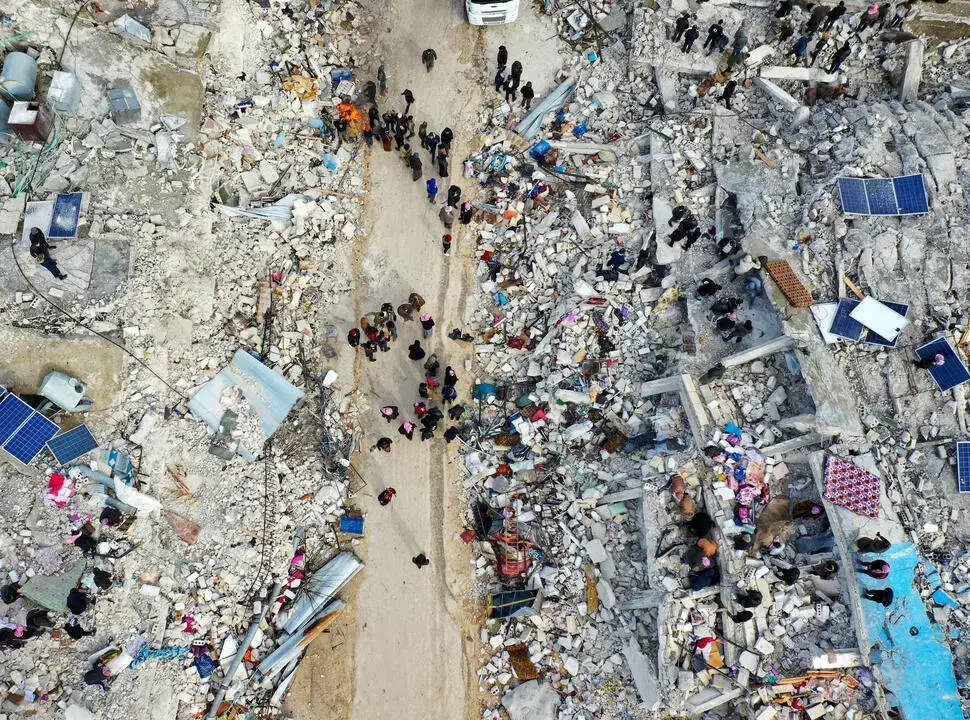
Rescuers scramble to find survivors in the village of Besnia in Syria, following the catastrophic earthquakes that struck both Türkiye and Syria on 6 February, killing thousands and injuring many more. “UNFPA is committed to support the people of Türkiye and Syria affected by the earthquakes, including the pregnant women who are expected to give birth in the coming weeks under these difficult conditions,” said Dr. Natalia Kanem, Executive Director of UNFPA. “Their ability to access quality care before, during and after delivery must not be an afterthought.” 

© AFP via Getty Images
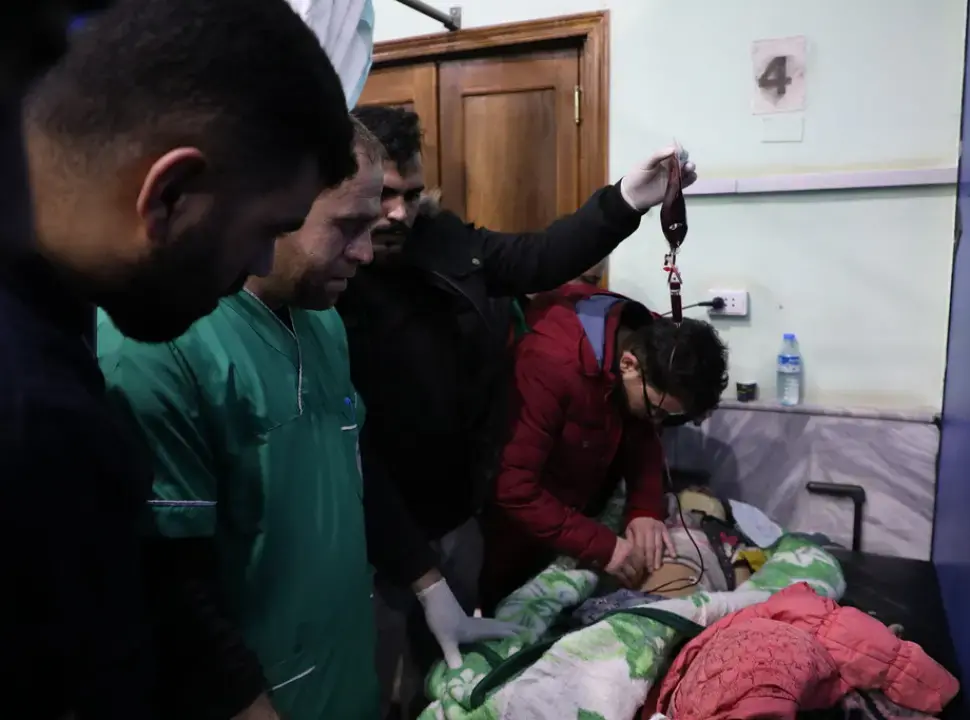
A child receives urgent care in the town of Sarmada in Syria in the wake of the devastating earthquakes. The initial quake struck in the early hours of the morning on 6 February while people slept, with the second hitting later in the day amid a series of aftershocks, compounding the devastation. The governments of both Türkiye and Syria have declared national emergencies and called for international support.

© OCHA/Ali Haj Suleiman
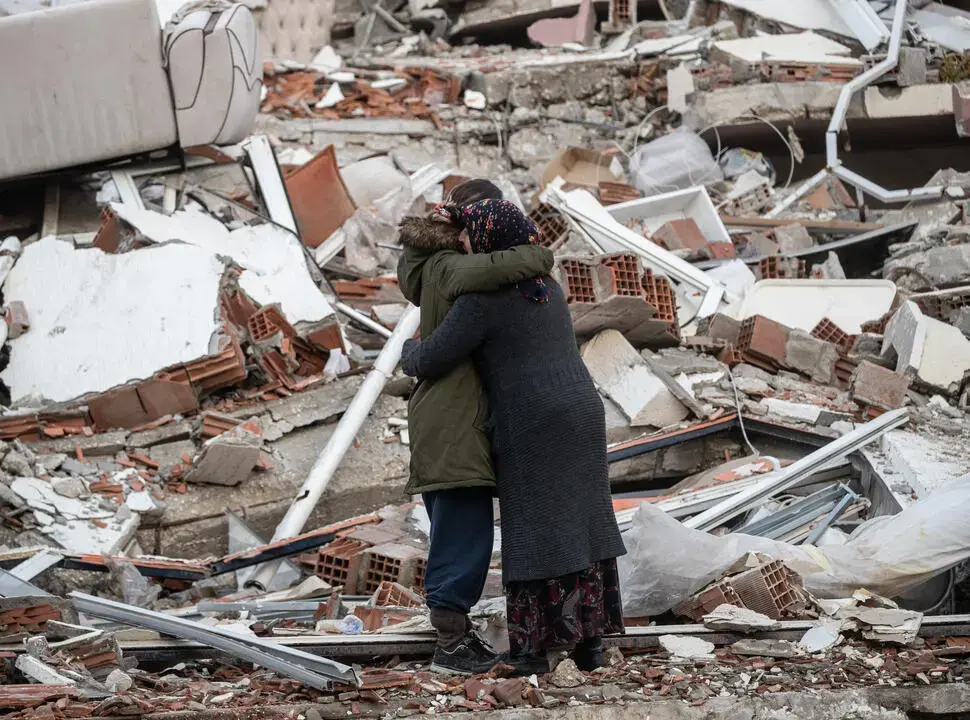
Women embrace amid a sea of debris in Hatay, Türkiye. Thousands of buildings, including maternity facilities and safe spaces for women and girls, have been severely damaged or destroyed. UNFPA’s urgent priority is to restore services that are crucial to the health and well-being of women and girls.

© Getty Images/Burak Kara
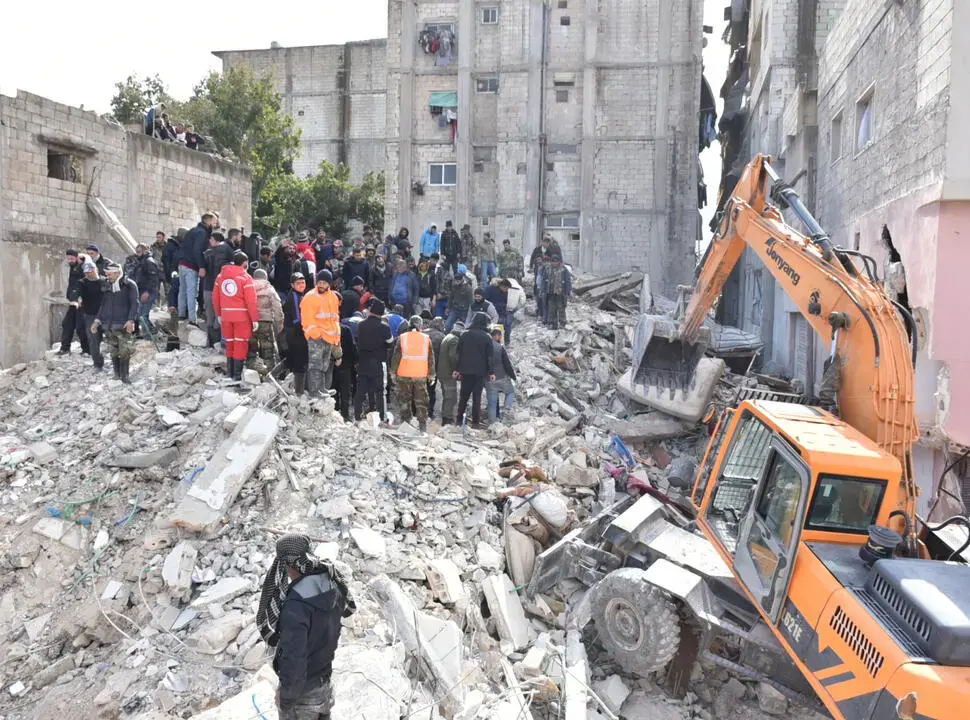
Rescuers comb through piles of rubble in Lattakia, Syria, hoping to find survivors in a race against time amid the overwhelming devastation. 

© UNFPA Syria/Mosaic
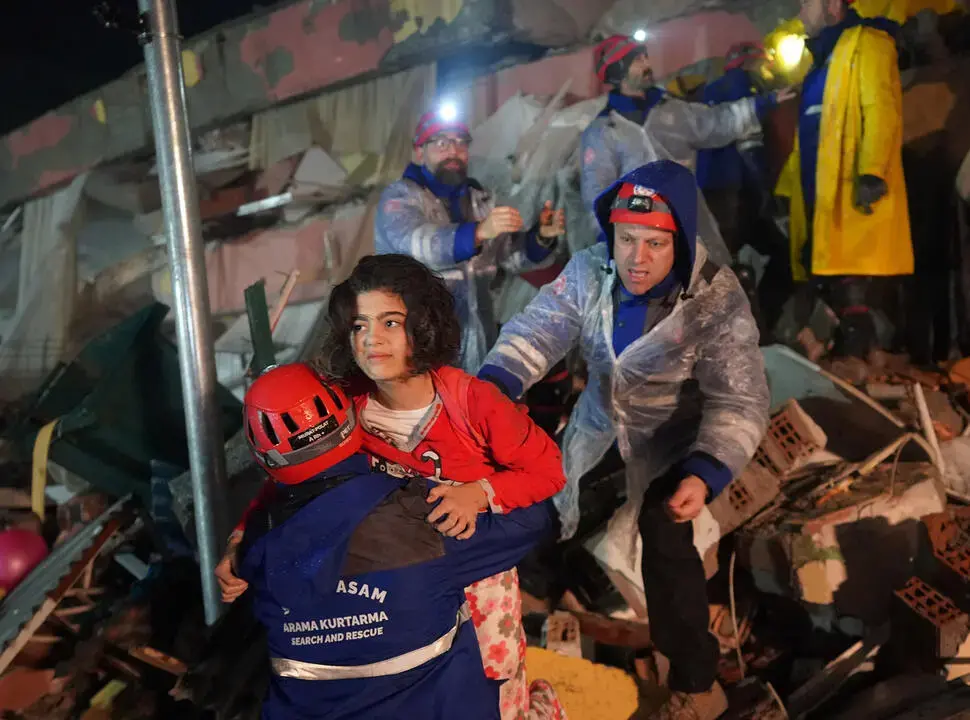
Rescuers work into the night, continuing to find people trapped under the rubble alive, including this young girl rescued in Hatay, Türkiye.

© SGDD-ASAM Turan Berker Akdevelioğlu
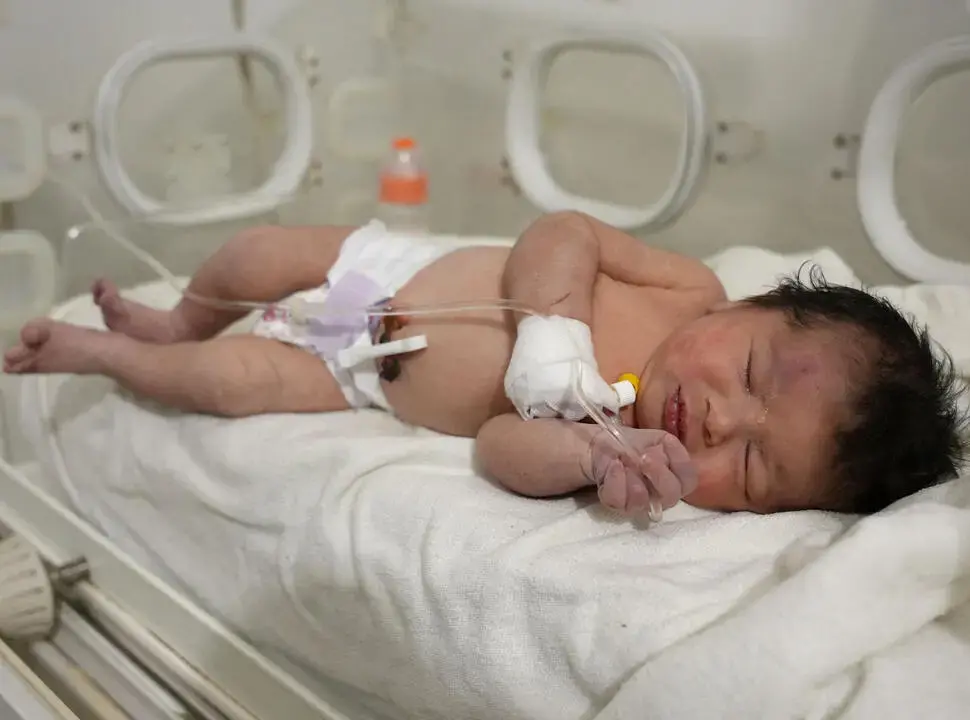
A newborn baby—who was found still tied by her umbilical cord to her mother—was pulled from the rubble of a home in northern Syria. Now receiving medical care at a clinic in Afrin, Syria, the infant is the sole survivor of her immediate family. Among the millions of people in Türkiye and Syria who have been affected by the quakes are tens of thousands of pregnant women who need access to maternal health services.

© AFP via Getty Images
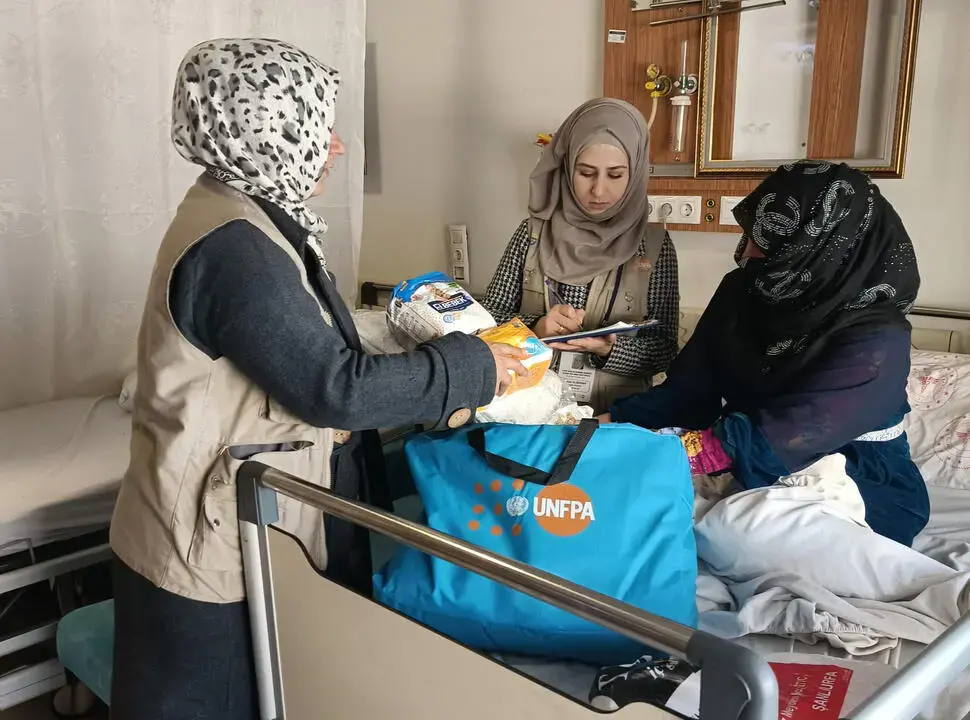
Women working with the UNFPA-supported Women and Girls Safe Space visit the Şanlıurfa Training and Research Hospital in Türkiye, providing postnatal counseling and delivering maternal kits—containing clothes and supplies for both mother and baby—to pregnant women and new mothers.

© Harran University, WGSS
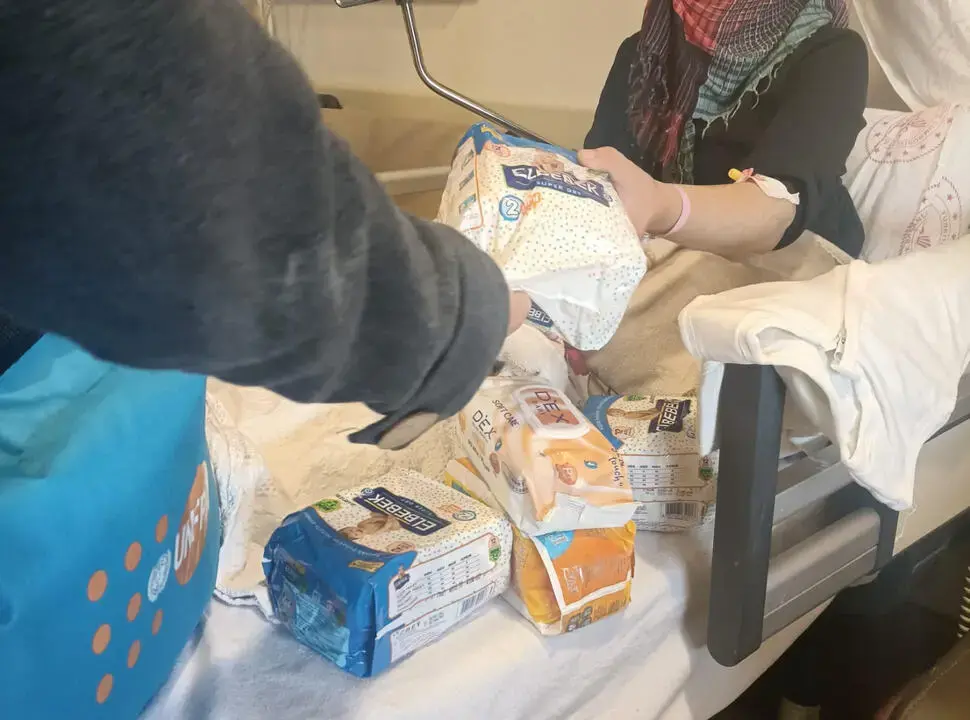
Staff members of the UNFPA-supported Women and Girls Safe Space deliver much-needed maternal kits to women at the Şanlıurfa Training and Research Hospital in Türkiye. The kits include baby clothes, hand soap, baby blankets, underwear, postpartum pads, baby shampoo, baby rash cream, diapers, and baby-safe wipes, among other items. 

© Harran University, WGSS
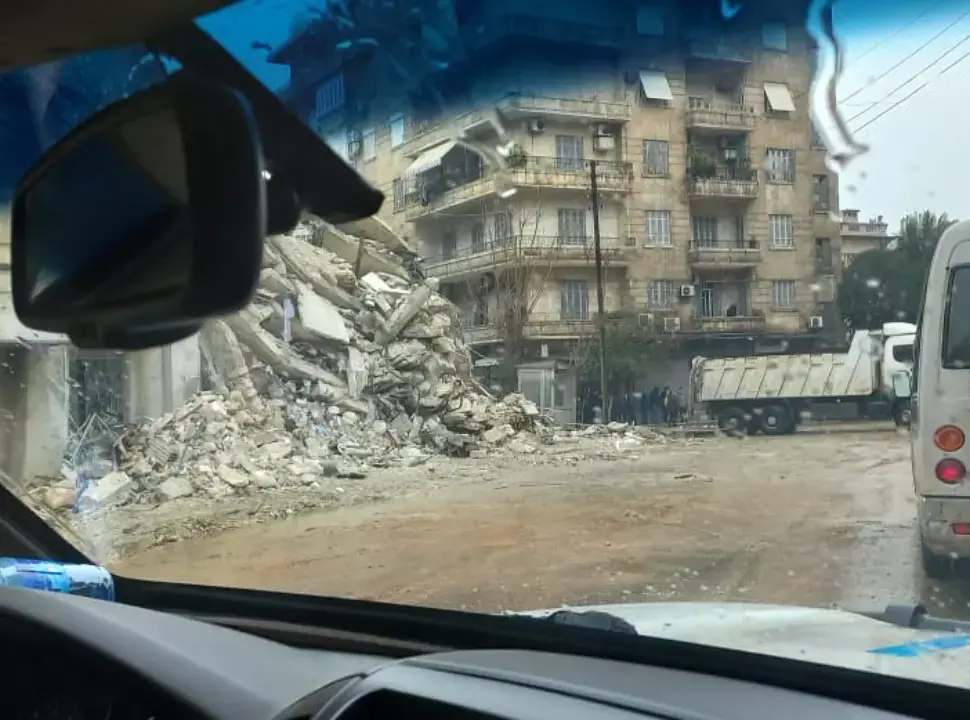
UNFPA Syria and partners arrived rapidly in affected areas, such as this devastated neighborhood in Aleppo, to assess needs and provide immediate assistance.

© UNFPA Syria
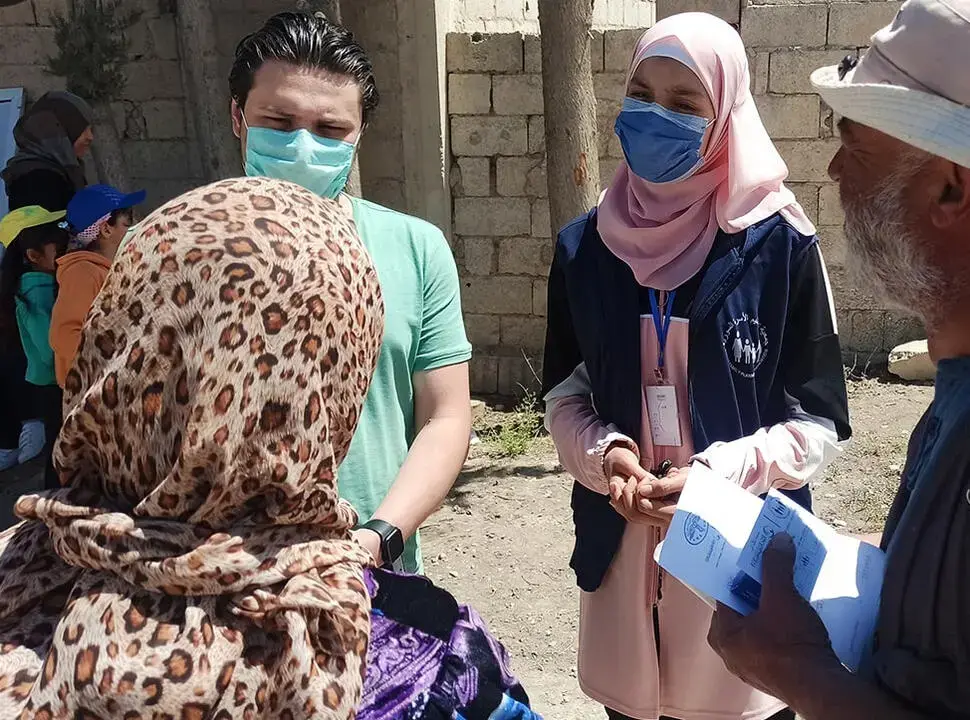
Staff members of UNFPA Syria carry out an assessment of needs in Aleppo and across the country, providing support via mobile clinics and safe spaces and handing out dignity kits and winter kits containing crucial supplies. 

© UNFPA Syria
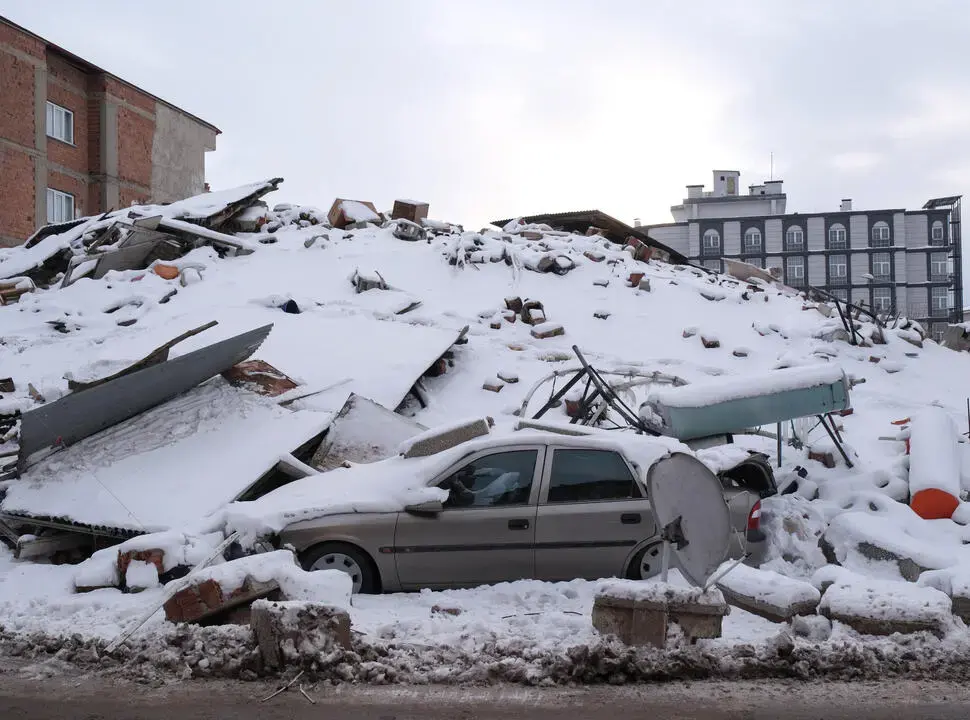
A fresh snowfall adds to the challenge of rescue efforts in Elbistan, Türkiye. Amid freezing temperatures, survivors have been building fires from pieces of wood in the debris in an attempt to stay warm. Another crisis looms if people cannot soon access shelter, food, and other essentials.  

© Getty Images/Mehmet Kacmaz
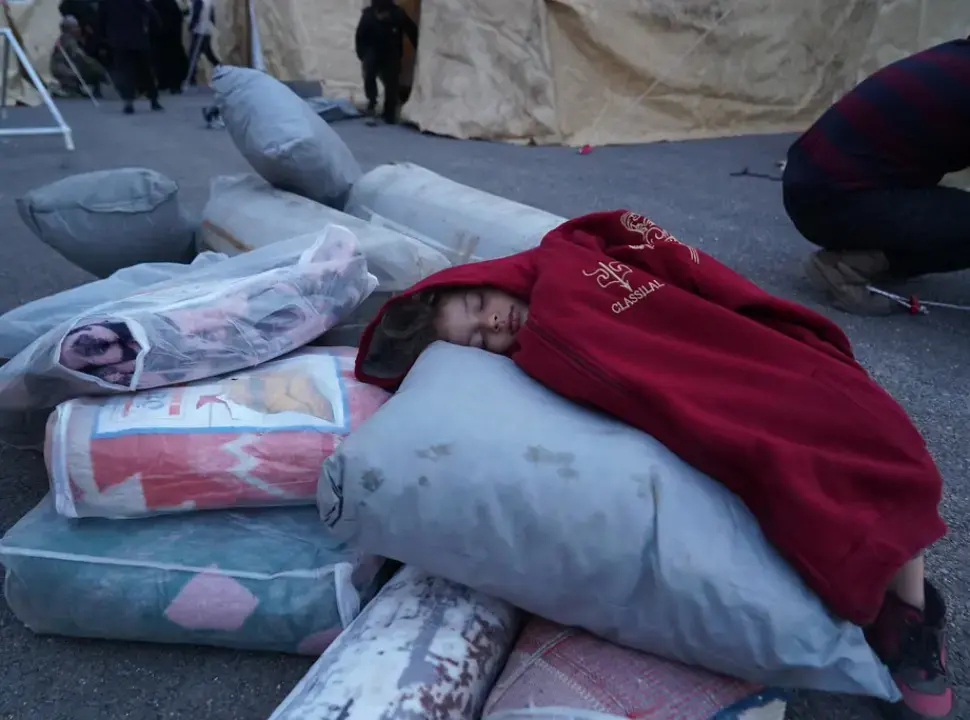
A child finds a place to sleep on a pile of bedding supplies provided by humanitarians in the town of Jandairisin in Syria.

© UNOCHA/Mohanad Zayat
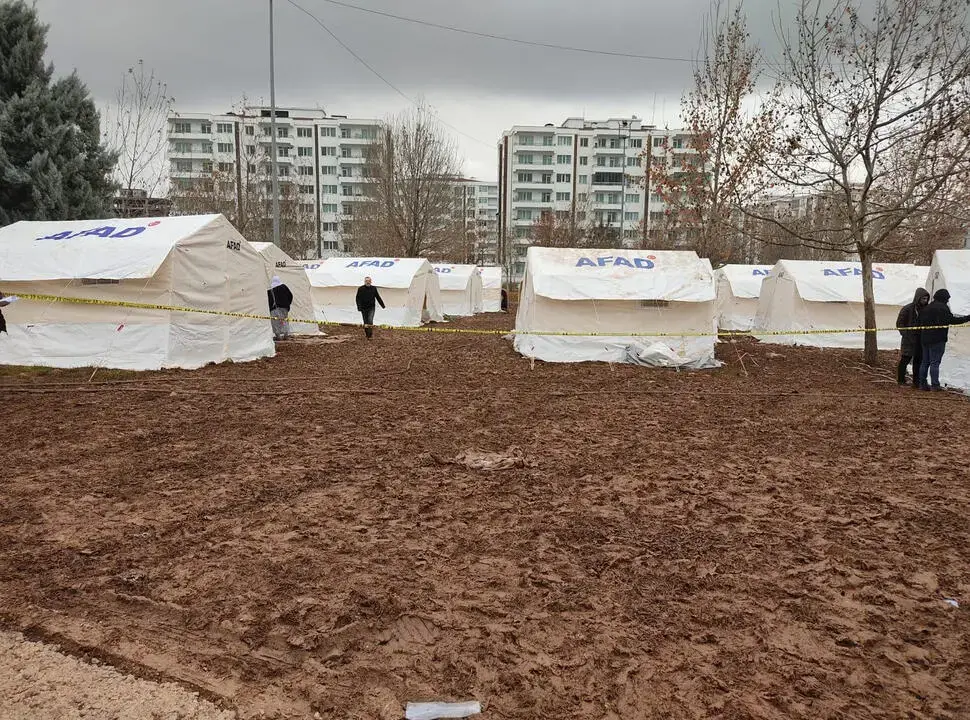
Urgently constructed camps in Diyarbakır, Türkiye, provide temporary shelter amid vast needs across both Türkiye and Syria.

© KAMER - WGSS
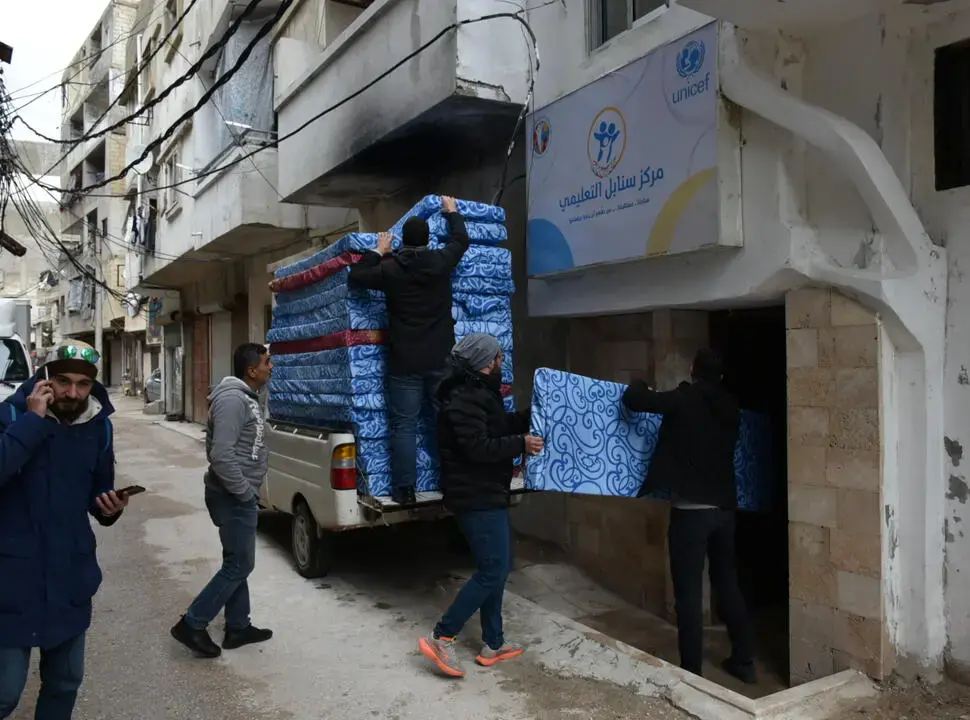
In Lattakia, Syria, a UNFPA-supported Safe Space sets up shelter for survivors left homeless by the catastrophic quakes.

© UNFPA Syria/Mosaic
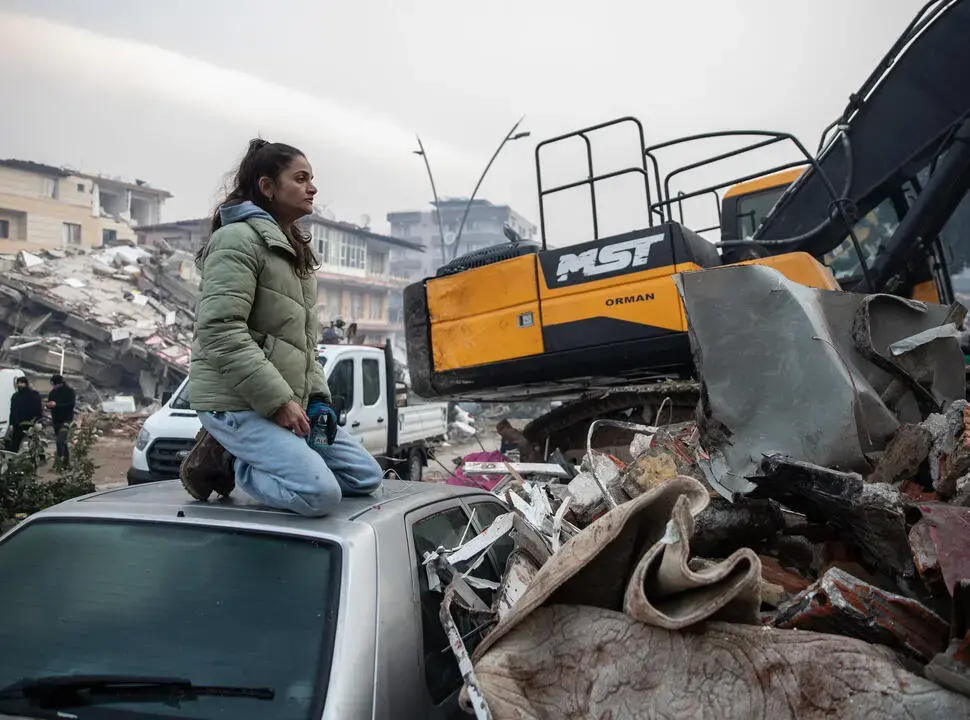
A woman waits for news of her loved ones, believed to be trapped under a collapsed building in Hatay, Türkiye. “The lives of so many people have been torn apart,” said Dr. Kanem. “Amidst the devastation and uncertainty that natural disasters bring, UNFPA will continue to do what is needed and what it does best: respond to women’s and girls’ emergency healthcare and protection needs.”

© Getty Images/Burak Kara

Temas relacionados

Presentación de diapositivas

Celebraciones del primer cumpleaños en Ucrania: Dar a luz de forma segura en medio de los bombardeos

calendar_today14 de mayo de 2023

1/16

Since the beginning of the full-scale Russian invasion of Ukraine, 1 in 3 babies have been delivered in a UNFPA-supported hospital.

Despite the dangers – there have been more than 850 verified attacks on health care facilities – obstetrician Olena Mokhonko has helped women deliver as many as 70 babies a month at Chernihiv Maternity Hospital.

She joined four of those women to celebrate their children’s first birthdays and to hear the mothers share their experiences of giving birth in a city under fire. Here, they tell their stories.

[Pictured above] At a poignant birthday party, mothers join the obstetrician who delivered their babies amid war. © UNFPA Ukraine/Serhii Korovayny

Nina and Yulia

In the last few weeks of her pregnancy, Nina’s birthing plan changed drastically as the conflict grew. Knowing that she might not be able to get to the hospital, she created a Plan B.

“I was preparing to give birth in the basement,” she says, recalling how her community rallied around her. “People from our neighbourhood had different stocks of food; some had cereals, some canned food...everyone had some food or hygiene supplies, so we had the basics. I found a perinatal psychologist on the Internet – there was still a connection at this time – and asked her what to do in my situation. She explained everything to me in detail: how to cut the umbilical cord, how to check the placenta.”

[Pictured above] Nina with Yulia in the bomb shelter where she sought safety before and after giving birth. © UNFPA Ukraine/Serhii Korovayny

When the time came, Nina called an ambulance but was told the staff could respond only to gunshot wounds. A volunteer took her to the maternity hospital, so she didn’t need to go through with the basement birth, but extreme challenges remained.

Nina recalls the system in place at the hospital: “If there were no missile attacks, we were taken to the first floor and gave birth in the corridor – far from the windows. But when the security situation was critical, we were lowered into the bomb shelter. It was pure horror: Babies were crying; women were giving birth. I gave birth in the corridor. Other women were lying next to me or giving birth.”

Despite the chaos, she says, “The medical staff worked very harmoniously. The director of the maternity hospital personally walked around the first floor, checked how we were feeling, and worried about everyone.”

[Pictured above] Neighbours pooled their resources and tidied up Nina’s basement, adding carpets for warmth, for her return from the hospital. © UNFPA Ukraine/Serhii Korovayny

Nina received quick and efficient postpartum care and was discharged with baby Yulia. Heavy bombardment continued as she arrived home. “We were in the basement all the time. When it quietened down a bit, we only went upstairs to use the toilet or to quickly prepare food.”

“At night, the hum of the planes made it impossible to sleep and the baby would wake up, asking to be fed.”

[Pictured above] Nina and children at the entrance to their basement. © UNFPA Ukraine/Serhii Korovayny

On 18 March, when Yulia was 11 days old, Nina took her children and left on an evacuation bus. “The city was in smoke, without lighting,” Nina recalls. “Data was taken from each of the passengers, and it was recorded who was sitting where, so that in the case of a shooting, the bodies could be identified.”

[Pictured above] Extreme baby pictures: Yulia in her pram outside a damaged building in the neighbourhood. © UNFPA Ukraine/Serhii Korovayny

Nina spent two months in Poland before returning home. “It is important for me that my children walk on their native streets, hear their native language. I am glad to wake up in my own house, and that my children are alive and healthy.”

[Pictured above] Obstetrician Olena shares in the birthday festivities as Nina blows out a candle. © UNFPA Ukraine/Serhii Korovayny

Iryna and Amelia

Iryna is a single parent. Her husband died two days before her daughter’s birth. “From the first days of the war, he went to defend our city,” she says. “I asked him not to go because I had to give birth, but he said, ‘Who but me?’ On 3 March, he came under fire and was wounded, and two days later he passed away.”

Iryna was in a bomb shelter when she heard the tragic news.

She gave birth in a cramped room – which she describes as a “small cupboard” – at the hospital on 7 March. Electricity and communications had been wiped out in the city, and the tiny room had been converted into an operating theatre, with a generator and other essential equipment. There, she gave birth by Cesarean section to Amelia.

“For the first week of her life, Amelia did not breathe,” she says, describing how her baby was transferred to the intensive care unit. “I was ready to give everything for her to survive. I understood that her father would not be brought back, but I hoped that everything would be okay with my daughter.”

[Pictured above] Iryna, a single parent, lost her husband, Serhiy, when he died fighting to protect their home city of Chernihiv. © UNFPA Ukraine/Serhii Korovayny

A week after she was born, Amelia began to breathe on her own. Iryna’s relief was immense. “When we were discharged, we immediately left the city,” she recalls. “Volunteers took us to the Khmelnytskyi region.” Iryna stayed there with her newborn for a month, but she was keen to get back. “The morgue workers had agreed not to bury Amelia’s dad until we returned, but we didn't have much time,” she says. As soon as Russian troops were pushed back from the city, she returned.

“Amelia was my salvation. If it weren't for her, I don't know how I would have survived everything. Only she gave me the strength to live on.”

[Pictured above] A playground near Iryna’s home in Chernihiv, where she returned after leaving for a month to seek safety. © UNFPA Ukraine/Serhii Korovayny

Kateryna and Sophia

Kateryna’s contractions started while she was sheltering in a cellar. With her city under attack, she managed to find a route to the hospital, arriving by 5 p.m. She gave birth to Sofia in the hospital’s dark, busy corridor, before midnight on 7 March.

“When Sofia arrived, we were taken to the hospital bunker for safety,” Kateryna recalls. “We spent the first hours of her life underground.”

When Kateryna was discharged the next morning, she went to her sister’s home in Chernihiv, where the shelling continued. “We hid in the basement and stayed there for three days. It was cold; there was no light, no water,” she says. “I had to find food for the baby somewhere because I had no milk.”

[Pictured above] Kateryna receives flowers on Sofia’s first birthday. © UNFPA Ukraine/Serhii Korovayny

Her husband and 4-year-old son, Mykhailo, were staying with grandparents in their occupied village of Ivanivka, a 20-minute drive away. Being away from her son made her anxious and distressed, but she couldn’t reach him amid the conflict.

“My sister and I went to Lviv. During the month we stayed there, I cried every day. When our village was liberated, my son, Mykhailo, was brought to us,” she says. “My children and loved ones are the only joy that gave me strength to survive this year.”

[Pictured above] Kateryna, with her husband and two children, found it difficult to be separated from her family while giving birth. © UNFPA Ukraine/Serhii Korovayny

Maryna and Diana

Maryna gave birth in the hospital’s corridor on the same night as Nina and Kateryna.

She describes how, in the weeks leading up to Diana’s birth, she was preparing for the baby’s arrival while also “waking up to the realization that war had begun.”

[Pictured above] Maryna reflects on the past year as the family celebrates Diana’s first birthday. © UNFPA Ukraine/Serhii Korovayny

She arrived at the maternity hospital during the day on 7 March, keen to avoid travelling at night amid city curfews. “My greatest fear was the possibility of a bomb dropping on us,” she says. “Thankfully, the experience went smoothly.” 

Despite the stress of giving birth amid the bombing, Maryna is grateful that all went well.

[Pictured above] Precious things: Maryna’s scan, taken at Chernihiv Maternity Hospital, and an ankle tag she wore during the birth. © UNFPA Ukraine/Serhii Korovayny

For the next two weeks, the family stayed in the basement with their newborn. “Although there was light from power generators, it was cold,” Maryna says. “We were among the lucky ones with some semblance of comfort.”

“We decided to leave Chernihiv because it was too dangerous to stay with a newborn. We went to Borzna in the Chernihiv region, where my husband's father lived,” she says. “One particular incident that stands out was when the footbridge we used to leave the city was blown up a day after we crossed it. If we had delayed our departure by just one day, we wouldn't have been able to leave.”

[Pictured above] Obstetrician Olena holds Diana on her first birthday. © UNFPA Ukraine/Serhii Korovayny

Her family is thrilled and relieved to welcome baby Diana. “Our first child, my son, had been eagerly waiting for his little sister. He helps us a lot and is excited to have a sibling. Our baby is the first girl in our big family, and we are grateful to be alive and healthy.”

[Pictured above] Arthur, 11, is excited to be a big brother to baby Diana. © UNFPA Ukraine/Serhii Korovayny

Obstetrician Olena Mokhonko

Olena Mokhonko has lived and worked in Chernihiv throughout the war. “I had to go to work because I am a doctor who took an oath to help others. In my work, what I love the most is seeing a father cry and witnessing the joy of parents as they welcome their child into the world,” she says. "When our city was occupied, my work changed dramatically. I had to perform deliveries and surgeries under extreme conditions. We moved all the necessary equipment to the bomb shelter and the first floor of our building.”

She describes how the relentless bombing affected life at home with her husband as well. “There was a time when we were so tired of the constant shelling that we no longer went to a bomb shelter. I still remember the sound of planes at night – my husband and I would hold hands, hear an explosion a few seconds later, and be grateful that the missile hadn't hit our house.”

[Pictured above] Olena has delivered babies throughout the war in her home city of Chernihiv. © UNFPA Ukraine/Serhii Korovayny

“As an obstetrician, I'm inspired by the strength and resilience of the Ukrainian women giving birth amidst the devastation caused by war. They are true heroines,” Olena says. “With the help of the international community and the determination of the Ukrainian people, I believe we can overcome these challenges and create a better future for our children.”

[Pictured above] Maryna’s photo gallery, bursting with baby pictures. © UNFPA Ukraine/Serhii Korovayny

Temas relacionados

Utilizamos cookies y otros identificadores para mejorar su experiencia en línea. Al utilizar nuestro sitio web usted acepta esta práctica, consulte nuestra política de cookies.

X