Acontecimientos

Noticias

El censo de población entra en la era digital en Kirguistán

calendar_today20 de mayo de 2022

Kirguistán realizó recientemente su tercer censo de población y vivienda desde su independencia en 1991. Se reclutaron unas 24.000 enumeradoras, como la que se aprecia en la imagen (a la izquierda) en el valle de Suusamyr, en la región de Chuy, para llevar a cabo el conteo de la población de casi 7 millones de habitantes. @UNFPA Kirguistán/Kanat Kubatbekov
1
La peor sequía en Etiopía en 40 años amenaza con deshacer el progreso en la salud materna y neonatal
19 May 2022

“De todas las sequías que he vivido, ésta es la peor. No hay agua ni pastos por ningún lugar. No sé cómo vamos a sobrevivir”. La Sra. Barkhado tiene 60 años y es una entre los millones de personas en Etiopía que han sido desplazadas por la peor sequía de la región en cuatro décadas. Las últimas tres temporadas de lluvias fueron un fracaso una tras otra; arruinaron las vidas y los medios de vida de casi 8 millones de personas, y llevaron a las zonas oriental y meridional del país al borde de la hambruna. Más de 286.000 personas se han visto obligadas a abandonar sus hogares en busca de supervivencia, pues se han arruinado los cultivos, ha perecido el ganado y se ha desvanecido la esperanza de poder alimentar a sus familias.

© UNFPA Etiopía/Paula Seijo
Dos mujeres caminan en un desierto.
Deka Soane, 13, had to drop out of school to support her family. Every day she walks hours from home to fetch a few gallons of salty water. When boreholes run dry, it is usually women and children who are tasked with seeking water for the household, putting them at greater risk of gender-based violence as they trek for miles, often exhausted and unaccompanied. With more than 1,115 schools in the region either fully or partially closed, girls are increasingly forced into child labour and early marriage as their parents search for ways to make ends meet.
© UNFPA Ethiopia/Paula Seijo
The main source of food and income for affected communities, nearly 1.5 million livestock have perished as wells dry up and crops fail. A makeshift camp is sheltering 800 displaced families in the village of Gabi’as, one of the worst-hit areas of the Somali region: Women and girls on the move are at heightened risk of sexual and physical violence and coercion, and child and forced marriage spike during humanitarian crises as households lose their means of earning a living and protection mechanisms dwindle.
© UNFPA Ethiopia/Paula Seijo
In the Somali region alone, some 930,000 people need emergency and reproductive health support and more than 565,000 people have reduced access to protection services, including women, children and survivors of gender-based violence. Prior to the outbreak of conflict, Ethiopia was making good progress on maternal and newborn health, but this is in danger of being derailed.
© UNFPA Ethiopia/Paula Seijo
Climate shocks and extreme weather are fuelling mass displacement and driving up humanitarian needs across the Horn of Africa, with struggling health systems buckling under the pressure. Dr. Mahamed Sheh, Medical Director of Ethiopia’s Gode General Hospital, explained, “We noticed an increase in maternal and newborn deaths in the last months. Almost all our cases are women who have travelled up to 200 kilometres to reach the facility, many with labour complications and no transport.”
© UNFPA Ethiopia/Paula Seijo
Akib Dahir, 27, arrived at the Gabi’as displacement camp with her eight children, after losing 180 goats and 15 camels to the drought. Her husband spends hours in the baking heat on an increasingly desperate hunt for pasture and water to keep their few remaining animals alive. “We are trying to save all we have,” she said. “The animals are almost worthless in the market. We can’t even feed our children.”
© UNFPA Ethiopia/Paula Seijo
Farhan Abdulahi has been blind since she was 10 years old. Now 20, she lives with her sister at the Gabi’as camp, with scarce access to medication or health care. “I have not received any assistance and rely on my sister to move around or get food,” Ms. Abdulahi said. Highly vulnerable to isolation and prejudice, children with disabilities globally are up to three times more likely to suffer physical, sexual and emotional violence.
© UNFPA Ethiopia/Paula Seijo
Saveye Aden, 29, is helped by other women in the community to build a buul – a traditional Somali tent made with bush materials and fabric – to spend the night with her eight children. The family fled across the mountains from Gode to Baraka and have settled close to the road in the hope of flagging down passing assistance: “We have never seen anything like this... If no help arrives, I don’t think we will survive this drought.”
© UNFPA Ethiopia/Paula Seijo
Sahan Mohammed, 70, fled from the village of Sodonkaal with her son to the nearest camp. “He brought me here because I am vulnerable and I need care,” she told UNFPA. She waits alone for him in their tent until sunset every night. “I only pray for the rain to come. I want to go back to our home and our pastoral lives.” With fewer protection mechanisms or support services available, the elderly and people with disabilities are often more exposed to sexual and physical abuse in displacement and crisis settings.
© UNFPA Ethiopia/Paula Seijo
“Services for women and children are very limited: We mainly provide iron supplements, immunization and referrals to the nearest health centre,” explained Abdulahi Kaad, who works at the displacement camp’s health post. New and expecting mothers frequently travel long distances over hazardous roads before finding any maternal or reproductive care: More than 60 per cent of those living in the Somali region are at least an hour’s walk from the nearest health facility – which may or may not be functioning if they do manage to reach it.
© UNFPA Ethiopia/Paula Seijo
Ayan Abadi, 24, had a life-saving caesarean operation while living in a settlement near Gode. She said, “When I saw my baby’s hand coming out, I ran for our lives. We travelled nearly 90 kilometres to the nearest health facility… We are both lucky to be alive.” With the support of Irish Aid, UNFPA is scaling up its response in the region with a package of essential services. Mobile health units will also be deployed to some of the hardest-to-reach areas, and eight facilities in the drought-riven Shabelle and Erer zones will receive emergency supplies.
© UNFPA Ethiopia/Paula Seijo
Staff at the Hadawe health centre in the Shebele zone, where UNFPA is supporting those affected by the crisis by providing ambulances, reproductive health medicine, and dignity kits containing sanitary and hygiene items. Across the Somali region, five UNFPA-supported safe spaces and one-stop centres will also ensure comprehensive medical and psychosocial support for survivors of gender-based violence.
© UNFPA Ethiopia/Paula Seijo
More than 154,000 women are currently pregnant in the Somali region, and over the next month an estimated 2,560 women and 3,430 newborns will experience complications – with potentially deadly consequences if skilled care and services aren’t available. The UNFPA 2022 Humanitarian Response Appeal for Ethiopia is calling for $30 million to strengthen the health system and build back the capacities of maternal and reproductive services in eight crisis-affected regions. To date, just over half of the appeal has been funded.
© UNFPA Ethiopia/Paula Seijo

Noticias

Tres mujeres, tres historias: Recogiendo los jirones de vidas destruidas por la fístula obstétrica

calendar_today18 de mayo de 2022

Pemba (en camiseta amarilla) y otras pacientes comparten con el cirujano principal, Dr. Lucien Wasingya Kasereka de FisPro DRC, una organización socia del UNFPA que trata a mujeres con fístula obstétrica. © FisPro DRC
1
publication cover

Fecha de publicación

Dec 2021

Autor

UNFPA

Número de páginas

58

Publication

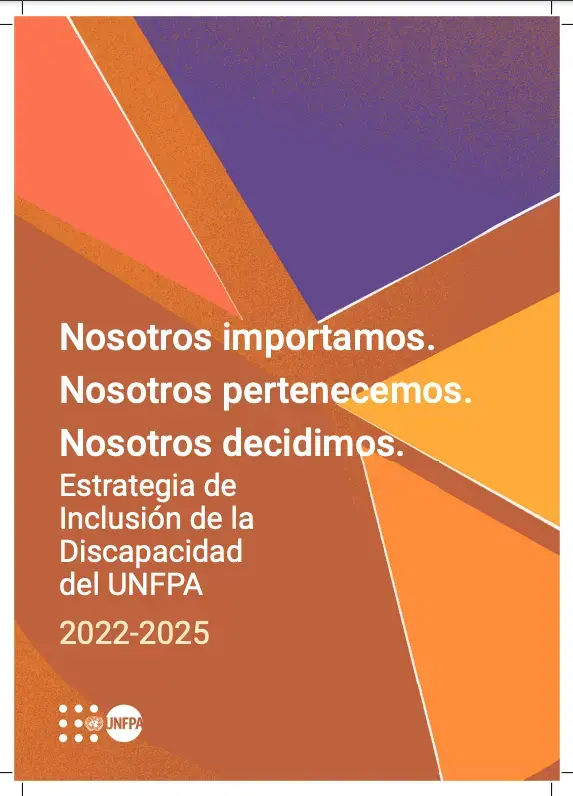
Nosotros importamos. Nosotros pertenecemos. Nosotros decidimos. Estrategia de Inclusión de la Discapacidad del UNFPA 2022-2025.

1

Noticias

Las casas de salud familiar salvan vidas y emplean a mujeres en las zonas rurales de Afganistán

calendar_today13 de mayo de 2022

Laila Amini, partera, revisa a una madre y a un recién nacido en la casa de la salud familiar de la aldea de Arkalik. Imagen cortesía de AADA.
1

Noticias

5 cosas que quizás no sabías sobre la fístula obstétrica

calendar_today16 de mayo de 2022

Profesionales de la salud cualificados y una atención obstétrica temprana de emergencia y de calidad pueden ayudar a prevenir la fístula obstétrica, una lesión de parto devastadora. © UNFPA Mozambique
1

Noticias

El UNFPA y el PMA aúnan fuerzas para cubrir las crecientes necesidades en materia de salud reproductiva y nutrición en el sur de Madagascar

calendar_today04 de mayo de 2022

Mujeres del distrito de Amboasary, en la región del Gran Sur de Madagascar, azotada por la sequía, a la espera de hacer consultas sobre salud sexual y reproductiva con el personal médico apoyado por el UNFPA. Al mismo tiempo, a pocos metros, el PMA hace donaciones de alimentos para ayudar a detener una crisis alimentaria que afecta a unos 3 millones de personas en la región. © UNFPA/Melvis Kimbi
1

Noticias

Empoderar a las parteras e invertir en ellas podría salvar millones de vidas cada año

calendar_today04 de mayo de 2022

Midwives in Morocco, like Amina Al Ammari, played a critical role in responding to the pandemic while also tending to pregnant women, new mothers and newborns. © UNFPA Morocco
1

Declaración

Los sistemas de salud del mundo deben invertir en las parteras

calendar_today05 de mayo de 2022

1

Fecha de publicación

Dec 2019

Autor

UNFPA, UNICEF

Recursos

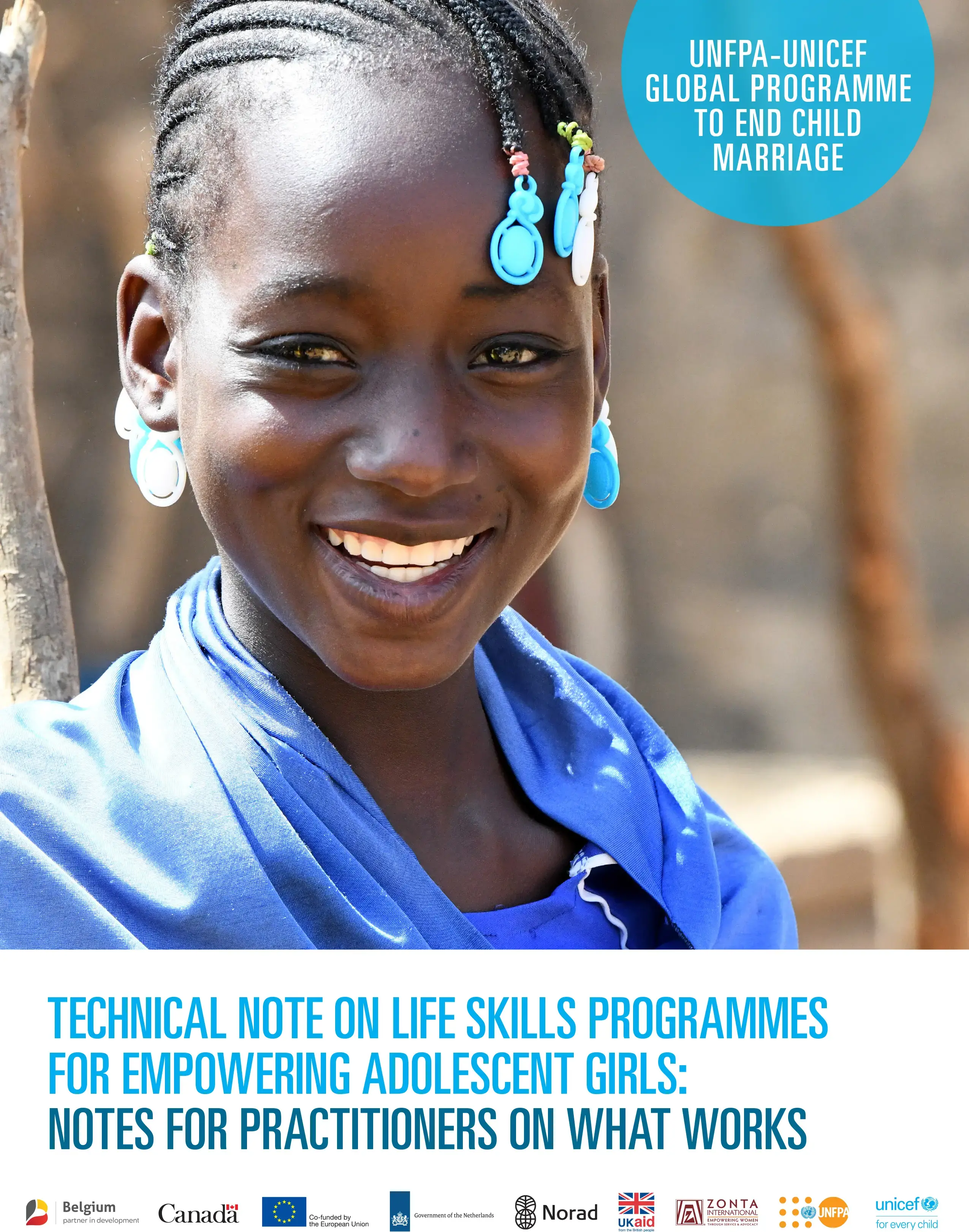
Nota técnica programas de habilidades para la vida para empoderar a niñas y adolescentes: notas para profesionales sobre lo que funciona bien

1

Utilizamos cookies y otros identificadores para mejorar su experiencia en línea. Al utilizar nuestro sitio web usted acepta esta práctica, consulte nuestra política de cookies.

X