Slideshow

Devastating 7.2-magnitude earthquake batters southwestern Haiti

calendar_today17 August 2021

1/8

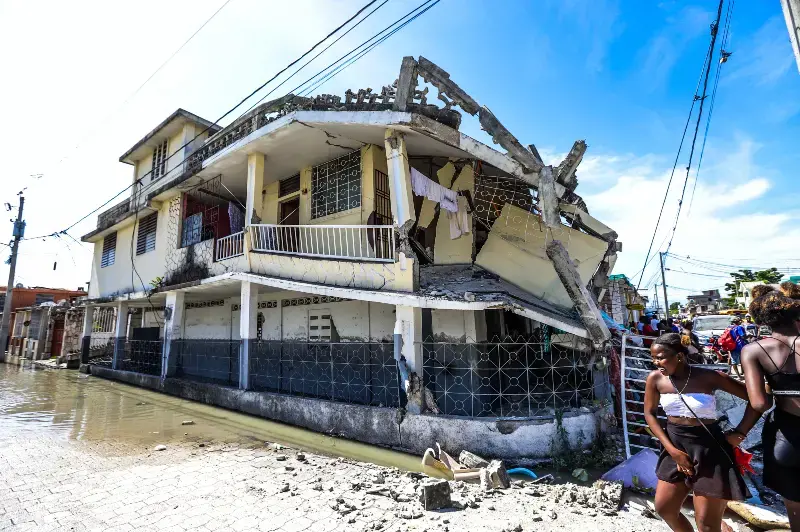
Already contending with political instability, gang violence that has displaced thousands and COVID-19, Haiti now faces the cruel aftermath of the 14 August 7.2-magnitude earthquake that has so far claimed 1,400 lives and injured more than 6,900 while hundreds remain missing, according to OCHA. The epicentre was recorded about 125 kilometres west of the capital, Port-au-Prince; the southern and western parts of the country were hardest hit. Hospitals were damaged or destroyed, overwhelming those still standing. Needs for food, shelter, safe water, sanitation and hygiene and medicines will continue to grow. Tropical Storm Grace has complicated relief efforts here, which is under a one-month national state of emergency. Cartagena Street (above) is in the seaport and commune of Les Cayes, which bore a significant brunt of the quake. Buildings including schools, hospitals and churches were flattened or smashed, roads were rendered impassable and more than 37,000 homes have been destroyed and 46,000 damaged throughout affected areas, according to the Haitian Civil Protection General Directorate. Updated 18 August: The death toll stands near 2,000 and injured approaching 10,000. Almost 61,000 homes have been destroyed and more than 76,000 damaged in the three most affected areas. © UNFPA Haiti/Ralph Tedy Erol
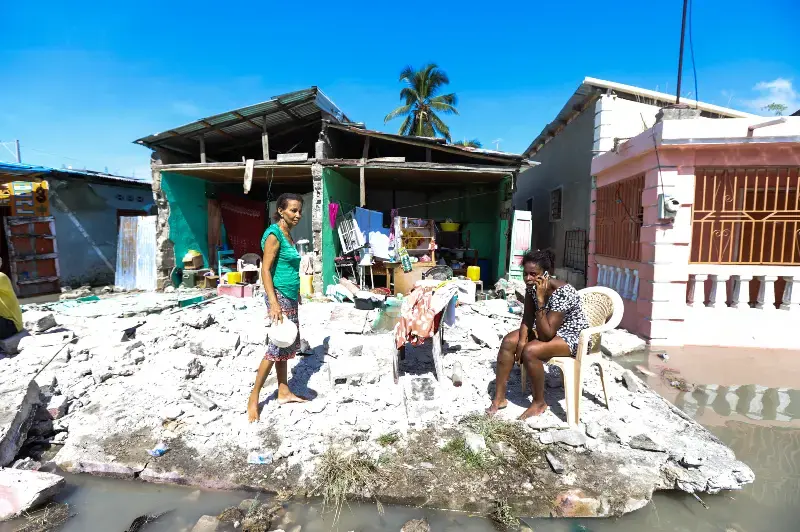
Families try to salvage anything they can from beneath the rubble. Remote communities closer to the epicentre are feared to be devastated. An estimated 1.2 million people have been affected; the 2010 earthquake affected three million people. © UNFPA Haiti/Ralph Tedy Erol
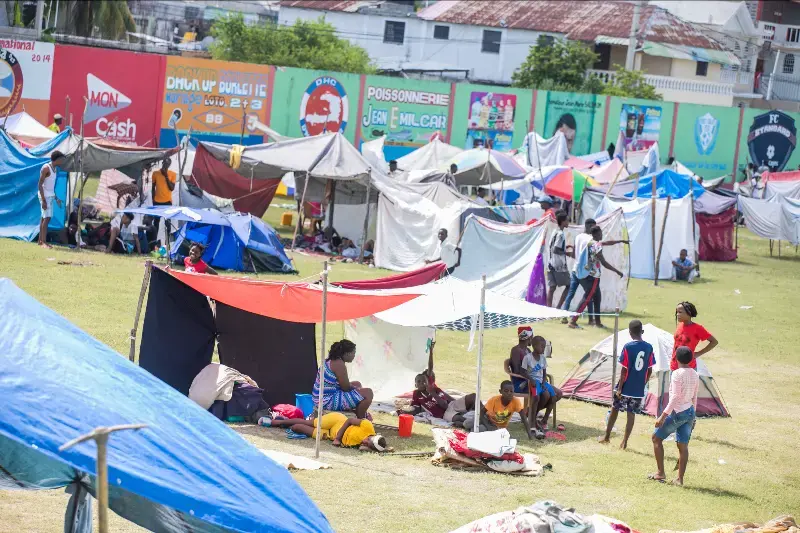
Hundreds of families have settled at football field Land des Gabions in Les Cayes. Tens of thousands of homes have been leveled, leaving many homeless. Some 19,000 Haitians are already displaced due to gang violence. Further displacement coupled with compromised access to health care is fueling concern on containing COVID-19. Gender-based violence is another worry, so protection services must always be part of emergency response. © UNFPA Haiti/Ralph Tedy Erol
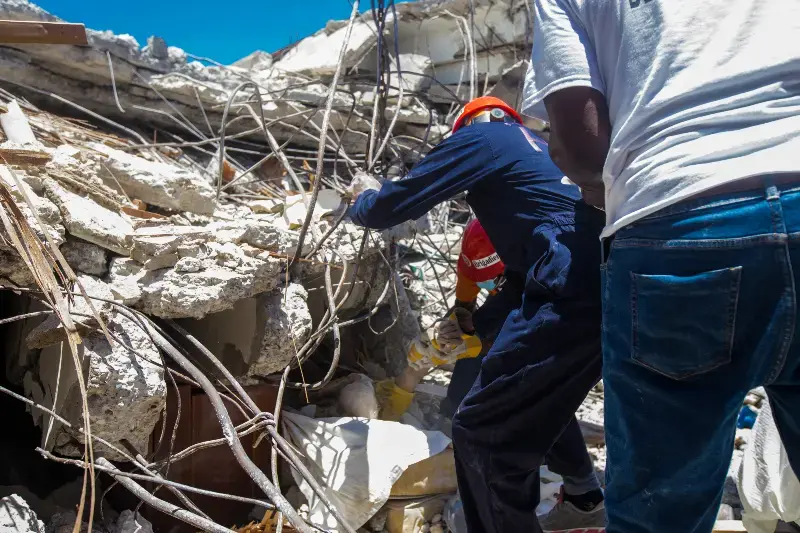
Workers at the site of the Catholic bishop's residence extricate a victim of the collapse in Les Cayes. Efforts by search-and-rescue teams and volunteers are ongoing days after the disaster. © UNFPA Haiti/Ralph Tedy Erol
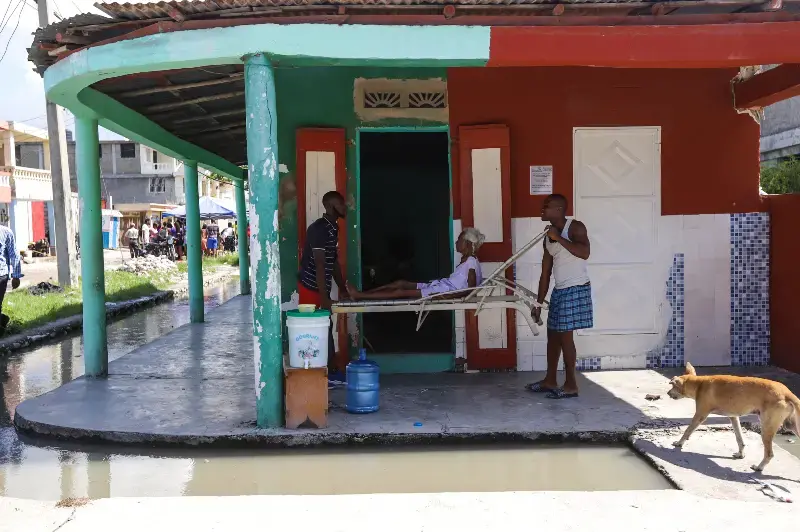
A woman is evacuated by family members at Immaculate Conception Hospital in Les Cayes. Hospitals still standing are in desperate need of personnel and medical supplies. © UNFPA Haiti/Ralph Tedy Erol
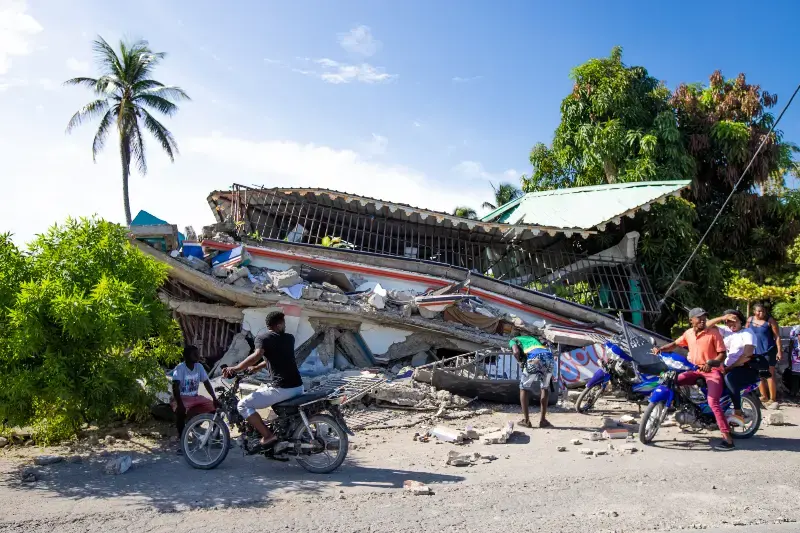
With houses in ruins, residents of Gelée, a village in Les Cayes, are leaving for temporary shelters. Gangs and road blockages have hampered relief efforts, and humanitarian partners are exploring alternatives, including by sea, to deliver aid. © UNFPA Haiti/Ralph Tedy Erol
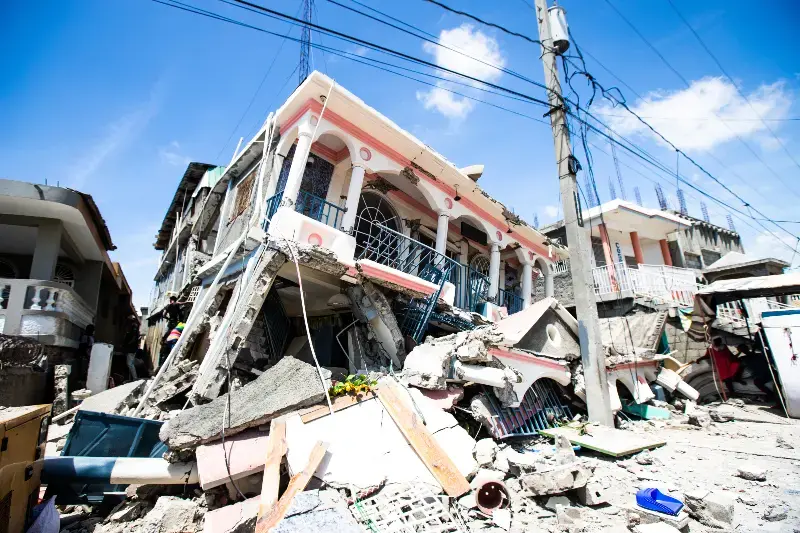
The earthquake toppled buildings on Boulevard des 4 Chemins in Les Cayes, which is in the Sud department, one of the three most heavily damaged areas. The other two are Grand’Anse and Nippes departments. © UNFPA Haiti/Ralph Tedy Erol
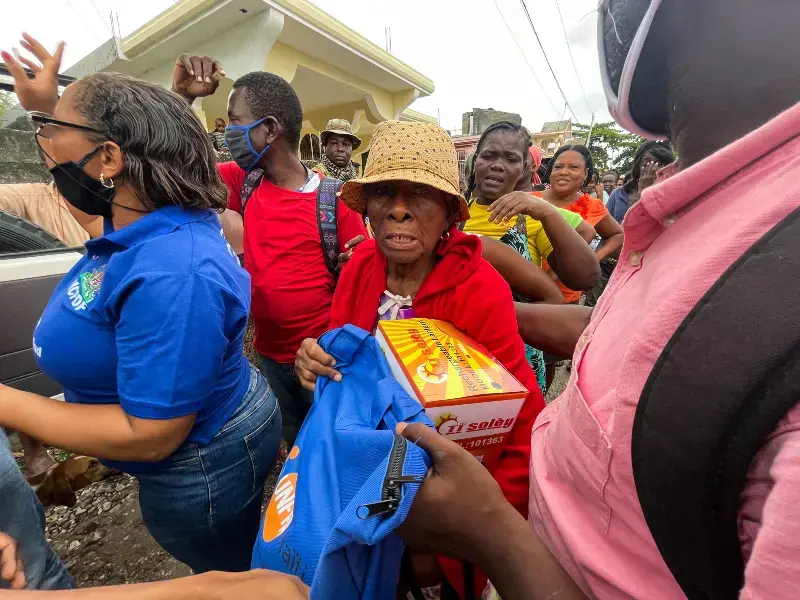
UNFPA distributed solar lanterns and dignity kits that include basic hygiene supplies like soap, toothbrushes, water purification tablets, underwear, menstrual pads, flashlights, hand sanitizer and masks to families in Les Cayes. © UNFPA Haiti

News

Crises in Haiti leave women and girls ever more vulnerable

calendar_today29 July 2021

Widespread, surging gang violence has forced thousands of Haitians to flee their homes in search of safety. © Edris Fortuné
1

News

Treating the invisible wounds of violence in Peru

calendar_today21 July 2021

Dr. Gabriela Gonzalez is a psychiatrist in Lima who helps survivors of gender-based violence work through their trauma. "I chose this specialty because I wanted to help people, especially women, in recovering their mental health, and improve their lives," she said. © UNFPA Peru
1

News

With COVID-19 heralding possible fertility changes, leaders must urgently support women’s rights and choices

calendar_today08 July 2021

A mobile health clinic, supported by UNFPA and the Spotlight Initiative, brings critical family planning and other services to underserved parts of Mozambique. ©UNFPA Mozambique/Mbuto Machili
1

News

Partnering with traditional birth attendants to reach Afro-descendant and indigenous women in Colombia

calendar_today06 July 2021

Traditional midwives are working with health systems to provide both modern and traditional care to expectant mothers. © UNFPA Colombia
1

News

Gender equality is the key to a better future for all, world leaders and youth activists agree at Paris Forum

calendar_today30 June 2021

“It is now time to deliver,” said UNFPA Executive Director Dr. Natalia Kanem at the opening ceremony of the Generation Equality Forum. © Service photo du Ministère de l'Europe et des Affaires étrangères
1

Mexico Humanitarian Emergency

Humanitarian needs

Last updated on - June 2024
 
Loading Humanitarian Funding Results ...
 
Loading Emergencies Key Results ...
Disclaimer
  • Results data are reported and updated as they become available.
  • -Targets and UNFPA's populations of concern, including women of reproductive age and pregnant women, are estimated using the MISP calculator.
  • -Funding estimates are based on country planning processes, including inter-agency humanitarian response plans and regional refugee and resilience plans.

Dominican Republic Humanitarian Emergency

Humanitarian needs

Last updated on - June 2024
 
Loading Humanitarian Funding Results ...
 
Loading Emergencies Key Results ...
Disclaimer
  • Results data are reported and updated as they become available.
  • -Targets and UNFPA's populations of concern, including women of reproductive age and pregnant women, are estimated using the MISP calculator.
  • -Funding estimates are based on country planning processes, including inter-agency humanitarian response plans and regional refugee and resilience plans.

News

After giving birth under a bridge amid hurricane wreckage, recovery remains a distant prospect for Honduran mother

calendar_today03 June 2021

A pregnant woman receives care at a shelter in the aftermath of two devastating storms in Honduras. © UNFPA Honduras
1

News

COVID-19 heightened menstruation challenges in Latin America and the Caribbean; action and investment needed

calendar_today28 May 2021

Indigenous adolescents from in Puerto Cabezas, Nicaragua, participate in a workshop on menstrual health and hygiene. ©UNFPA Nicaragua/Diter Bonilla
1

We use cookies and other identifiers to help improve your online experience. By using our website you agree to this, see our cookie policy

X