
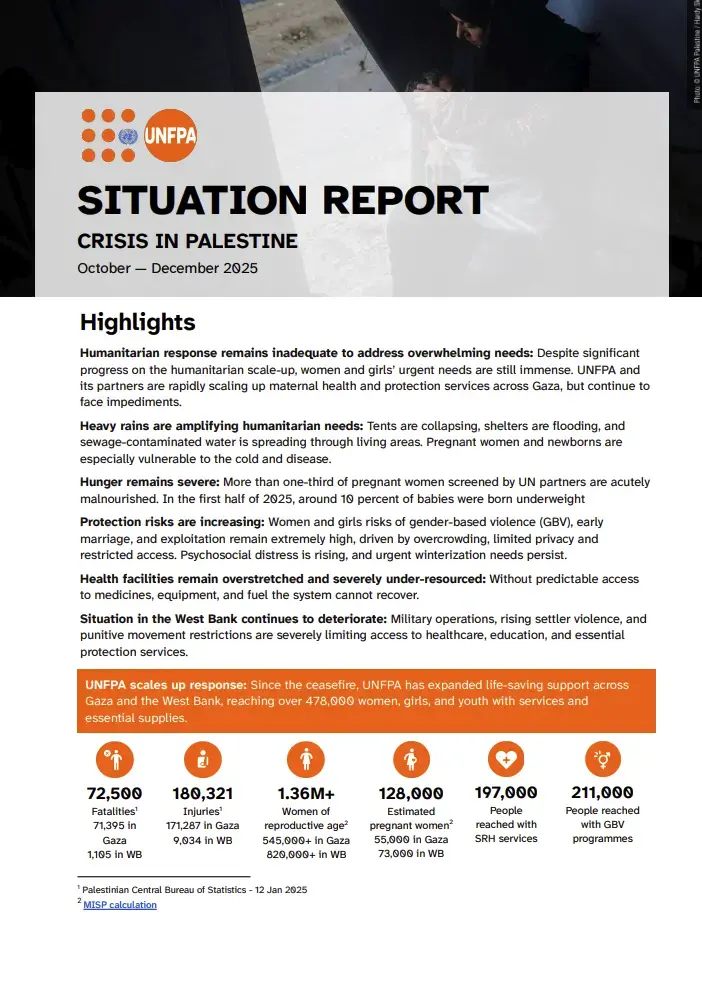

The humanitarian situation in the occupied Palestinian territory remains catastrophic. In Gaza, widespread destruction, repeated displacement, and winter storms have compounded already extreme needs, leaving millions exposed to flooding, sewage contamination, hunger, and cold. Health systems are near collapse, with most facilities damaged or non-functional, severe shortages of medicines and fuel, and neonatal units operating far beyond capacity. Pregnant women, newborns, and adolescent girls face acute risks, including malnutrition, preventable complications during childbirth, and heightened exposure to gender-based violence (GBV). In the West Bank, intensified military operations, settler violence, and movement restrictions continue to disrupt access to healthcare, education, and protection services, further deteriorating living conditions for women and girls, including tens of thousands of pregnant women.
In response, UNFPA has rapidly scaled up life-saving sexual and reproductive health (SRH), GBV prevention and response, and youth services across Gaza and the West Bank. This includes reopening and supporting health facilities, deploying midwives, operating mobile clinics, and providing emergency obstetric and neonatal care through fixed and temporary service points. Safe spaces, shelters, and mobile outreach have expanded access to case management, psychosocial support, dignity supplies, and cash assistance for women and girls at risk. Adolescents and youth have been engaged through learning spaces, resilience activities, life-skills education, and community-based initiatives, while UNFPA continues to lead coordination for SRH, GBV, and youth response to ensure services reach the most affected populations despite severe access constraints.
Despite these efforts, funding remains insufficient relative to the scale and duration of the crisis. In 2025, only around half of UNFPA’s humanitarian appeal was funded, limiting the ability to sustain and expand essential services. For 2026, UNFPA is seeking significant additional resources to address ongoing humanitarian needs and support early recovery, including restoring health services, maintaining protection mechanisms, and strengthening community resilience. Without predictable and adequate funding, critical gains remain fragile, and the health, safety, and dignity of women, girls, and young people across the territory will continue to be at grave risk.


