
Hurricane Melissa caused extensive human and material losses across Jamaica, Haiti and Cuba. Although humanitarian response and recovery efforts are underway, the needs of those affected remain urgent and immense.
Health services, including sexual and reproductive health (SRH), have been severely disrupted. Damage to health facilities and supplies is making it difficult to ensure the continuity of critical services such as emergency obstetric care and prenatal check-ups.
Stagnant floodwaters combined with damaged infrastructure have also created sanitation issues, raising the risk of infectious disease outbreaks. In Cuba, health risks are compounded by existing outbreaks of arboviral diseases, which are particularly high-risk for pregnant women and their babies.
A total of 5,064 people remain in shelters across Jamaica, Haiti and Cuba. Many of these facilities are operating with limited resources and are struggling to meet essential needs such as clean water and menstrual hygiene supplies. Thousands of women and girls are living in conditions that lack adequate privacy, security, and separate sanitation facilities, which increases their vulnerability to gender-based violence (GBV).
UNFPA continues to actively contribute to inter-agency coordination efforts to ensure that SRH and GBV priorities are fully integrated into the collective response to Hurricane Melissa.
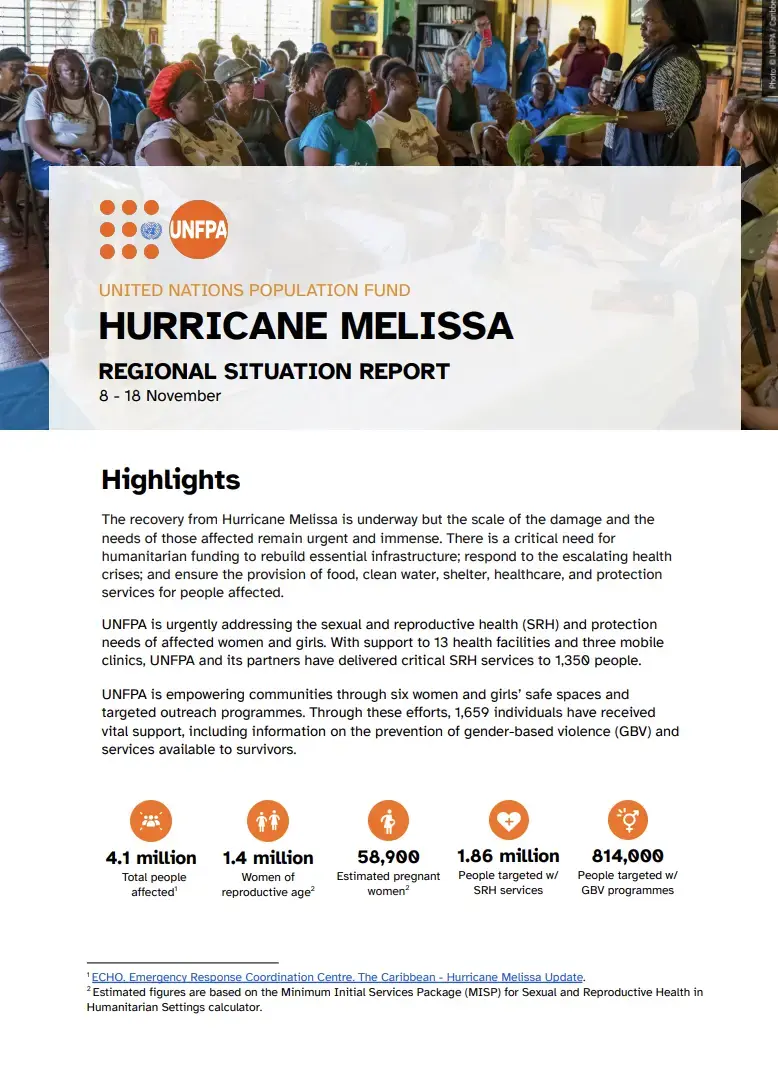
Between 8-18 November 2025, UNFPA and its implementing partners reached 1,350 people with SRH services through support to 13 health facilities and three mobile clinics. A total of 1,659 people were also reached with GBV prevention, mitigation, and response activities through six UNFPA-supported women and girls’ safe spaces. Dignity kits were provided to 1,621 women and adolescent girls, 160 new mothers received mama kits, and 442 women and girls affected by the hurricane received psychosocial support.
UNFPA is appealing for US$9.93 million for the Hurricane Melissa response. Currently, only US$250,000 has been funded, leaving a US$9.68 million gap. Additional funding is urgently needed to ensure that critical and lifesaving health and protection services are available to women and girls affected.


