
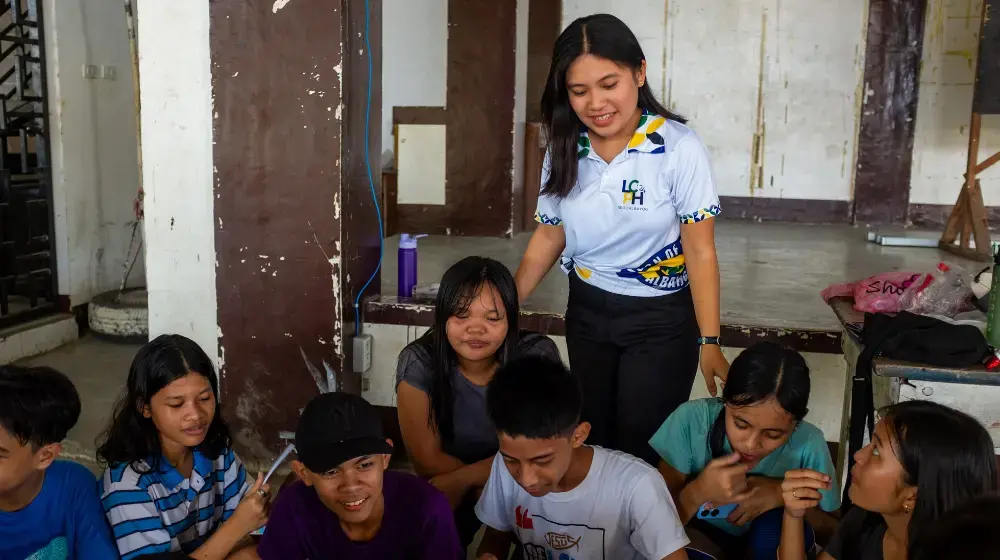
SAMAR, Philippines – “People my age are not talking about sex because of the cultural norms and traditions passed down by older generations,” Shameerah De Guzman told UNFPA, the United Nations sexual and reproductive health agency.
In the Samar province of the Eastern Visayas region of the Philippines, adolescent pregnancy is a familiar occurrence. While early sexual activity is common, the use of modern methods of contraception remains below average: Nearly 40 per cent of adolescents aged 15-19 who had engaged in premarital sex did not use contraception the first time they had intercourse.
A new initiative, the Joint Programme on Accelerating the Reduction of Adolescent Pregnancy, has availed of a novel resource to address the issue: young people. The programme, which is implemented by UNFPA with support from the Government of Korea through the Korea International Cooperation Agency, leverages the strengths of local youth leaders to reach adolescents with quality information on sexual and reproductive health. In just two years, this approach has succeeded in decreasing the adolescent birth rate by 5 per cent, from 38.1 per 1,000 in 2022 to 36.1 per 1,000 in 2024, and in increasing the use of modern contraceptives by 70 per cent.
Agents of change
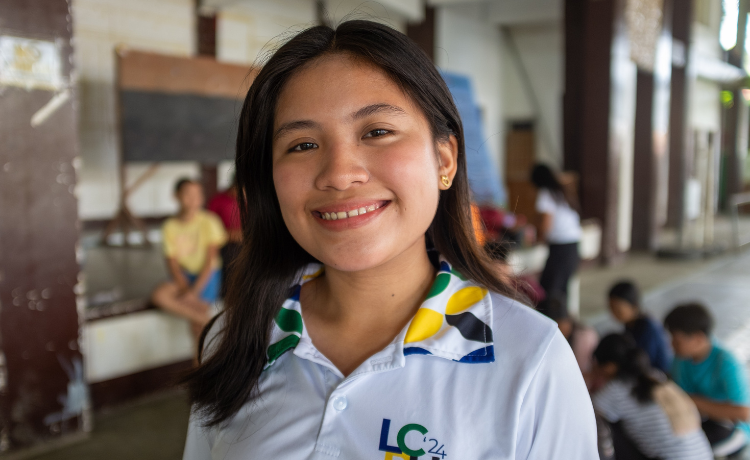
Ms. De Guzman is one such youth leader. With the support of UNFPA, she began volunteering at her school’s teen centre to provide information on sexual health and psychosocial support, referring students to the city health office when needed.
“Sex at a young age is happening. It is real, and we can’t tell the youth not to engage in it because it is natural and human. Instead, we can tell them how to do it safely and properly,” she said.
A key activity included under the initiative is the Expanded Youth Leadership and Governance Programme. This project includes dedicated sessions in which young people can build their skills and learn how to voice their concerns within local governing bodies. With this support, youth leaders gain experience formulating and advocating for policies that improve adolescent well-being.
Although there is much work to do, Ms. De Guzman is hopeful that the participation of young people will lead to change.
“I hope that people become more accepting and open about these things. If we don’t change how we react to teenage pregnancy, these problems will not be solved.”
“We need to change our approach and work hand-in-hand with adults.”
Cultural norms
Globally, an estimated half a million girls aged 10 to 14 give birth every year. When girls become pregnant as adolescents – particularly as very young adolescents – their lives change radically. Adolescent mothers face higher rates of complications from pregnancy, lifelong health risks, diminished job prospects and higher vulnerability to poverty.
Taking note of the challenges faced by young parents in her community, Ms. De Guzman realized that the primary driver of adolescent pregnancy was a lack of education.
“The main factors for the high cases of teenage pregnancy in our community are a lack of education and the hesitation to open up on the topic,” she said. “It is still taboo for some to talk to their parents about sex.”
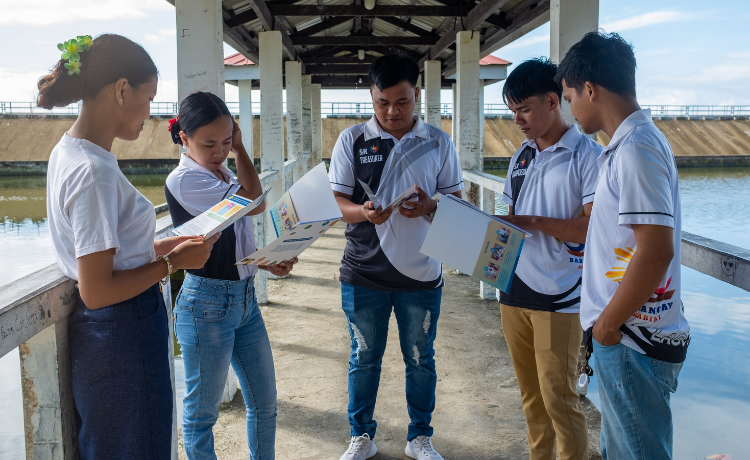
“As a youth leader, we play a big role in mitigating these issues as we are the peer navigators, the closest link to them by being the same age,” said Ms. De Guzman. “We can make them feel comfortable.”
The Joint Programme on Accelerating the Reduction of Adolescent Pregnancy will run until 2026 across the provinces of Samar and Southern Leyte. As the administrator of funds, UNFPA is investing in the capacity of young people to lead through ensuring their active participation in planning and implementing projects from the outset. Efforts are now focused on building sustainable systems that will protect and empower adolescents in the coming years and beyond.


