
Conflict in the Middle East
As the crisis unfolding in the Middle East continues to spiral, millions of people have been forced from their homes and thousands have lost their lives. Across the region, women and girls face devastating consequences for their safety and futures.
Hundreds of thousands have lost access to life-saving healthcare services, with pregnant women and new mothers particularly vulnerable, as the delivery of life-saving medical supplies is delayed by disrupted critical maritime and airspace routes.
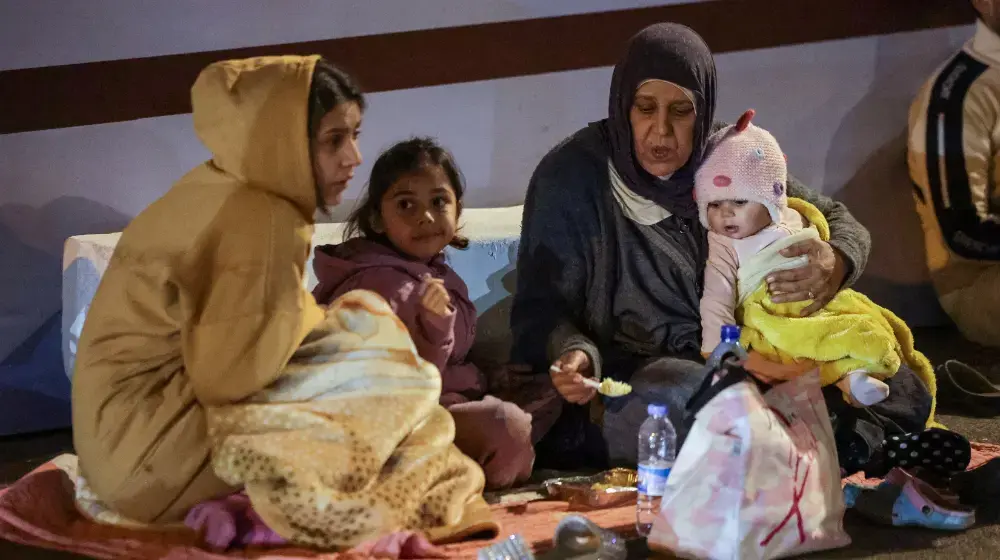
Fear and anxiety have radiated across the region: Millions of people have been displaced by strikes on Iran. More than 1 million have been forced from their homes as the violence spread to Lebanon, adding to the tens of thousands already displaced since the conflict with Israel in 2024. Families are now seeking safety in repurposed schools that are overcrowded and lacking in basic resources.
Tens of thousands have crossed the border from Iran to Afghanistan, and more than 125,000 have fled Lebanon into Syria, a country still reeling from 15 years of conflict. In Jordan, where an estimated 415,000 refugees, asylum seekers and stateless people will require humanitarian assistance this year, the war is adding to socioeconomic strain.
With needs growing rapidly across the region, UNFPA is scaling up its operational capacity in Iraq, Lebanon and Syria, pre-positioning essential supplies and mobilizing resources to address critical response and supply gaps, and to uphold the safety, health and dignity of women and girls. To aid in these emergency efforts, UNFPA is appealing for $12 million for Lebanon from March to May 2026 as part of an inter-agency flash appeal.
“Our priorities are clear: Even in the midst of a crisis, every woman must be able to give birth safely, and every woman and girl must be protected from violence,” said UNFPA Executive Director Ms. Diene Keita. “I echo the Secretary-General’s urgent call for diplomacy to prevail. All civilians, including humanitarian and medical personnel, as well as health facilities, must be protected in full respect of international humanitarian law.”
Updated 26 March 2026