

Berlin, October 2025 – The World Health Summit in Berlin marked a pivotal moment in global health discourse, as UNFPA successfully reframed investment in women's health not as a social expenditure, but as the engine of innovation, resilience and shared economic prosperity. Amid escalating global fragmentation and widening inequalities, the message was unequivocal: Investing in women's health is the smartest investment of our time.
This year saw a crucial shift, with women’s health finally becoming a central pillar of global strategies, directly linking health investment to economic growth.
But the funding gap remains striking. Despite growing funds for research, less than 1 per cent of global research and development addresses women’s health beyond oncology. This stark inequality highlights systemic shortcomings across technology, finance, product design and other areas that have historically failed to account for half of humanity.
The Berlin Roadmap: Launching an era of coordinated action
A key catalyst for change was the official launch at the Summit of the Berlin Roadmap for Collaborative Action in Women’s Health. This initiative unites global partners — governments, industry, researchers and multilateral organizations — in a coordinated partnership that is grounded in trust and shared accountability.
The Roadmap's Practical Agenda for Accelerating Innovation:
- Strengthen evidence generation: Bolstering the data foundation for informed decisions
- Align financing: Directing funds toward currently unmet needs
- Improve regulatory pathways: Streamlining processes to get innovations to women faster
- Design with women: Ensuring innovations are developed with, not just for, women
This coordinated approach replaces siloed efforts, recognizing that no single actor can close the women’s health innovation gap alone.
The WomenX Collective – and its new WomenX Berlin Hub – exemplify this momentum, acting as critical, connective infrastructure to bridge scientific innovation, finance, and policy. Its mission is to ensure proven, life-saving, and scale-ready innovations reach women everywhere.
Equity by design: Imperative for sustainable health systems
The Summit underscored a growing consensus: Innovation must go hand-in-hand with equity. Health systems designed without women in mind are neither effective nor sustainable.
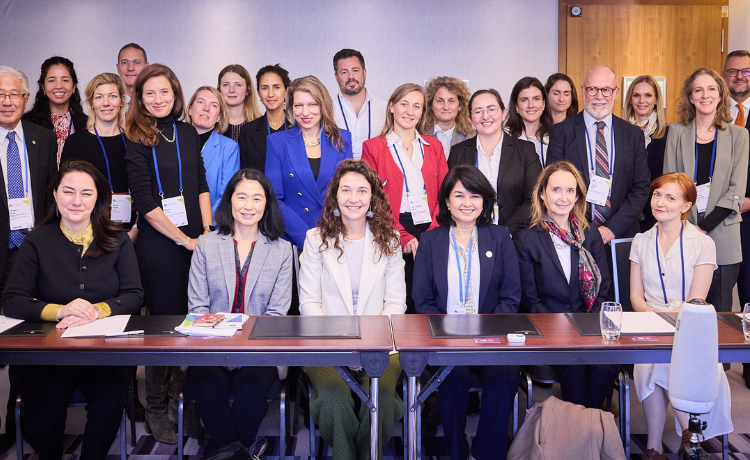
A shared call to action: Moral and economic imperative
On the centre stage, UNFPA’s Executive Director, Diene Keita, delivered a powerful and sobering statement: “Every minute, two women lose their lives to causes we already know how to prevent.” This starkly framed the importance of closing the women’s health gap, as both a moral duty and an economic imperative.
There was broad agreement that meaningful progress requires collective action. Key partners, including Africa CDC, BMZ, Daiichi Sankyo, the Gates Foundation, the Ministry of Health of Indonesia, the Government of Kenya, the Mohammed bin Zayed Foundation for Humanity and the European Investment Bank reaffirmed their commitment to advancing women’s health as a driver of global wealth and shared prosperity.
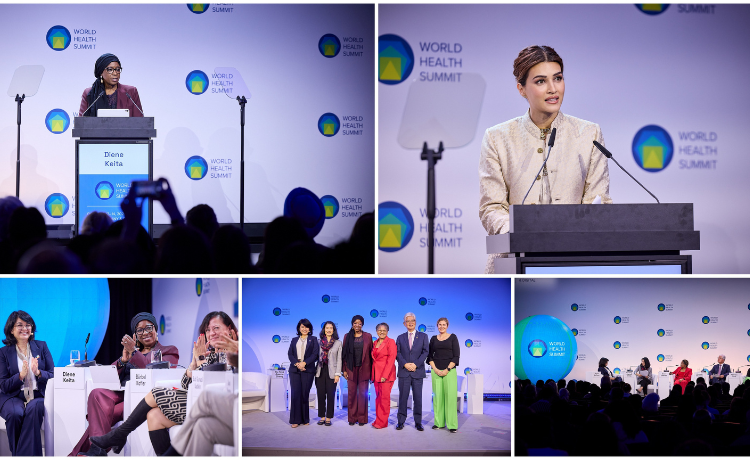
Kriti Sanon, UNFPA’s Honourary Ambassador for Gender Equality in India, urged leaders to act, reminding the audience that progress begins when women become the shapers of policy, not just its subjects. “Changing the narrative is as vital as changing the numbers,” she said.
From Berlin: Turning commitment into action
The World Health Summit cemented a long-overdue shift: Women’s health is no longer a peripheral agenda – it is the engine of growth, resilience and equity.
UNFPA will champion this vision through the WomenX Collective, the Equity 2030 Alliance and the Berlin Roadmap for Collaborative Action.
When innovation meets collaboration, impact follows. Because when women thrive, the world prospers.


