

New York, 17 March 2026 - Around the world, millions of women and girls still struggle to access quality maternal and reproductive health services, despite the existence of effective solutions. The challenge is no longer identifying solutions, but scaling them equitably and sustainably.
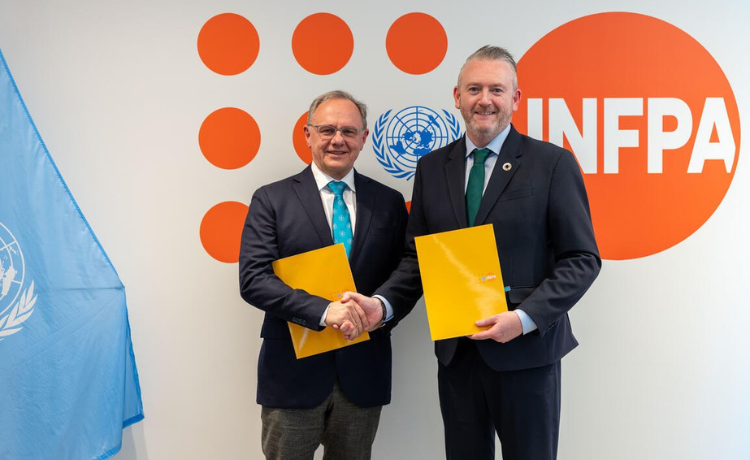
A new partnership between UNFPA, the United Nations Population Fund, which is the UN’s sexual and reproductive health agency, and the International Federation of Gynecology and Obstetrics (FIGO), was formalized this month through a memorandum of understanding. This partnership combines UNFPA’s global reach and health system engagement with FIGO’s extensive network of clinicians, aiming to reach those still lacking quality care by accelerating the transition from proven solutions to real-world impact.
Turning proven solutions into global change
Across the global health landscape, effective tools already exist – from technology-enabled cervical cancer screening to innovations that prevent and manage complications such as postpartum haemorrhage. Yet these proven maternal and reproductive health interventions are still failing to reach scale in the countries and communities where they are needed most. Many of the solutions remain underused, underfunded or limited to small pilots.
This partnership aims to accelerate the development, introduction, and adoption of innovative solutions.
"The partnership between UNFPA and FIGO reflects a truth borne out by the evidence: Investing in maternal health saves lives, transforms communities and requires urgent prioritization,” said Ms. Diene Keita, Executive Director of UNFPA. "This agreement will help us strengthen midwifery and obstetric care models, expand evidence-based maternal health innovations, elevate clinical standards, and mobilize the skills and resources required to deliver measurable impact at scale."
From global commitment to country-led action
At its core, the collaboration connects global expertise with country-level action. Through technical cooperation, capacity-building and knowledge exchange, the partnership will support countries in expanding access to quality reproductive health care. It will leverage FIGO’s network across more than 140 professional societies and UNFPA’s partnerships across more than 150 countries and territories.
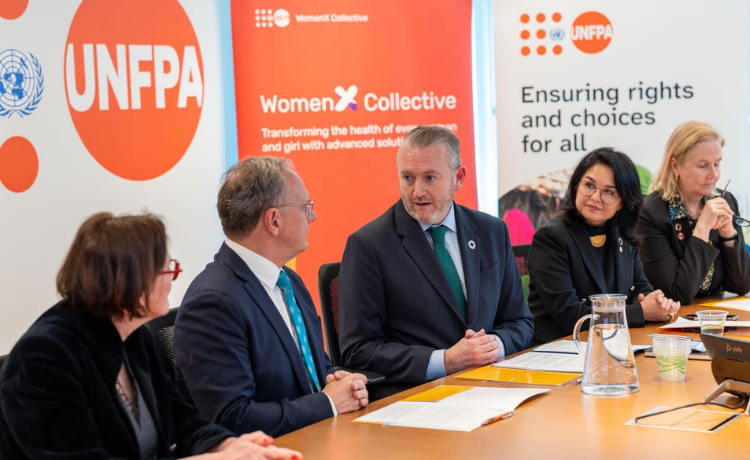
The initiative will also expand access to high-impact interventions in maternal and reproductive health and women’s cancers, particularly in low- and middle-income countries, while building on broader UNFPA efforts such as the WomenX Collective to accelerate evidence-driven solutions through increased public and private investment.
Pio Smith, UNFPA Deputy Executive Director (Programme) ad interim, described the partnership as a strategic collaboration that will advance progress toward universal access to sexual and reproductive health and rights by 2030. Prof. Dr. Frank Louwen, President of FIGO, pointed to a shared commitment not only to improving health outcomes, but also to advancing rights, dignity, and equity for women and girls everywhere.
Strengthening systems for sustainability
Beyond individual solutions, the partnership focuses on the systems required to sustain progress – supporting data-driven decision-making, strengthening workforce capacity, and advancing investment cases that position women’s health as a priority.
In a context of growing pressure on health systems, such integrated approaches are essential. This collaboration signals a shift towards system-level change to ensure we move beyond isolated successes to deliver measurable impact for women and girls worldwide.


