

UNITED NATIONS, New York - At the 70th Session of the Commission on the Status of Women (CSW70) held in New York, UNFPA, the United Nations Population Fund, which is the UN’s sexual and reproductive health agency, convened global leaders to issue a powerful call to action: Menstrual health must be recognized as a fundamental human right and a matter of economic empowerment.
‘Breaking barriers in business: A policy and practice blueprint for closing the menstrual health gap at work’ was co-hosted by UNFPA with the Permanent Mission of Finland to the UN, Essity, a leading global hygiene and health company, and Shahi Exports, India’s largest apparel manufacturer. The event highlighted solutions towards advancing sexual and reproductive health and rights in the workplace, with a particular focus on menstrual health.

Menstrual health as a business investment
Women spend up to 6 per cent of their reproductive years in the workforce, yet most professional environments were not built with women’s health in mind. Policies, facilities and schedules often overlook needs related to menstruation and other aspects of women’s reproductive health.
This event showcased how workplace menstrual health interventions can reduce absenteeism by up to 62 per cent and deliver a threefold return on investment. “Investing in menstrual health is not an act of charity – it's a smart business strategy,” said UNFPA Deputy Executive Director, Andrew Saberton.
How to standardize workplace equity
UNFPA urges the private sector to integrate sexual and reproductive health and rights into environmental, social and governance reporting, and diversity, equity and inclusion metrics to strengthen workplace equity and accountability.
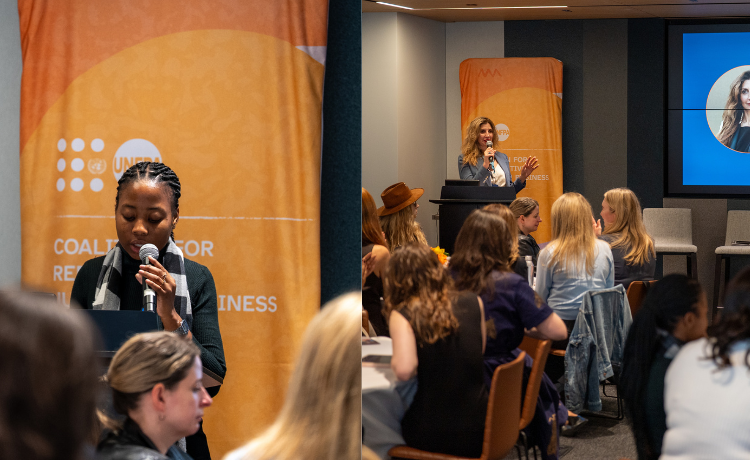
Laura Rissanen, State Secretary to Finland's Minister of Social Security, said investing in women’s health is essential for building workforce resilience and supporting national economic development, while Jennifer Herrera, Executive Director of PERIOD. The Menstrual Movement, highlighted how younger generations increasingly expect workplaces to support menstrual health.
Supply chain innovation
A panel moderated by UNFPA Global Champion Shudufhadzo Musida featured private sector leaders who are advancing menstrual health across global supply chains.
Essity’s Chief Sustainability Officer, Sahil Tesfu, noted that partnerships between businesses, governments, international organizations, and civil society are essential for improving workplace infrastructure and access to menstrual health products, and for creating supportive environments that enable workers to manage menstruation with dignity.
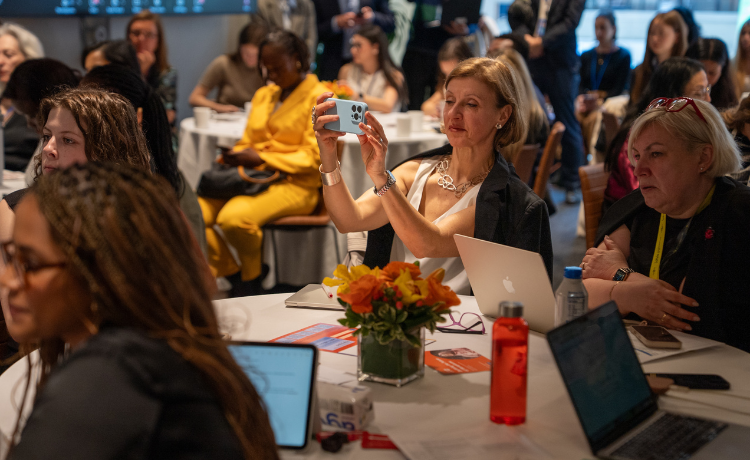
Representing Shahi Exports, Associate Vice President Deepak Rautela shared how technology is helping expand access to period products and increase awareness across factory sites, through initiatives such as biometric vending machines for subsidized sanitary pads.
Bridging policy and practice
Closing the menstrual health gap requires aligning private sector action with strong public policy. The Coalition for Reproductive Justice in Business, led by UNFPA and partners, advocates for greater investment in women’s health at work and stronger multi-stakeholder collaboration. In 2026, the Government of Finland was announced as the Coalition’s first government champion, marking a key step toward aligning private sector innovation with public policy leadership.
As momentum for menstrual equity continues to grow, corporate leaders and policymakers are being called upon to move beyond awareness and toward shared accountability. Jane Nyanjom of the Reproductive Health Network Kenya gave the example of Nairobi County’s menstrual leave policy initiative as recognition that menstrual health is an important aspect of both workplace equity and public health.
As Mirriam, a youth advocate for Plan International, said, “I urge employers, business leaders, and decision-makers – here and around the world – to integrate menstrual health into workplace policies, budgets and everyday practices. Because when workplaces work for women, they work better for society as a whole.”
Join the movement: UNFPA calls for the next wave of corporate and government champions to join the Coalition. Your leadership is the bridge between policy and practice. Become a champion today.


