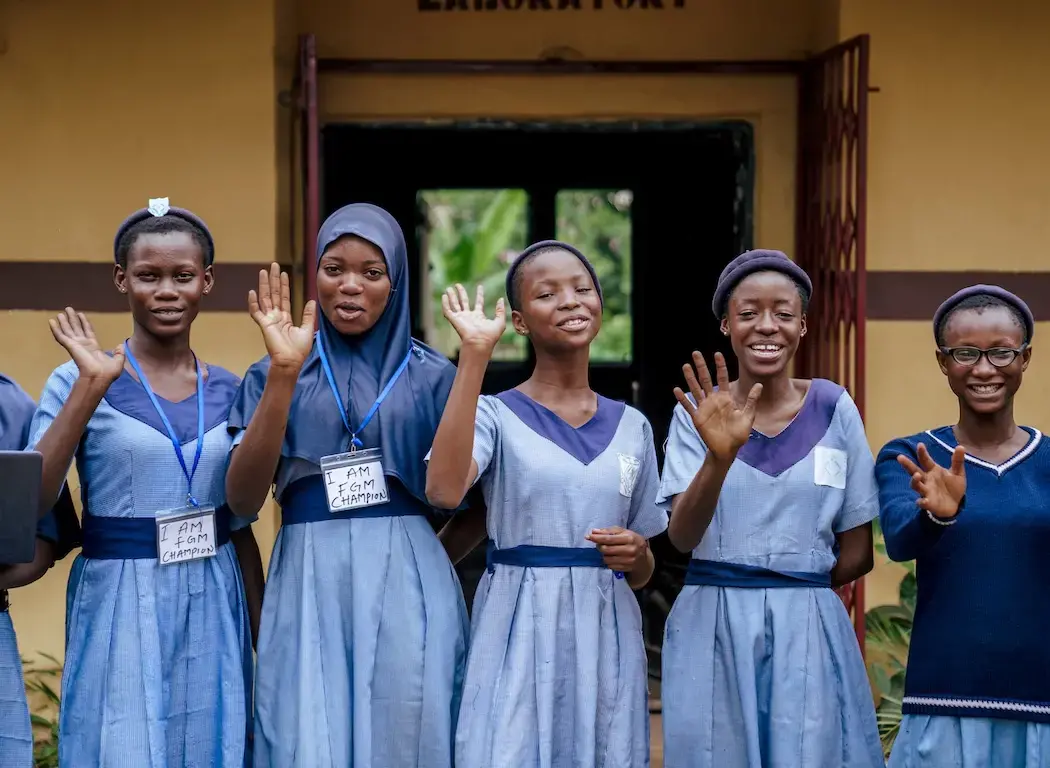
What is the Joint Programme on the Elimination of Female Genital Mutilation?

UNFPA, in partnership with UNICEF, leads the largest global programme to accelerate the elimination of female genital mutilation. The Programme is implemented in 18 focus countries in Africa and Asia: Burkina Faso, Djibouti, Egypt, Eritrea, Ethiopia, The Gambia, Guinea, Guinea-Bissau, Indonesia, Kenya, Mali, Mauritania, Nigeria, Senegal, Sudan, Somalia, Uganda and Yemen, with a reach and influence in other countries and regions where this harmful practice is prevalent.

The Joint Programme was established in 2008, with both agencies working in close collaboration with governments and partners across all levels – grassroots, community, subnational, national, regional and global. It covers multiple sectors – among them social, education, health, religion, economics and politics – advocating for the scale-up of evidence-based interventions and results. Currently the programme focuses on five strategies: promoting girls’ agency; building movements with a special focus on youth; engaging women-led organizations; funding diversification; and expanding and intensifying global influence.  

Why get involved?

Female genital mutilation is a violation of human rights and is never safe, with immediate health risks that can span a lifetime, including chronic pain, infections, increased risk of childbirth complications and psychological trauma.

Ending this harmful practice is an achievable Sustainable Development Goal to safeguard and protect the 68 million girls and women at risk. Your involvement can take many forms – from advocacy and policy making to providing financial support or implementing interventions on the ground. By participating in this global movement, you can contribute to ending female genital mutilation and creating a world where every girl and woman lives free from violence and discrimination.

Updated 4 February 2026
Top 10 achievements since 2008

  • FGM girls aged 0 to 14 years were protected from undergoing female genital mutilation
  • Communities developed women and girls have initiated conversations on eliminating female genital mutilation
  • Young people people made public declarations to abandon female genital mutilation
  • Access GBV services communities established surveillance systems to protect girls from undergoing female genital mutilation
  • Social behaviour change individuals were reached by mass media messaging on female genital mutilation
  • Gender based violence response grassroots organizations have been integrated into coalitions and networks working on the elimination of female genital mutilation
  • policy community and front-line workers from 241 implementing partners were engaged in interventions that aim to end female genital mutilation
  • protection girls and women received female genital mutilation–related prevention and protection services
  • Empathetic ethical GBV care health-service delivery points have at least one health worker trained to provide repair or prevent female gential mutilation
  • Rule of law justice arrests were made as part of enforcing female genital mutilation legislation
36

Where we work

Explore snapshots of the focus countries. Each snapshot offers a brief synopsis of the context, including drivers, prevalence, attitudes and progress in eliminating female genital mutilation, and a list of key programme partners. The snapshots also highlight key programmatic achievements and an activity showcasing how the current Phase IV of the programme operates at the field level.

The designations employed and the presentation of material on the map do not imply the expression of any opinion whatsoever on the part of UNFPA concerning the legal status of any country, territory, city or area or its authorities, or concerning the delimitation of its frontiers or boundaries. Due to coding limitations, the wording across the indicators is standard, both in the global page and the individual country pages. The wording is applied homogeneously to all reporting offices and is by no means an endorsement or statement of recognition of sovereignty. A dotted line represents approximately the Line of Control in Jammu and Kashmir agreed upon by India and Pakistan. The final status of Jammu and Kashmir has not yet been agreed upon by the parties.

A dispute exists between the Governments of Argentina and the United Kingdom of Great Britain and Northern Ireland concerning sovereignty over the Falkland Islands (Malvinas).

The boundaries and names shown and the designations used on this map do not imply official endorsement or acceptance by the United Nations.

Annual Report

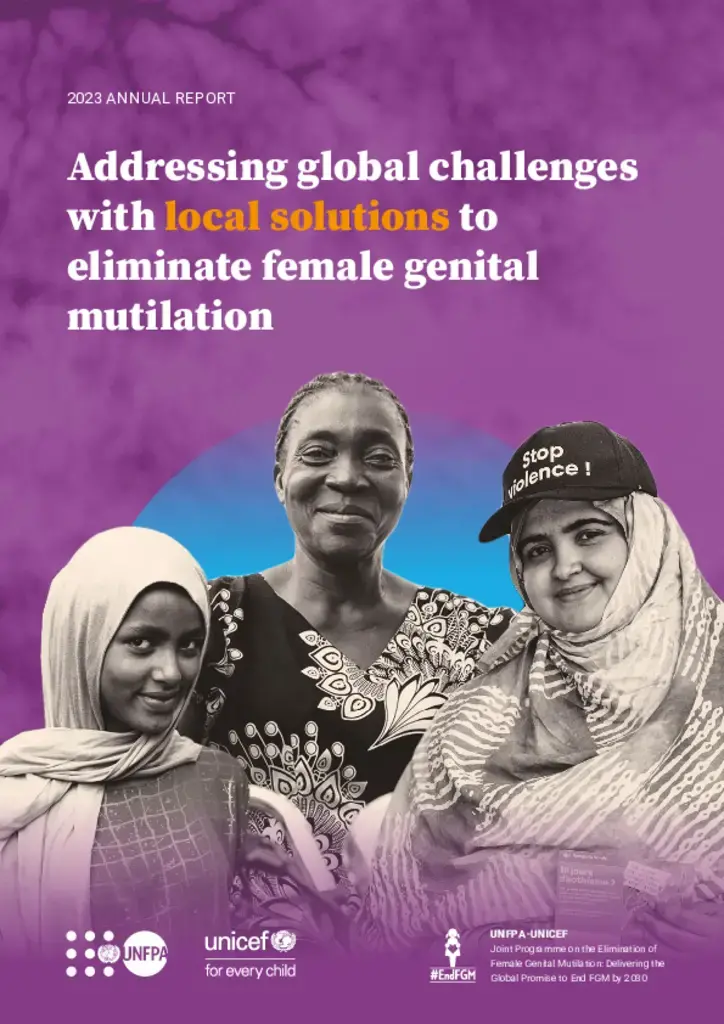
2023 Annual Report of FGM Joint Programme: Addressing global challenges with local solutions to eliminate female genital mutilation
The 2023 annual report adopts a theme of “addressing global challenges with local solutions to eliminate FGM”. It focuses on engagement with women-…

Download
Read publication

Annual Report

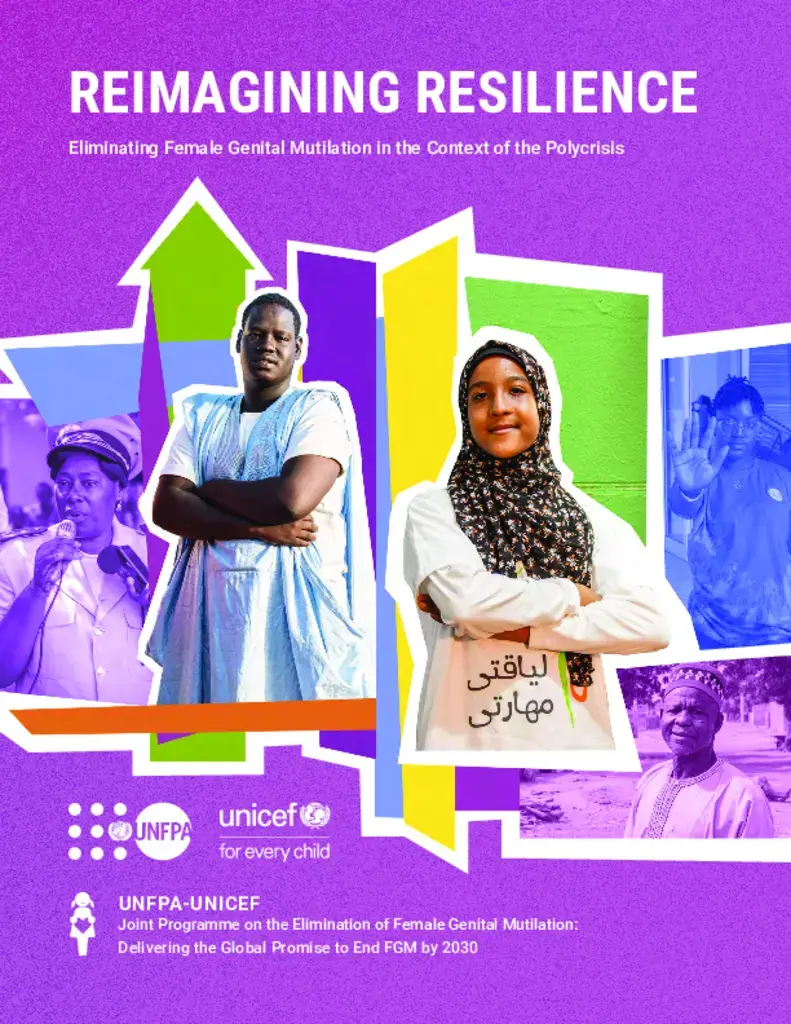
2022 Annual Report of FGM Joint Programme: Reimagining Resilience
In 2022, the UNFPA-UNICEF Joint Programme on the Elimination of Female Genital Mutilation achieved significant milestones. This annual report focuses…

Download
Read publication

Annual Report

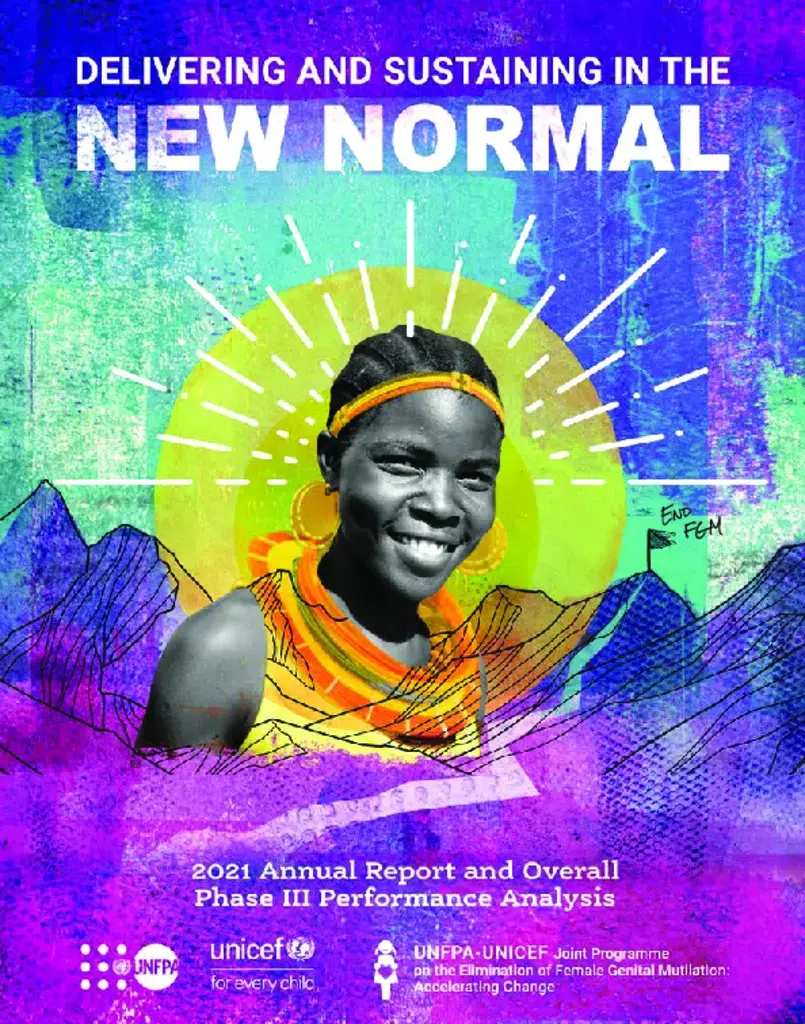
2021 Annual Report of FGM Joint Programme: Delivering and Sustaining in the New Normal
This report highlights achievements made in 2021 and the overall performance analysis of Phase III (2018 – 2021). It outlines the challenges and…

Download
Read publication

Annual Report

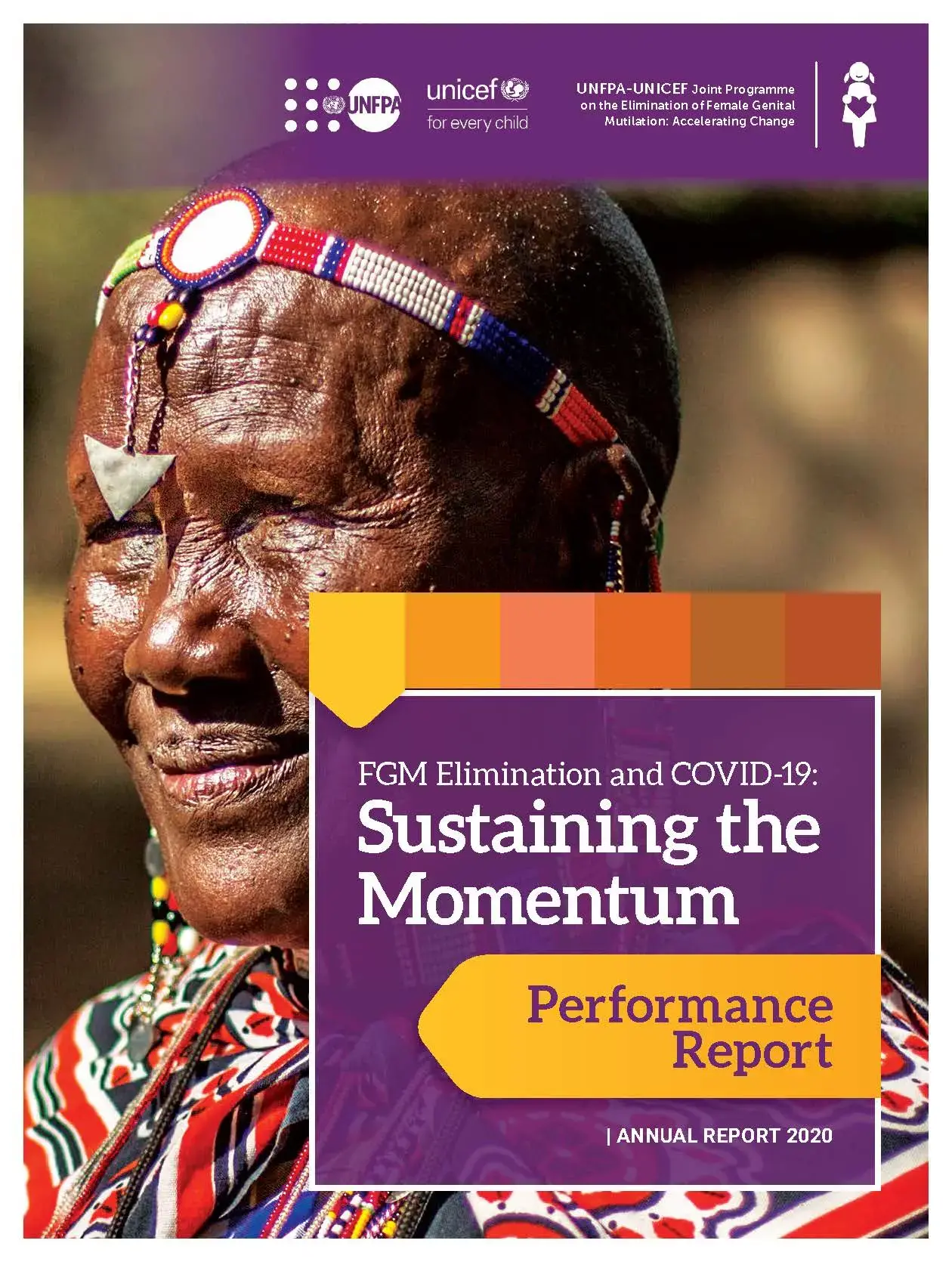
2020 Annual Report of FGM Joint Programme: Report on the Data and Evidence for Impact
The 2020 annual report of the global Joint Programme on the Elimination of Female Genital Mutilation presents the progress made thus far in the…

Download
Read publication

Resources

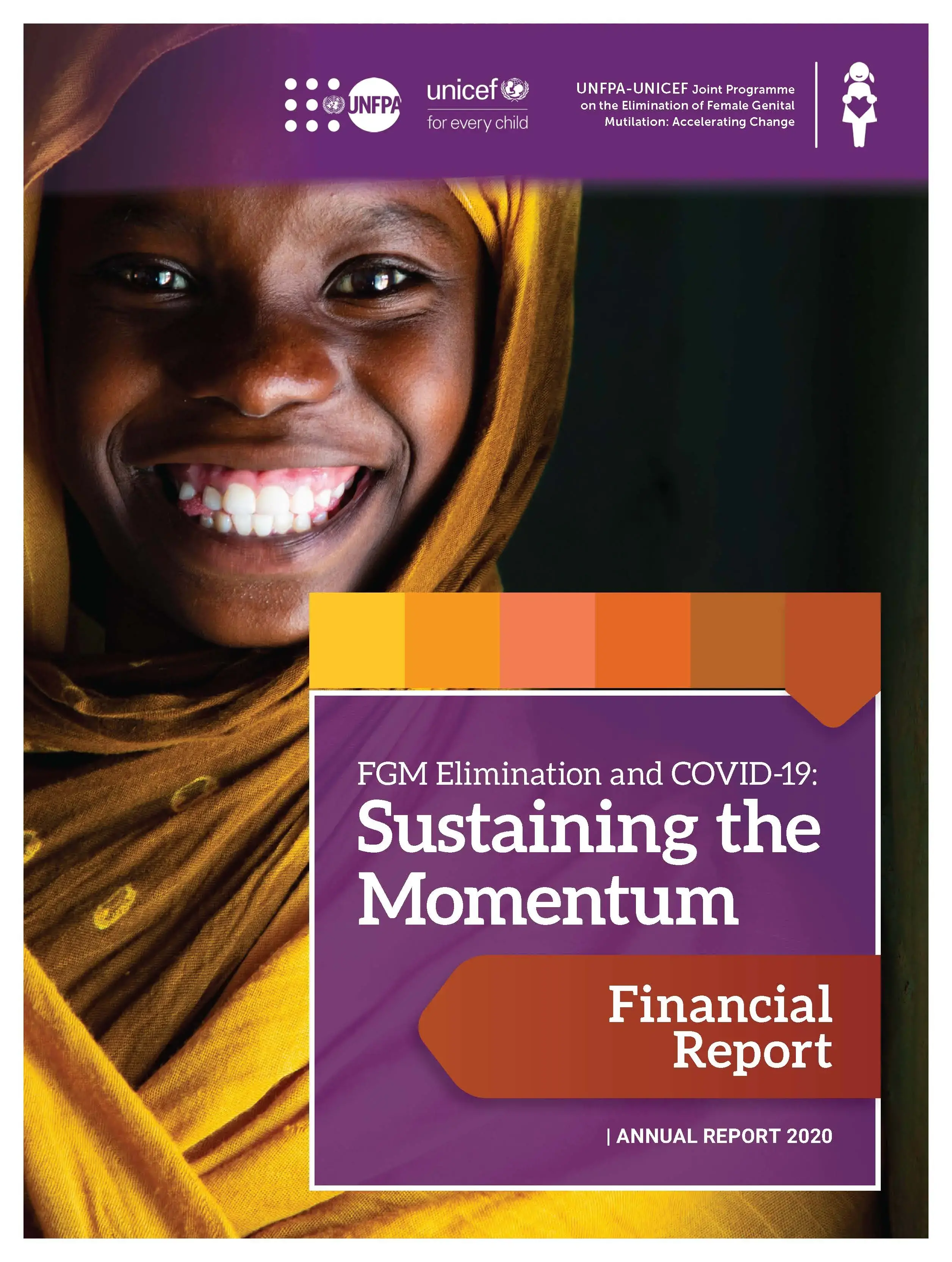
2020 Annual Report on FGM - The Financial Report

The 2020 annual report of the global Joint Programme on the Elimination of Female Genital Mutilation presents the…

Read publication

Partnerships and funding

Partnerships are at the heart of the UNFPA-UNICEF Joint Programme’s strategy to eliminate female genital mutilation. The Joint Programme partners include a diverse set of multi-sectoral stakeholders representing governmental institutions, national and international organizations, civil society organizations, grassroots organizations, women’s groups, youth-led initiatives, academia and front-line workers, all striving together to end female genital mutilation. These partnerships are at global, regional, national and subnational levels, working to create an enabling environment for change. This ranges from policy-making to community-level and grassroots interventions, building a world where girls and women are safe, empowered and free to live their lives without the threat of female genital mutilation.

The Joint Programme’s funding partners provide the financial support to catalyze and scale up evidence-based effective interventions that result in norm changes to end female genital mutilation. In the current fourth phase, the Joint Programme is generously funded by the Governments of Belgium, Canada, France, Germany, Iceland, Italy, Luxembourg, Norway, Spain, Sweden, the United Kingdom, the United States and the European Union, as well as the Nordisk Foundation. Nonetheless, additional financial resources are required to further scale up interventions to be able to achieve the global target of eliminating female genital mutilation by 2030. 

Every year $1.4 billion is spent treating female genital mutilation health-related complications. Meanwhile for an estimated cost of $2.4 billion, the practice could instead be eliminated in 31 priority countries. 

Funds received by the Joint Programme in 2024

UNFPA Global share

We use cookies and other identifiers to help improve your online experience. By using our website you agree to this, see our cookie policy

X