
In 2000, UNFPA continued to support countries in the development of population and development strategies, and data collection, analysis and policy formulation. A top priority in 2000 was the development of a new global strategy for reproductive health commodity security.
Publication date
01 January 2001
Author
UNFPA
Number of pages
32

Annual Report
UNFPA Annual Report 2000
Publication date
01 January 2000
Author
UNFPA
Number of pages
34
Annual Report
UNFPA Annual Report 1999
1999 was a momentous year for UNFPA. The "ICPD+5" review, our 30th anniversary, and the birth of the 6 billionth person provided us with unique opportunities to look at where we have been and where we are going in our quest to help people make informed, responsible and free choices regarding their sexual and reproductive health.
Publication date
11 September 1999
Author
UNFPA
Number of pages
76
Annual Report
UNFPA Annual Report 1998
The year 1998 was a crucial one in UNFPA's efforts to advance the agenda agreed to by the 1994 International Conference on Population and Development (ICPD), held in Cairo. Also in 1998, the Fund stepped up its collaboration with other partners to provide reproductive health services to people displaced by armed conflicts or natural disasters.
Publication date
11 September 1998
Author
UNFPA
Number of pages
76
Annual Report
UNFPA Annual Report 1997
The themes that animate UNFPA's Annual Report for 1997 are ones that have become familiar since the ICPD in 1994. Reproductive health, including family planning and sexual health, remained the focus of the Fund's work during 1997, with programmes in the area of adolescent reproductive health playing an increasingly important role.

Publisher
UNFPA
Publication date
2003
Author
UNFPA
Number of pages
36
Annual Report
UNFPA Annual Report 2002
Annual Report
In this annual report, we draw attention to the many different ways in which UNFPA is working to reduce poverty by meeting reproductive health needs in developing countries, especially among the poorest and most vulnerable.
Publisher
UNFPA
Publication date
01 January 2003
Author
UNFPA
Number of pages
29
Publication
Population, Reproductive Health and the Millennium Development Goals
How the ICPD Programme of Action Promotes Poverty Alleviation and Human Rights
This publication highlights the importance of the ICPD Programme of Action, the "Cairo+5" discussions and subsequent experience and agreements as we mobilize to achieve the Millennium Development Goals.
Publisher
UNFPA
Publication date
2014
Author
UNFPA
Number of pages
56
Annual Report
UNFPA Annual Report 2013
Realizing the Potential
1
Publisher
UNFPA
Publication date
01 January 2003
Author
UNFPA
Number of pages
38
Publications
Achieving the Millennium Development Goals
Population and Reproductive Health as Critical Determinants -- Population and Development Strategies
1
Publisher
UNFPA
Publication date
01 January 2004
Author
UNFPA
Number of pages
36
Annual Report
UNFPA Annual Report 2003
1
Publisher
UNFPA
Publication date
01 January 2004
Author
UNFPA
Number of pages
124
State of World Population
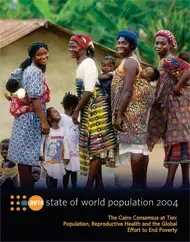
State of World Population 2004
The Cairo Consensus at Ten: Population, Reproductive Health and The Global Effort to End Poverty
Countries are making real progress in carrying out a bold global action plan that links poverty alleviation to women's rights and universal access to reproductive health. Ten years into the new era opened by the 1994 International Conference on Population and Development (ICPD) in Cairo, the quality and reach of family planning programmes have improved, safe motherhood and HIV prevention efforts are being scaled up, and governments embrace the ICPD Programme of Action as an essential blueprint for realizing development goals.