1
Events
International Day of Zero Tolerance for Female Genital Mutilation 2024
06 February 2024
Global

Publication date
Dec 2023
Author
UNFPA, UNICEF
Number of pages
32

Publication
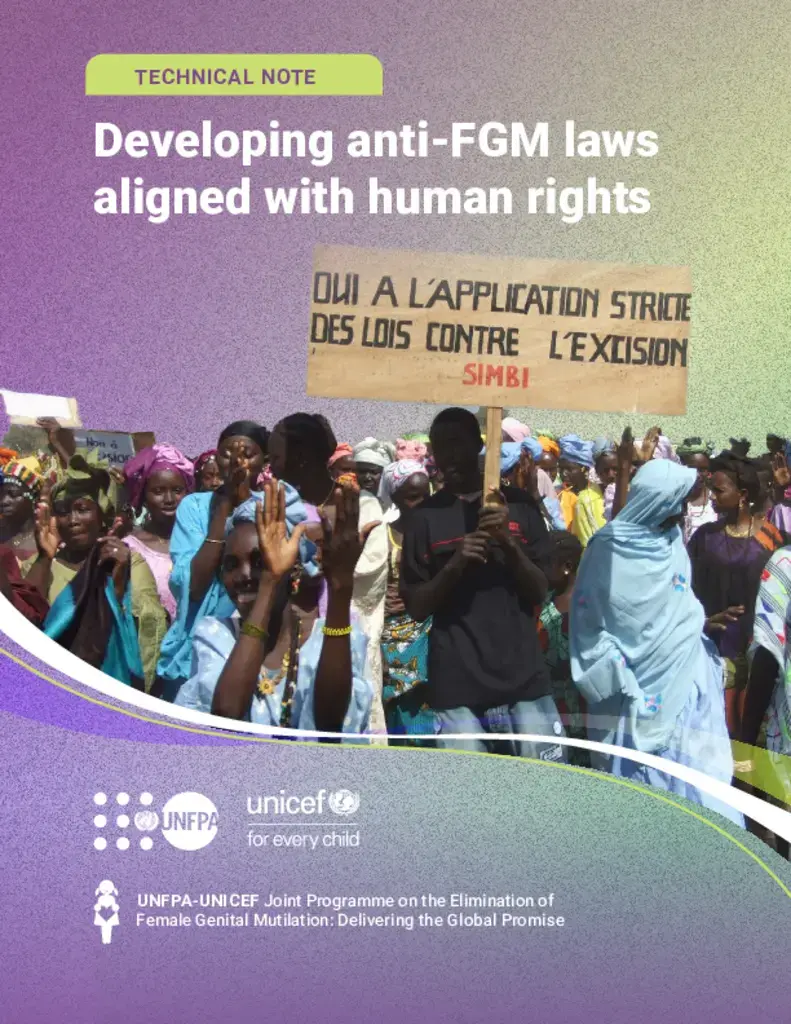
Technical Note: Developing Anti-FGM Laws Aligned with Human Rights
1
Updates
Sweden's new contribution towards ending female genital mutilation
03 January 2024
1
Switzerland
Donor rankings include UN-to-UN transfers, which are UNFPA's top source of revenue overall.
1
Effective 1 January 2022, UNFPA adopted a new revenue recognition policy; however, for the purposes of this website, information is presented based on previous policy to allow comparability of information across different years.
2024 | Top
Donor Global Statistics
Donor Global Statistics
News & Updates

Updates
NEW YORK, United Nations – Germany is reinforcing its commitment to addressing the most urgent humanitarian needs of women and girls around the world by contributing an additional US$2.2 million to UNFPA, the United…
03 December 2024
Read Story

News story
ZANZIBAR, United Republic of Tanzania – “When I learned about family planning, I felt like I had control over my life,” said Mwanaisha Rajabu, a 28-year-old mother of three living in Fuoni, a village on the Unguja…
02 December 2024
Read Story

News story
AJ JAZIRAH, Sudan – “Some parents were killed while trying to protect their daughters from being raped,” said Sara*, a counsellor in Sudan’s eastern Aj Jazirah state and one of many health workers relaying…
19 November 2024
Read Story
Italy
Donor rankings include UN-to-UN transfers, which are UNFPA's top source of revenue overall.
1
Effective 1 January 2022, UNFPA adopted a new revenue recognition policy; however, for the purposes of this website, information is presented based on previous policy to allow comparability of information across different years.
2024 | Top
Donor Global Statistics
Donor Global Statistics
News & Updates

News story
HERAT, Afghanistan – By midnight, Khurshid, 35, was in serious trouble. Five months pregnant and bleeding heavily, she had passed out at home. Her family carried her unconscious body to the nearest – and only – health…
10 July 2018
Read Story

News story
WAING MAW, Myanmar – “We should not have to live in fear of violence just because we are women,” Khaung Nan declared in Waing Maw, a town in Myanmar’s battle-worn Kachin State.
Ms. Khaung Nan works at the Waing Maw…
23 May 2017
Read Story

News story
KABUL, Afghanistan – Purple is the colour that midwifery students proudly wear in a small but revolutionary school in the busy Afghan capital, Kabul. In addition to a purple scarf, they have one other thing in common:…
09 May 2014
Read Story
Finland
Donor rankings include UN-to-UN transfers, which are UNFPA's top source of revenue overall.
1
Effective 1 January 2022, UNFPA adopted a new revenue recognition policy; however, for the purposes of this website, information is presented based on previous policy to allow comparability of information across different years.
2024 | Top
Donor Global Statistics
Donor Global Statistics
News & Updates
Updates
NEW YORK, United Nations – Germany is reinforcing its commitment to addressing the most urgent humanitarian needs of women and girls around the world by contributing an additional US$2.2 million to UNFPA, the United…
03 December 2024
Read Story
News story
ZANZIBAR, United Republic of Tanzania – “When I learned about family planning, I felt like I had control over my life,” said Mwanaisha Rajabu, a 28-year-old mother of three living in Fuoni, a village on the Unguja…
02 December 2024
Read Story
News story
AJ JAZIRAH, Sudan – “Some parents were killed while trying to protect their daughters from being raped,” said Sara*, a counsellor in Sudan’s eastern Aj Jazirah state and one of many health workers relaying…
19 November 2024
Read Story
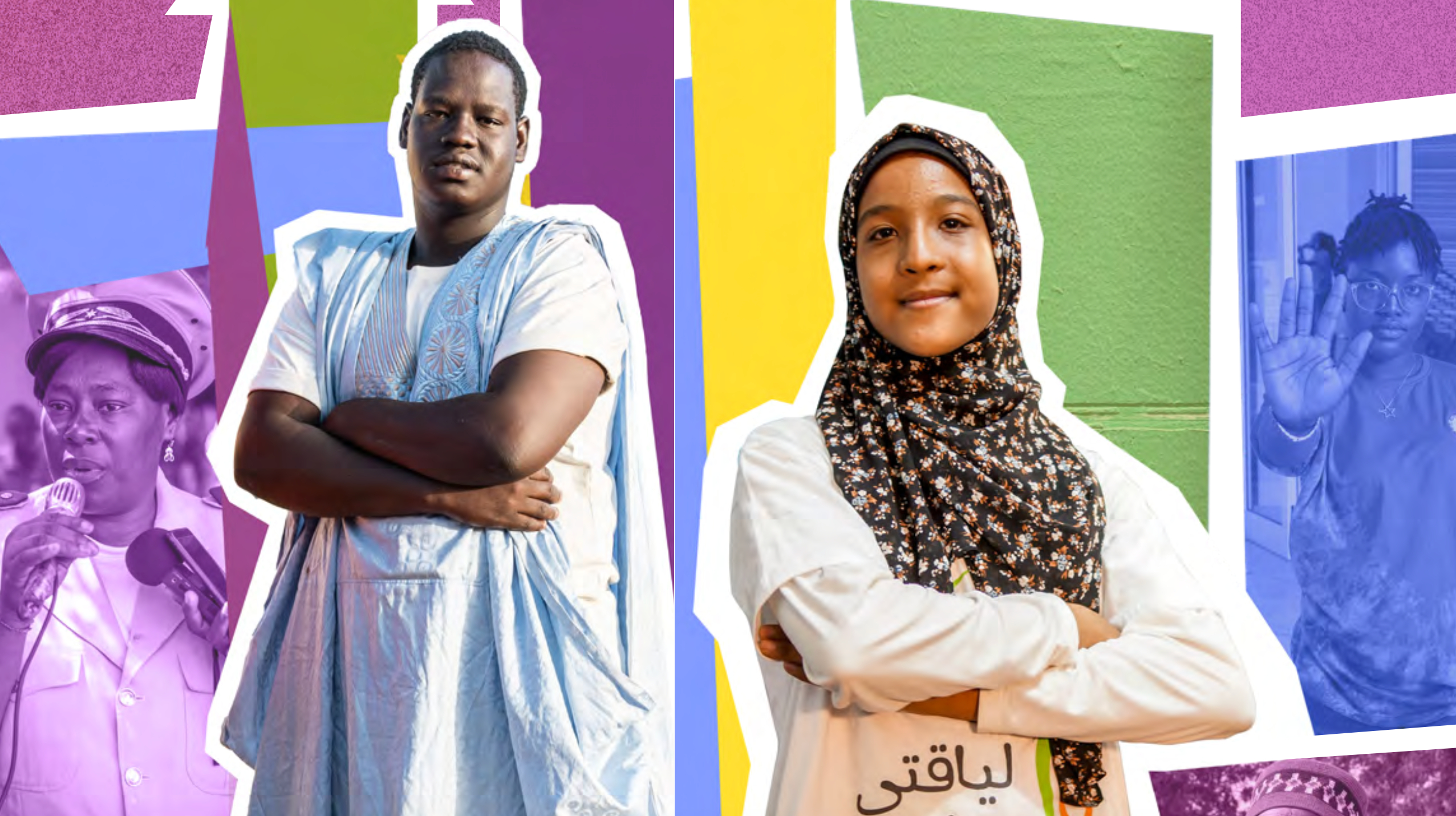
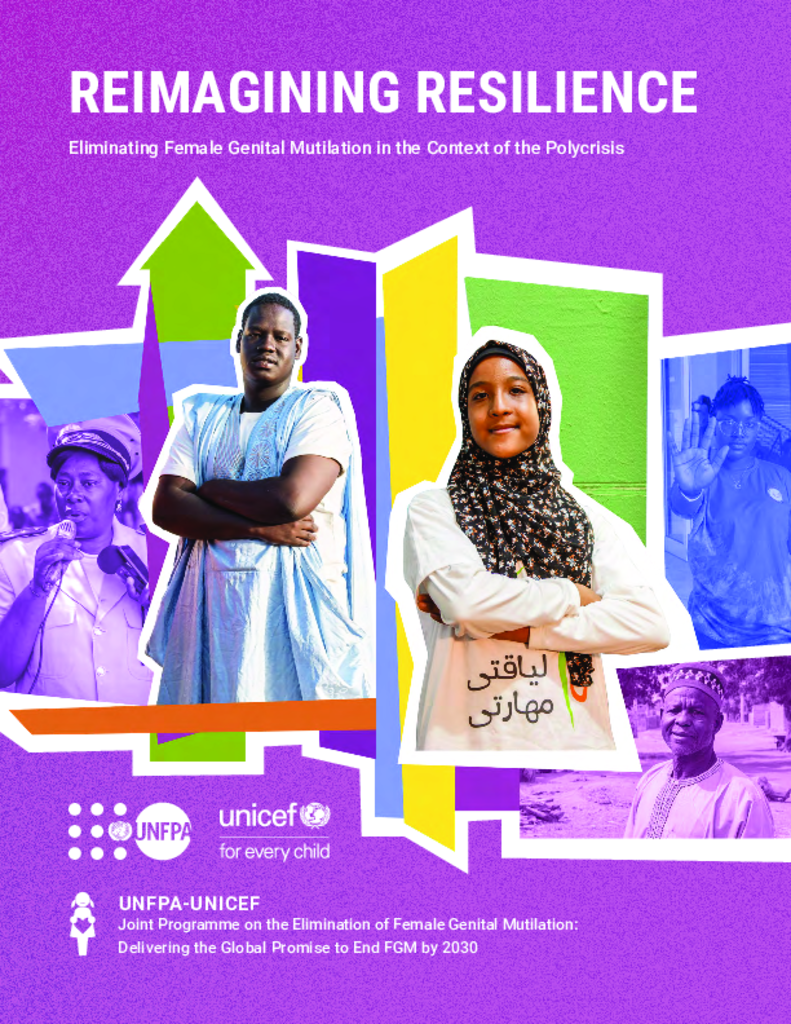
2022 Global Annual Report - Reimagining Resilience: Eliminating Female Genital Mutilation in the Context of the Polycrisis
Select a language to download
In 2022, the UNFPA-UNICEF Joint Programme on the Elimination of Female Genital Mutilation achieved significant milestones. This annual report focuses on "reimagining resilience" to address the impact of the polycrisis on gender equality and women's empowerment. The report highlights the launch of Phase IV (2022-2030) of the Joint Programme, which emphasizes promoting girls' agency, achieving transformative change through social movements, strengthening partnerships with women-led organizations, expanding global influence, and leveraging public-private partnerships for FGM elimination.
Despite challenges posed by the polycrisis, the Joint Programme delivered impressive results across 17 countries. By centering adolescent girls' agency, voice, and leadership, and scaling up partnerships with grassroots women- and youth-led organizations, the Joint Programme furthered its commitment to addressing gender equality and fostering resilience against FGM. Innovation and technology were harnessed to overcome obstacles and develop new solutions to tackle FGM.
Country Profiles


News
Women in Guinea-Bissau speak out against female genital mutilation: “I’m lucky to be alive”
13 September 2023
1
Statement
World will miss target of ending FGM by 2030 without urgent action – including from men and boys
02 February 2023
1
Publisher
UNFPA
Publication date
Jul 2023
Resources
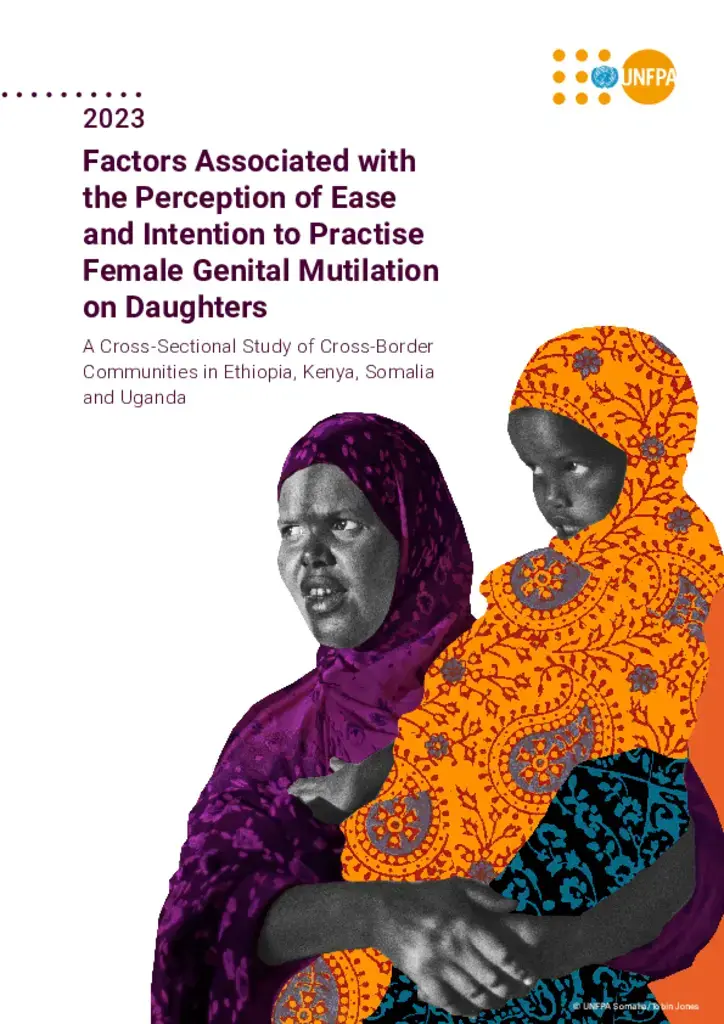
Factors associated with the perception of ease and intention to practice female genital mutilation on daughters: A cross-sectional study of cross-border communities in Ethiopia, Kenya, Somalia, and Uganda
This study addresses cross-border female genital mutilation (FGM) practice, cross-border FGM takes place when communities cross national borders to perform FGM, circumvent laws and avoid prosecution. Using data from a recent cross-border study, this paper aims to identify factors associated with the perception of the ease of cross-border FGM and the intention to perform FGM on daughters and female relatives in the border communities of Ethiopia, Kenya, Somalia and Uganda.