
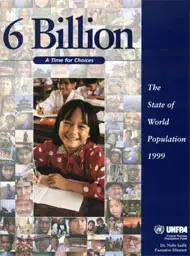
Women are having fewer children than ever before, and population growth has slowed from 2.0 to 1.3 per cent in 30 years. But large families in the recent past mean that there are many more women of childbearing age. Global population is still rising by about 78 million people a year. Half the world is under 25 and there are over a billion young people between 15 and 24, the parents of the next generation.
Publisher
UNFPA
Publication date
Sep 1999
Author
UNFPA
Number of pages
76

State of World Population
State of World Population 1999
6 Billion: A Time for Choices
Publication date
01 January 2000
Author
UNFPA
Number of pages
24
Publication
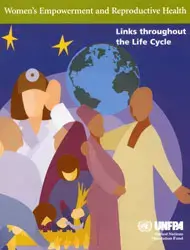
Women’s Empowerment and Reproductive Health
Links Throughout the Life Cycle
After describing the international consensus reached in Beijing about empowering women and ending gender inequality, and defining key human rights concepts, the report examines key issues related to reproductive health and rights that affect women throughout their lives. Topics covered include: Early life chances, The mutual relationship between reproductive health and education, Adolescence and the transition to adulthood, Marriage and the family, Labour force participation and employment, Reproductive health and violence and Issues affecting the health of older women
Publisher
UNFPA
Publication date
01 January 2000
Author
UNFPA
Number of pages
84
State of World Population
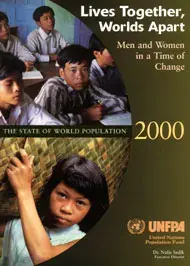
State of World Population 2000
Lives Together, Worlds Apart: Men and Women in a Time of Change
The report examines a broad range of evidence from around the world showing that systematic discrimination against women and girls causes extensive suffering and lost opportunities for both women and men, and holds back efforts to reduce poverty, improve health, stem the spread of HIV/AIDS and slow rapid population growth.
Publisher
UNFPA
Publication date
01 January 2000
Author
UNFPA
Number of pages
196
Publications
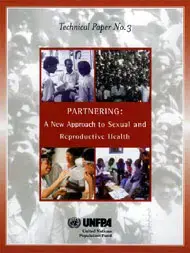
Partnering: A New Approach to Sexual and Reproductive Health
Technical Paper Number 3
"Partnering" shows how a global consensus is emerging on how to scale up successful programmes that involve men without diverting scarce resources from women's health. In fact, men are more and more taking ownership of mobilization and advocacy for the emergence of a more gender equitable young man.
Publication date
01 January 2000
Author
UNFPA, UNICEF, WHO
Number of pages
37
Publication
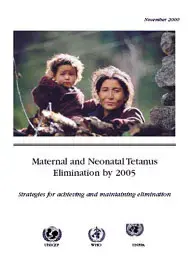
Maternal and Neonatal Tetanus Elimination by 2005
Strategies for Achieving and Maintaining Elimination
These guidelines describe the strategies for achieving elimination of maternal and neonatal tetanus by the year 2005 and, once elimination is achieved, for maintaining it. They are intended for public health managers at the national and distric levels in countries that have not yet reached the goal and for the organizations that provide them with technical assistance. They will also be useful for development partners that are planning financial or other support.
Publisher
WHO
Publication date
01 January 2000
Author
WHO, UNICEF, UNFPA
Number of pages
39
Publications
Maternal Mortality in 2000:
Estimates Developed by WHO, UNICEF and UNFPA
1
Publisher
UNFPA
Publication date
01 January 2013
Author
UNFPA
Number of pages
88
Publications
Financial Resource Flows For Population Activities in 2011
This report is intended to be a tool for donor and developing country Governments, multilateral organizations and agencies, private foundations and NGOs to monitor progress in achieving the financial resource targets agreed to at the ICPD. Development cooperation officers and policy makers in developing countries can use the report to identify the domestically generated resources and complementary resources from donors needed to finance population and reproductive health programmes.
Publication date
01 January 2001
Author
UNFPA
Number of pages
80
State of World Population
State of World Population 2001
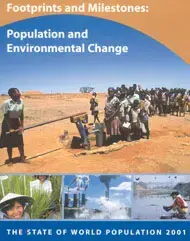
Footprints and Milestones: Population and Environmental Change
Human activity is altering the planet on an unprecedented scale, the report points out. More people are using more resources with more intensity and leaving a bigger "footprint" on the earth than ever before. The report examines the close links between environmental conditions, population trends, and prospects for alleviating poverty in developing countries. It finds that expanding women's opportunities and ensuring their reproductive health and rights are critically important, both to improve the well-being of growing human populations and to protect the natural world.
Publication date
01 January 2001
Author
UNFPA
Number of pages
42
Publication
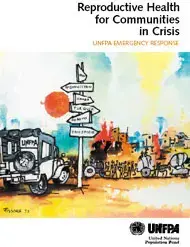
Reproductive Health for Communities in Crisis
UNFPA Emergency Response
Wars or natural disasters deprive people of life-saving reproductive health information and services. This advocacy booklet details UNFPA's work with global partners to respond to the reproductive health needs of refugees and internally displaced persons in crisis situations around the world: providing services to address complications of pregnancy and delivery, the transmission of sexually transmitted infections including HIV/AIDS, adolescent health, violence against women, and access to condoms and other contraceptives.
Publication date
01 January 2001
Author
UNFPA
Number of pages
38
Publication
Reproductive Health Commodity Security:
Partnerships for Change - A Global Call to Action
This document is a response to a call from the international community for UNFPA to take the lead in ensuring reproductive health commodity security (RHCS). It outlines the scope of the issue, identifies required actions at both the global and country levels to ensure RHCS, and proposes specific roles for various partners, from developing country governments to NGOs and the private sector. It also projects contraceptive costs, shortfalls and consequences.