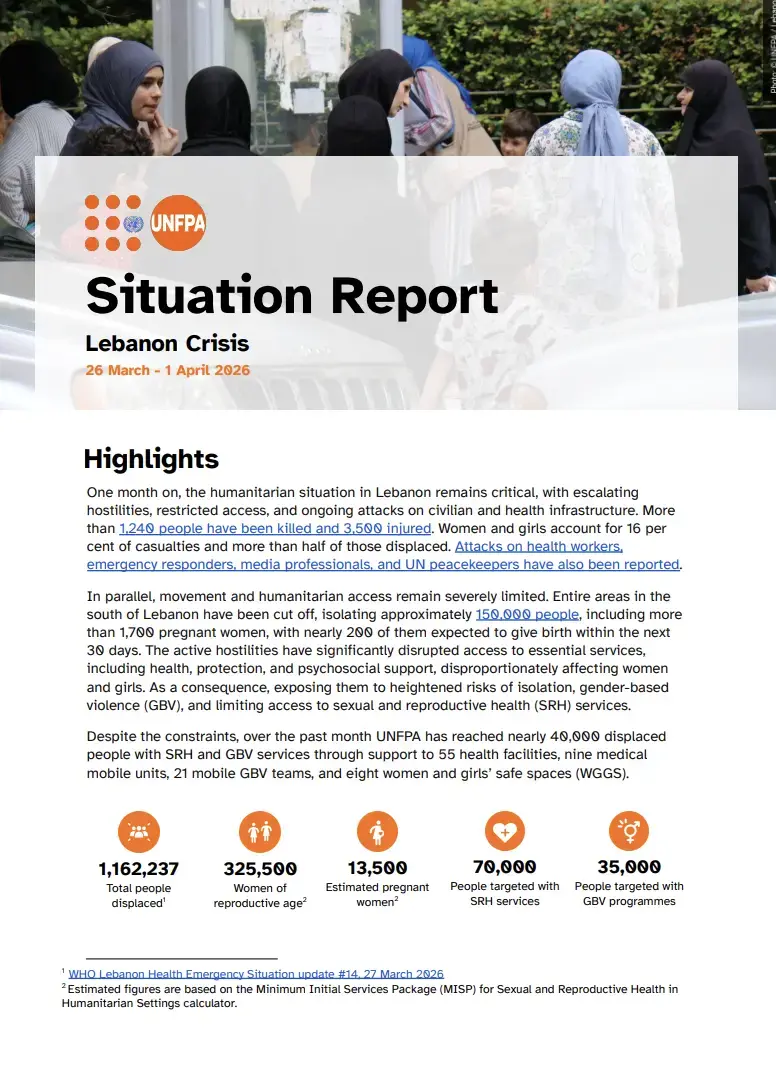

One month into the conflict, the humanitarian situation in Lebanon remains critical. Escalating hostilities, restricted access, and continued attacks on civilian and health infrastructure are driving urgent needs. More than 1,240 people have been killed and 3,500 injured, with women and girls accounting for 16 per cent of casualties.
Approximately 1.2 million people have been displaced, including an estimated 620,000 women and girls—nearly one quarter of the country’s female population. Among them are 325,500 women of reproductive age, of whom around 13,500 are pregnant. An estimated 1,500 are expected to give birth within the next 30 days, underscoring the urgent need for life-saving sexual and reproductive health (SRH) services and supplies.
Currently, 136,156 displaced people are sheltering in 669 collective centres. Overcrowding, disrupted community networks, and prolonged displacement are increasing exposure to gender-based violence (GBV), including intimate partner violence, sexual violence, exploitation, and harassment.
Despite severe constraints, UNFPA has reached nearly 40,000 displaced people over the past month with SRH and GBV services. This has been delivered through support to 55 health facilities, nine mobile medical units, 21 mobile GBV teams, and eight safe spaces for women and girls.
However, UNFPA’s Flash Appeal remains critically underfunded. Only 12 per cent (US$1.5 million) of the US$12 million required has been mobilized to meet the urgent needs of 225,000 people between March and May 2026. This significant funding gap is severely limiting UNFPA’s capacity to sustain the delivery of life-saving SRH and protection services for women and girls.


