
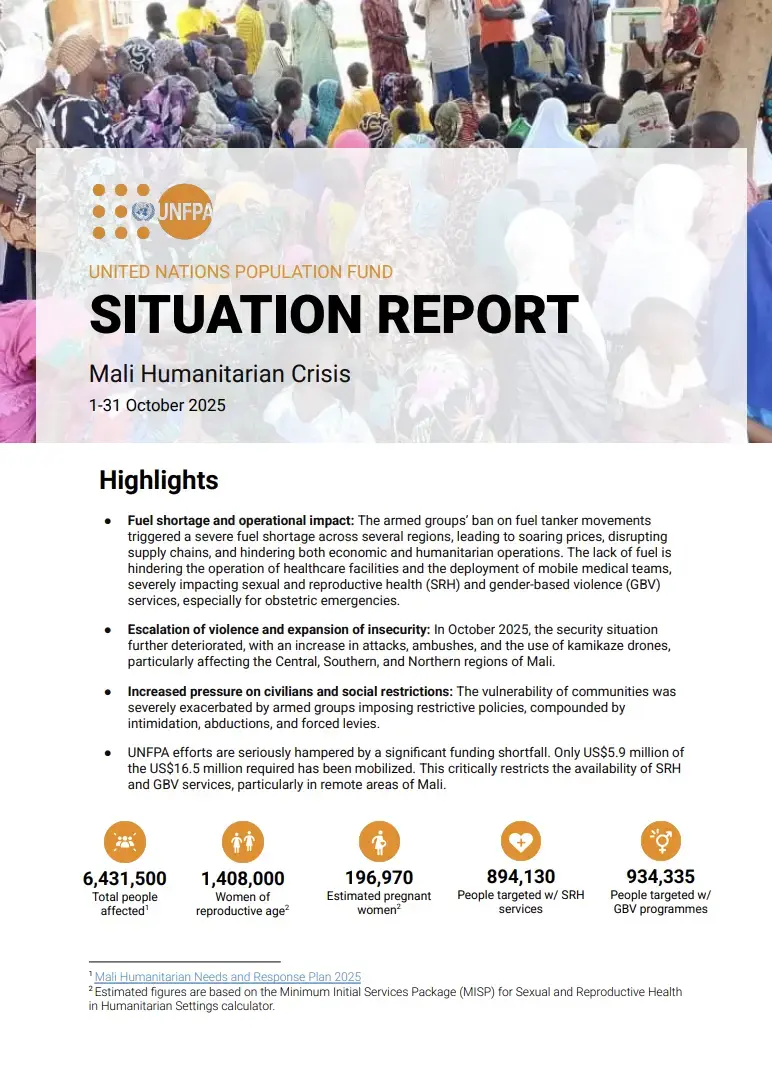

Mali’s humanitarian situation deteriorated sharply in October, driven by a nationwide fuel shortage, escalating violence, and tightening restrictions imposed by armed groups. The ban on fuel tanker movements triggered severe operational paralysis, inflating prices and disrupting supply chains, while increased attacks and intimidation further deepened insecurity across central, southern, and northern regions. These overlapping pressures significantly heightened the vulnerability of civilians, especially women and girls.
Despite these constraints, UNFPA sustained critical sexual and reproductive health (SRH) and gender-based violence (GBV) services through community midwives, mobile teams, safe spaces, and One Stop Centers. These efforts ensured access to antenatal and postnatal care, assisted deliveries, family planning, psychosocial support, and survivor-centered GBV services, reaching thousands of people even as electricity cuts, mobility restrictions, and suspended activities limited coverage in several areas.
However, the response remains gravely underfunded. Only US$5.9 million of the US$16.5 million required has been mobilized, leaving a 64 percent gap that threatens the continuity of life-saving SRH and GBV programmes nationwide. Without urgent resources, essential services for women and girls—including emergency obstetric care, case management, and safe spaces—risk further disruption at a moment when insecurity and access challenges are rapidly intensifying.


