
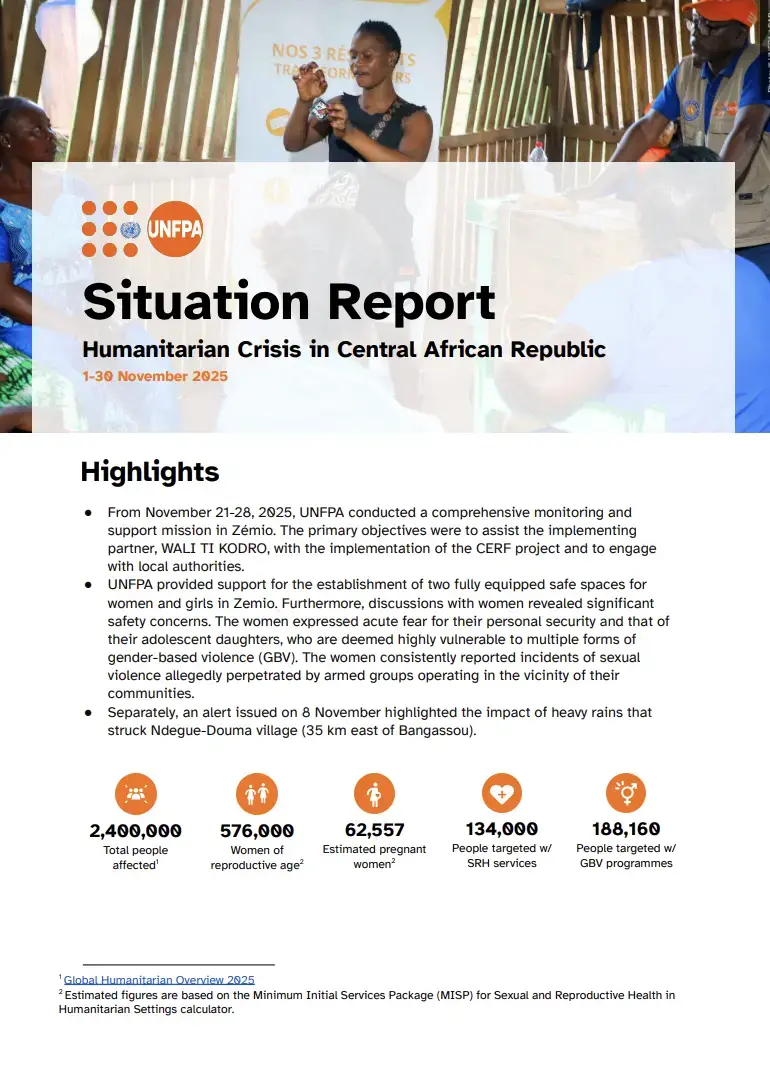

The humanitarian situation in the Central African Republic (CAR) remains fragile, driven by insecurity, localized violence, and climate-related shocks that continue to displace communities and disrupt basic services. Recent flooding and clashes by non-state armed groups have compounded needs, with women and girls disproportionately affected through limited access to sexual and reproductive health (SRH) services and increased exposure to gender-based violence (GBV). An estimated 2.4 million people are affected nationwide, including large numbers of women of reproductive age and pregnant women requiring care.
In response, UNFPA has prioritized the continuity of life-saving SRH and GBV services through a mix of facility-based care, mobile outreach, and community engagement. Health services have focused on maternal care, family planning, clinical management of rape, and psychosocial support, while GBV interventions have expanded access to safe spaces, case management, and prevention activities. Safeguarding and accountability were also strengthened through training on the prevention of sexual exploitation and abuse and psychological first aid, alongside support to decentralized coordination in highly affected areas.
In 2025, UNFPA requires US$16.6 million to meet urgent SRH and GBV needs in CAR, but as of November, only US$7.5 million had been secured, leaving a 55 per cent funding gap. Without additional resources, the continuity and scale of essential services for women and girls remain at serious risk.


