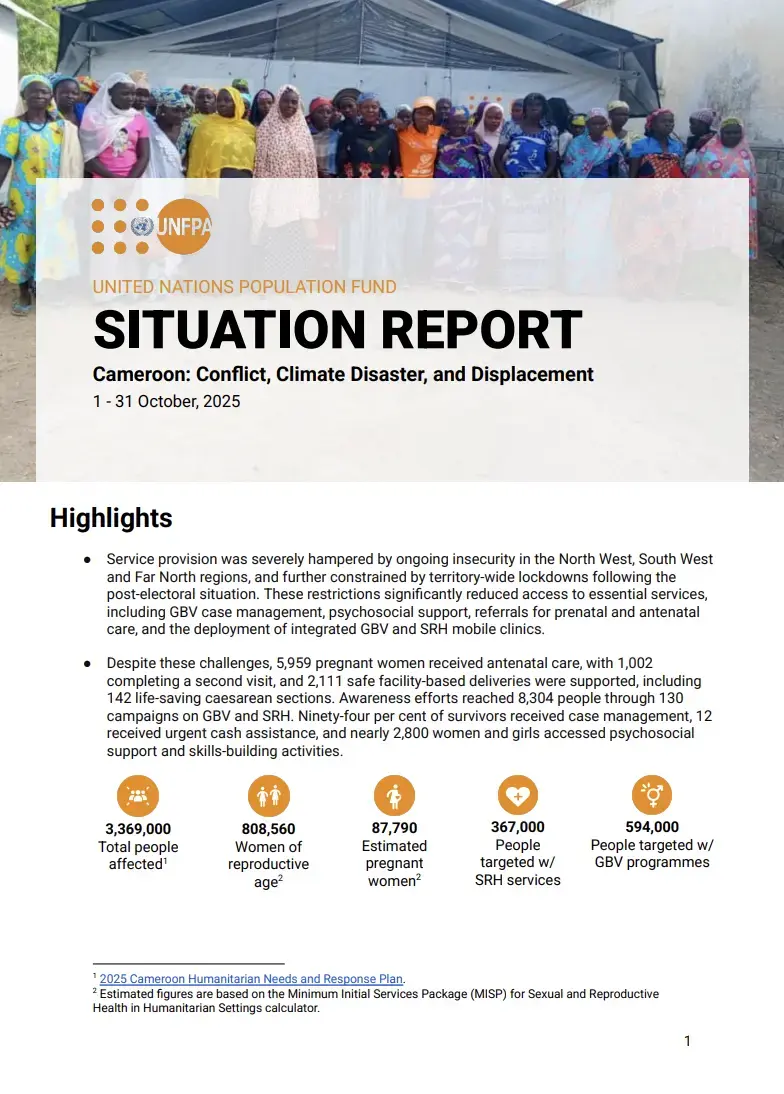

Cameroon’s humanitarian needs intensified in October as insecurity in the North West, South West, and Far North regions, combined with country-wide lockdowns following the post-electoral crisis, severely restricted movement and access to services. These disruptions limited gender-based violence (GBV) case management, psychosocial support, and antenatal and prenatal care, while also constraining the deployment of integrated mobile clinics. The broader instability has degraded civilian safety and heightened protection risks for women and girls.
Despite these constraints, UNFPA and partners sustained essential sexual and reproductive health (SRH) and GBV services. Nearly 6,000 pregnant women accessed antenatal care, over 2,100 facility-based deliveries were supported — including 142 life-saving caesarean sections — and 8,304 people were reached with GBV and SRH awareness campaigns. Almost all GBV survivors received case management, and close to 2,800 women and girls engaged in psychosocial support and skills-building activities, while youth dialogues and community preparedness sessions strengthened social cohesion and resilience.
However, critical funding gaps threaten the continuity of these services. As of October, only US$3.5 million of the US$9 million required had been secured, leaving a 61 percent shortfall. This lack of resources directly compromises access to life-saving SRH and GBV assistance and places thousands of vulnerable women and girls at heightened risk, particularly in areas affected by conflict, displacement, and climate shocks.


