
Primary tabs
Previous Executive Directors
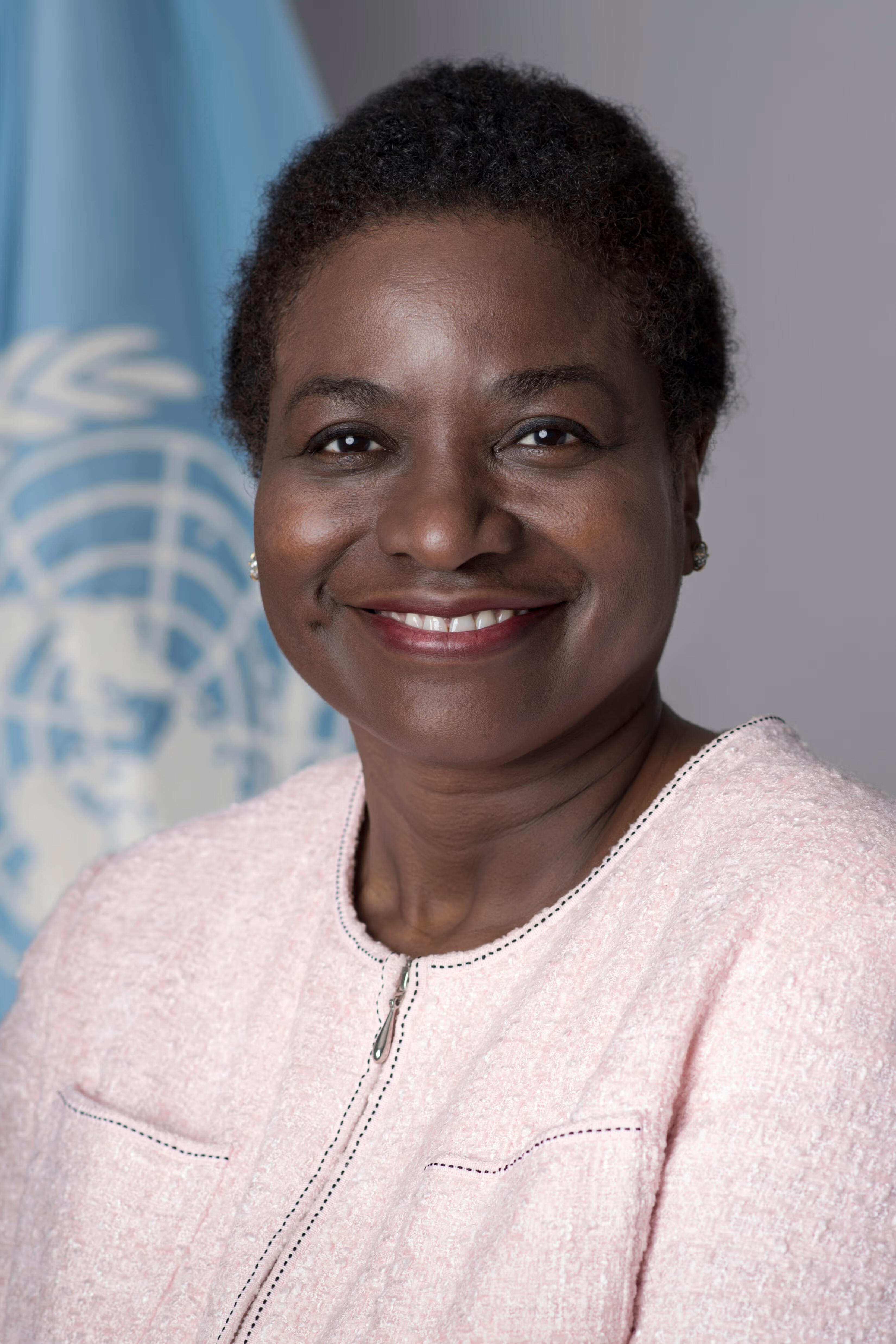
Dr. Natalia Kanem
Appointed by UN Secretary-General António Guterres, Dr. Natalia Kanem served as Executive Director of UNFPA from October 2017 to July 2025, bringing decades of strategic leadership in preventive medicine, public and reproductive health, social justice and philanthropy.
Dr. Kanem began her research career in academia with the Johns Hopkins and Columbia University schools of medicine and public health. She joined UNFPA in 2014 as Country Representative in the United Republic of Tanzania and in 2016 was named Deputy Executive Director in charge of programmes. Previously Dr. Kanem served as founding president of ELMA Philanthropies Inc., a philanthropic institution focusing on Africa’s children and youth, and as a senior associate of the Lloyd Best Institute of the West Indies.
At the Ford Foundation from 1992 to 2004, she funded pioneering work on women’s reproductive health and human rights, serving first in West Africa and eventually as Deputy Vice-President for peace and social justice programmes in Africa, Asia, Eastern Europe, Latin America and North America.
Dr. Kanem holds a medical degree from Columbia University and a master’s degree in public health with specializations in epidemiology and preventive medicine from the University of Washington. She is a magna cum laude graduate of Harvard University in history and science.
In 2019, Dr. Kanem presided over the Nairobi Summit on ICPD25, which marked the 25th anniversary of the International Conference on Population and Development. Named on the 2019 Gender Equality Top 100 list by Apolitical, an online platform for global public servants and policymakers, Dr. Kanem is recognized for her leadership in advocating for the rights and choices of women and girls, and as one of the most influential people in formulating global policy on sexual and reproductive health and rights in the Sustainable Development Goals era.
Dr. Babatunde Osotimehin
(6 February 1949–4 June 2017)
Appointed by UN Secretary-General Ban Ki-moon, Dr. Babatunde Osotimehin served as Executive Director of UNFPA from January 2011 until his death in June 2017. A physician and global leader in the areas of public health and the empowerment of women and young people, he placed a strong emphasis on promoting human rights in population and development.
He understood that the world’s largest-ever cohort of young people were its greatest hope and that enabling them — and adolescent girls in particular — to exercise their human rights and achieve their full potential was key to sustained economic growth and sustainable development. He advocated globally for countries to seize the opportunity of the demographic dividend for accelerated development, calling for increased investment in young people’s employment, education and health, including their sexual and reproductive health.
Dr. Osotimehin completed his medical studies at the University of Ibadan, Nigeria, in 1972 and received a doctorate in medicine from the University of Birmingham, United Kingdom, in 1979. He was named Professor at the University of Ibadan in 1980 and headed the Department of Clinical Pathology before being elected Provost of the College of Medicine in 1990.
Before becoming UNFPA’s Executive Director, he served as Nigeria’s Minister of Health and as the Director-General of the National Agency for the Control of HIV and AIDS, which coordinates all HIV/AIDS work in Nigeria.
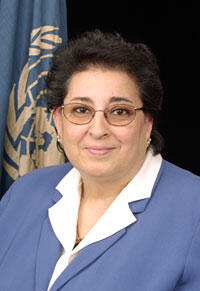
Thoraya Ahmed Obaid
Appointed by UN Secretary-General Kofi Annan, Thoraya Ahmed Obaid served as Executive Director of UNFPA from January 2001 through December 2010, becoming the first Saudi Arabian to head a UN agency.
Ms. Obaid had a long and distinguished career at the UN: She worked for the Economic and Social Commission for Western Asia from 1975 to 1998, where she rose to the rank of Deputy Executive Secretary. In 1998, she moved to UNFPA as Director of the then-Division for Arab States and Europe, holding that position until 2001, when she became Executive Director.
Ms. Obaid was the first Saudi Arabian woman to receive a government scholarship to a university in the United States, in 1963. She has a doctorate in English literature and cultural anthropology from Wayne State University and a B.A. in English literature and sociology from Mills College.
Ms. Obaid has received many awards and honours. She was ranked among the 50 Most Powerful Arab Women by Forbes magazine in 2004. She is also profiled as one of 100 Muslim Builders of World Civilization and Culture in Notable Muslims, a book published in Oxford, England, in 2006.
Throughout her life, Ms. Obaid has championed the causes of health and empowerment for women and young people. She has focused on supporting governments to establish programmes to empower women and develop their capacities as citizens with rights and responsibilities. She has also emphasized the importance of promoting development through a culturally sensitive approach, working within the context of each society, taking into consideration cultural values and religious beliefs that shape people and their actions. As UNFPA’s Executive Director, she introduced a focus on culture to the agency’s development work, linking gender and universal values of human rights and human worth promoted by all religions in all cultures.
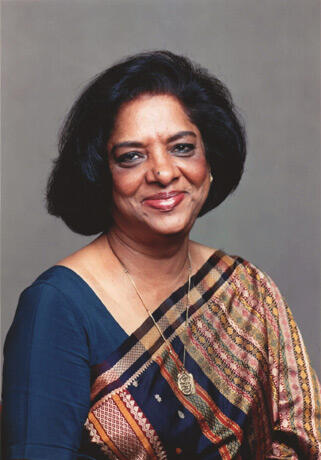
Dr. Nafis Sadik
(18 August 1929–14 August 2022)
Appointed by UN Secretary-General Javier Pérez de Cuéllar, Dr. Nafis Sadik served as Executive Director of UNFPA from April 1987 through December 2000, becoming the first woman to head one of the UN’s major voluntarily funded programmes.
After retiring from UNFPA, she served as Special Adviser to the UN Secretary-General and as his Special Envoy for HIV/AIDS in Asia and the Pacific.
Throughout her life, Dr. Sadik called attention to the importance of addressing the needs of women, and of involving women directly in making and carrying out development policy. This is particularly important for population policies and programmes.
In June 1990, she was appointed as Secretary-General of the International Conference on Population and Development. Dr Sadik said of the landmark 1994 conference: “When the essential needs of the individual are addressed, those of larger groups – the family, the community, the nation and indeed the planet – are more likely to be kept in the right perspective. One of the challenges to the conference is to find the balance between individual rights and responsibilities on the one hand, and the rights and obligations of the wider society on the other.”
A national of Pakistan, Dr. Sadik was born in Jaunpur, India, the daughter of Iffat Ara and Mohammad Shoaib. Her contribution to improving the health of the world’s women and children brought her many international awards and honours.
She was a member of the Board of Governors of the Foundation for Human Development and a member of the South Asian Commission on the Asian Challenge. She served as President of the Society for International Development from 1994 to 1997.
Dr. Sadik wrote numerous articles for leading publications about family planning, health, and population and development, and edited several books. Among them: Population: The UNFPA Experience (New York University Press, 1984), Population Policies and Programmes: Lessons Learned from Two Decades of Experience (New York University Press, 1991) and Making a Difference: Twenty-five Years of UNFPA Experience (Banson, London, United Kingdom, 1994).
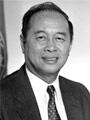
Rafael Montinola Salas
(7 August 1928–3 March 1987)
Rafael Montinola Salas was the first Executive Director of UNFPA, heading the agency from the time it became operational in 1969 until his death in March 1987. Under his leadership, UNFPA grew from a small trust fund into the world’s largest multilateral provider of population assistance.
Mr. Salas was a pioneer in the field of population. Indeed, he was one of its first true international advocates, conveying to others the importance of understanding the crucial links between population and development and the need to take population factors into account in development planning.
Born in Bago, Negros Occidental, in the Philippines, he graduated with high honours from the University of the Philippines in 1950, completing his B.A. (magna cum laude) and LL.B (cum laude) in 1953. He then attended Harvard University, where he obtained a master’s in public administration in 1955. Upon graduation, he returned to the University of the Philippines, where he held a variety of academic positions until 1966.
In 1966, Mr. Salas was called on to serve his country as Executive Secretary of the Republic of the Philippines under then-President Ferdinand E. Marcos. During his tenure as Executive Secretary, he was credited with solving the country’s annual rice production problem as action officer of the National Rice Sufficiency Programme.
From 1962 to 1969, Mr. Salas was a member of various Philippines delegations to international conferences, including the UN General Assembly. He headed the Philippines delegation to and served as Vice-President of the International Conference on Human Rights, held in Tehran in April and May of 1968. It is the conference that proclaimed: “Parents have a basic human right to determine freely and responsibly the number and the spacing of their children.”
Mr. Salas stepped down as his country’s Executive Secretary in 1969 when he began his post as UNFPA’s first Executive Director. Over the years, he received many honorary degrees and academic awards from around the world for his work and dedication in the field of population. His efforts to create global awareness and consensus about the importance of population to social and economic development earned him the title of “Mr. Population” by the international community. He also contributed a huge body of literature on government management and population issues to scholarly journals, magazines and newspapers.
To honour his legacy, UNFPA established the Rafael M. Salas Memorial Lecture series, providing a unique forum for distinguished guest lecturers to discuss important aspects of population and development.


