
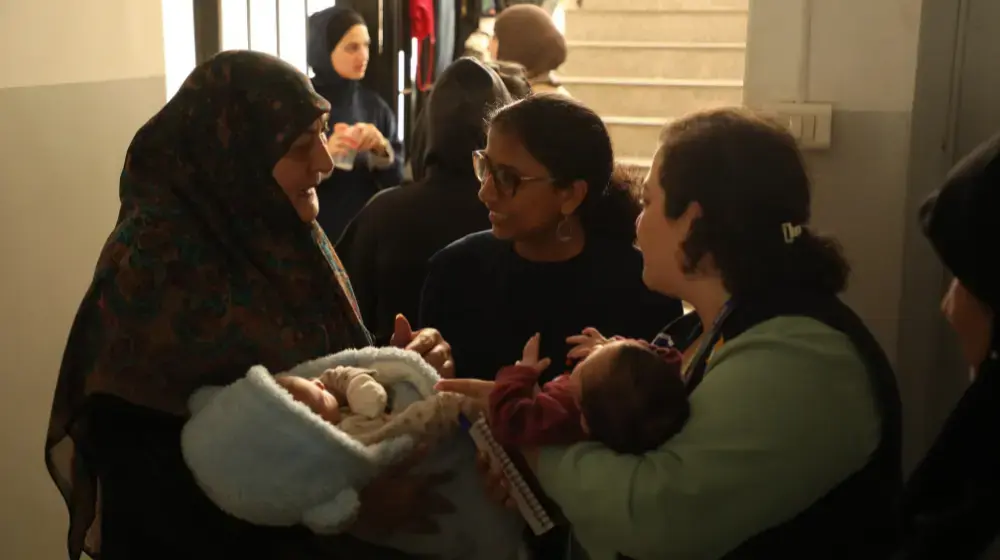
BEIRUT, Lebanon – At just four days old, Ali is sheltering at the Lebanese University in Beirut. His mother, Hawraa, was heavily pregnant and preparing his nursery when she had to flee her home under an evacuation order from Israeli forces.
“I lost contact with my doctor and had no [backup] plan,” she told UNFPA, the United Nations Population Fund, which is the UN’s sexual and reproductive health agency. “All this while trying to process the weight of displacement and losing our home.”
Through its partner organization AMEL, UNFPA provided her with prenatal care, a referral to a hospital to give birth, and the essential supplies she sorely needed as a new mother, such as nappies, bottles and personal hygiene items.
After 12 hours of labour, Ali was born. “All I want to do now is protect him and make sure he is safe and healthy,” said Harwaa.
After a month of escalating hostilities across the Middle East, more than 1.2 million people in Lebanon – including an estimated 13,500 pregnant women – have so far been forced from their homes. As health and protection needs surge, UNFPA is working with the government and local partners to rapidly scale up its support for displaced people and the communities hosting them.
“All I want to do now is protect him” – Hawraa
A growing health crisis
Ali’s cousin Fatima was two days old when her family wrapped her in a blanket and drove to Beirut from their home in Blida, a village near the border with Israel. They too sought refuge at the university, along with over 600 other people crammed into a four-floor space with only two functioning bathrooms.
Fatima, Ali and their mothers now sleep on mattresses on the ground, in rooms shared with several other families. There is only one window, no shower, scarce water and a communal bathroom that is impossible to keep clean.
“My back is breaking, but it’s the fear of her getting an infection that keeps me awake at night” – Sanaa
“The bathrooms are awful”, said Sanaa*, who tried to clean up overflowing sewage with buckets and shovels. After fleeing her home for the second time in two years, she is sheltering at the university and volunteering with a group to manage sanitation needs. “One bathroom is for about six rooms, and each room has about six children. We have newborns, five-month-olds, one-year-olds, and they can fall sick. So hygiene supplies are very important.”
For people with a disability, the challenges are multiplied; many are seeking refuge outside, as there are very few accessible shelters, and all are at full capacity.
Nada* has two adult daughters with disabilities, one of whom is in a wheelchair. “I have to change her in a corner with a thin sheet for a wall, praying no one looks,” Nada told UNFPA. “It’s not just the war outside that’s hurting her – it’s the shame she’s forced to feel inside.”
"Every time she needs the bathroom, my heart sinks. The floor is wet, the stalls are narrow, and I’m lifting a grown woman while trying not to slip. My back is breaking, but it’s the fear of her getting an infection that keeps me awake at night.”
Midwives are crucial first responders
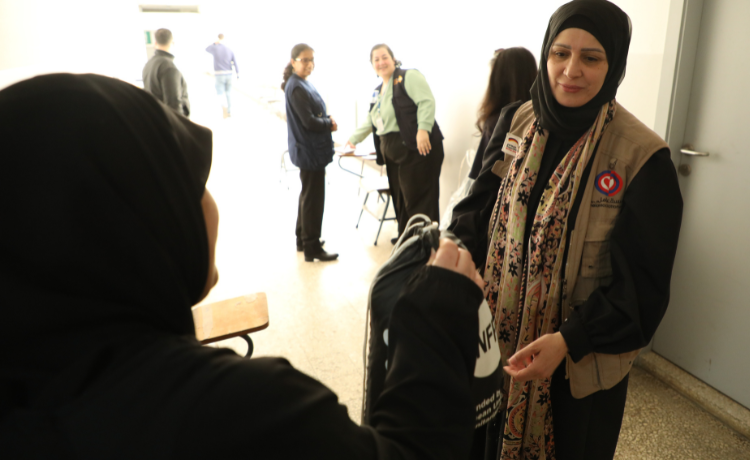
UNFPA-supported midwife Ahlam spends much of her time helping pregnant women and new mothers to adjust their hygiene and self-care habits to these dire conditions.
But she has noticed a concerning trend: To avoid the communal toilets, women are drinking less water, leaving them dehydrated and prone to urinary tract infections. “When there is no water to wash clothes and no clean underwear to change into, the risk of fungal infections increases. And infections are especially risky during pregnancy,” she explained.
Midwives are particularly valuable in times of crisis, not only as life-saving first responders, but because they are deeply embedded in their communities. Maguy Ghanem, a sexual and reproductive health specialist with UNFPA in Lebanon explained, “This rootedness gives them access to the most vulnerable and hard-to-reach members of their communities. They inhabit a more intimate sphere than most doctors or hospital nurses.”
Midwives also usually have strong connections with local leaders and health centres, allowing them to quickly obtain information about, and for, those most in need of help.
To avoid the communal toilets, women are drinking less water, leaving them dehydrated and prone to urinary tract infections.
UNFPA responding across the board
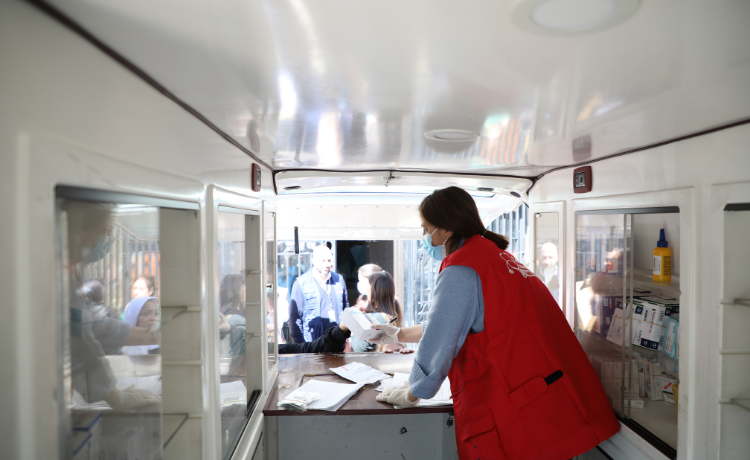
UNFPA has deployed nine mobile health units across Lebanon to provide maternal care and emergency obstetric support in collective shelters. UNFPA is also ensuring clinical management of rape, providing psychosocial support, and distributing dignity kits containing hygiene and menstrual supplies, as well as baby kits of essentials for pregnant women and new mothers.
But disruptions to major global transport routes are delaying the delivery of life-saving health supplies for women and girls in multiple crises. In response, UNFPA is working with partners to map alternative routes, reroute inbound shipments and reposition critical supplies.
Adding to the risks, half of UNFPA-supported facilities in conflict-affected areas have been forced to close due to the violence, and many health workers have been displaced, leaving the remaining services severely shortstaffed. Attacks on health facilities, ambulances and humanitarian workers continue to rise, including two hospitals supported by UNFPA.
*Names changed for privacy and protection


