
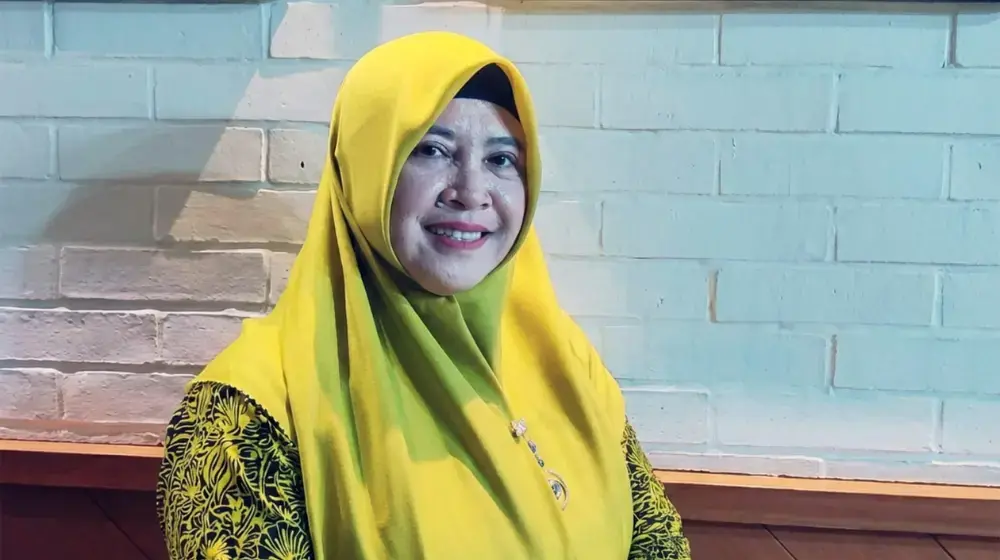
BREBES/SERANG/GARUT, Indonesia – “Inclusivity is not a luxury,” said Rita, a counsellor who works with women and children in need of protection in Serang, on the island of Java in Indonesia. “It is a necessity.”
But gender-based violence protection and support services didn’t always reach or accommodate persons with disabilities or survivors from other marginalized communities – not because front-line service providers intended to exclude people, but because they didn’t have the training to address these survivors’ specific needs.
Rita described one recent, challenging case involving an adolescent girl with a hearing impairment who had survived sexual violence. Coordinating and responding to her case felt like navigating through fog, said Rita.
The girl’s pain was palpable, yet her words remained just out of reach because communicating with her about this sensitive and harrowing experience required time, patience and specialized support.
Fortunately, Rita and her colleagues had recently attended a training with Women at the Centre, a project led by UNFPA – the United Nations Population Fund, which is the sexual and reproductive health agency of the UN.
Centring women’s needs
Women at the Centre aims to improve gender-based violence prevention and response services among counsellors, case managers and other front-line professionals across the country. It is currently strengthening case management systems through professional training and development in El Salvador, Indonesia, Madagascar and Zimbabwe.
The global programme – supported by Takeda Pharmaceutical Company Ltd. – has already made a world of difference. In Indonesia alone, more than 1,200 people have been reached with training, dignity kits and case management services in the last three years.
“Before the training, uncertainties like these were often filled with assumptions,” Rita explained. “But now, we have learned to slow down, observe and think critically.”
Her team used drawings, gestures, written prompts, and long, gentle pauses to provide the support the girl needed. And they’re making sure to build on their experiences for the benefit of future survivors.
Irma, who leads the response team, explained that their team of only four women serve all 29 sub-districts in Serang: “With the high number of cases and limited resources, we ensure that every record we make is not merely administration in case management – it becomes a source of learning and a guide for the recovery steps of the next survivor.”
“We’ve learned to slow down, observe and think critically” – Rita

Coordinating care
The Women at the Centre programme has also helped case managers coordinate care, from various service providers to family members and survivors themselves.
Firman, in the district of Brebes, spoke about a young woman with disabilities whose family hesitated to seek services for the gender-based violence she had experienced. This situation is all too common, with families and communities often concerned that formally reporting violence will lead to stigma.
Women and girls with disabilities are particularly vulnerable to gender-based violence, and are up to 10 times more likely to experience sexual violence compared to those without disabilities.
Location matters, as well. The family came from a remote village, where transportation to services was a challenge.
“We arranged transport, coordinated with the hospital and psychologists, and helped the family understand why reporting mattered,” Firman recalled.

Firman’s work extends beyond hospital visits and counselling. He also helps persons with disabilities access specialized care, such as prosthetic limbs.
This support requires tailoring to the needs of each individual. “Access and empathy must go together,” he said.
“Structure protects survivors. It also protects us.”
Today, Indonesia’s Ministry of Women’s Empowerment and Child Protection and Ministry of Social Affairs are working with UNFPA to develop new certification programmes. These will include trainings like the one conducted by Women and the Centre, as well as structured supervision, mentoring, and engagement in a national community of practice.

“Structure protects survivors” – Ifa
The goal is for all front-line responders to have a clear, structured pathway to follow — from intake and assessment to intervention, monitoring and closure. Each case will be documented, tracked and managed – collaboratively with police, hospitals, psychologists and others.
At the Social Affairs Office in Brebes, Ifa explained how these new practices have transformed her work: “Before, we worked in silos. We used to overlap cases. No one knew exactly who was responsible for what,” she said. “Now we understand our roles. We coordinate with those who share the same vision, and in the end, we move as one team.”.
She paused, then added, “Structure protects survivors. It also protects us, helping us respond more strategically and consistently.


