1
Immersion dans les cliniques mobiles qui sauvent des vies en République démocratique du Congo
Le camp de Bulengo, près de la ville de Goma, dans le Nord-Kivu, abrite plus de 120 000 personnes.
© UNFPA RDC/Junior Mayindu

06 Septembre 2023
Actualités
En dépit des obstacles : résilience, espoir et accouchements sans danger dans une clinique mobile de l’UNFPA en République démocratique du Congo
31 Août 2023
Actualités
« Elle était parfois désespérée » : en République démocratique du Congo, les survivantes de violences sexuelles trouvent l’apaisement auprès des équipes de première ligne de l’UNFPA
18 Août 2023
1
Actualités
La violence sexuelle poursuit les femmes et les filles fuyant le Soudan pour le Soudan du Sud
24 Juillet 2023
1
Actualités
Grand succès à Nyarugusu : comment l’un des plus grands camps de réfugié·e·s au monde a réussi à comptabiliser zéro décès maternel en 2022
10 Avril 2023
1
Actualités
Les naissances ne s’arrêtent pas pendant les crises : l’accouchement d’une femme à Madagascar en plein cyclone Freddy
13 Avril 2023
1
Actualités
« Sanad est leur bouée de sauvetage » : au cœur d’un espace d’accueil sécurisé de l’UNFPA en Égypte pour les femmes ayant fui le conflit au Soudan
19 Juin 2023
1
Actualités
Redonner espoir, reconstruire des vies : un jour dans la vie d’un chirurgien de la fistule en Zambie
26 Mai 2023
1
Diaporama
Accoucher pendant un cyclone tropical
01 Mai 2023
1/13
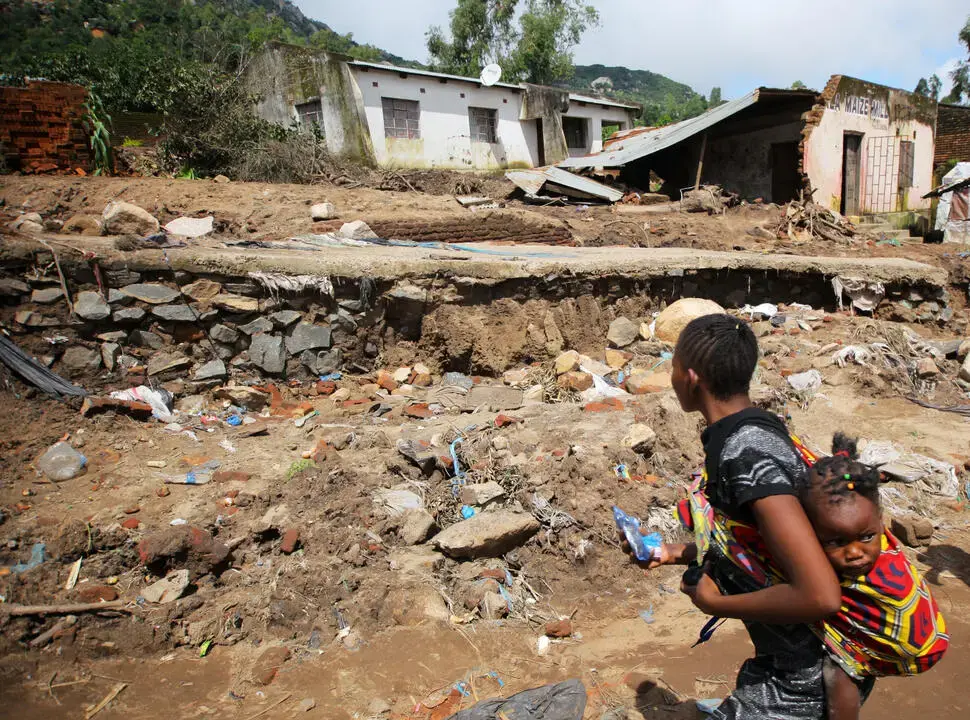
When Tropical Cyclone Freddy slammed into Madagascar, Mozambique and Malawi, 32,000 pregnant women were due to give birth within the coming weeks.
The destruction of homes, health facilities and travel routes during the cyclone – which continued for weeks in February and March – made childbirth much more perilous.
Around 5,000 of the women could expect to experience complications in their final months of pregnancy or during childbirth, which, without access to skilled care, could prove fatal.
A climate crisis is an obstetric emergency.
[Pictured above] A young woman and child walk past damaged houses in the Chilobwe township of Blantyre, Malawi, after Tropical Cyclone Freddy hit. © UNFPA Malawi/Eldson Chagara
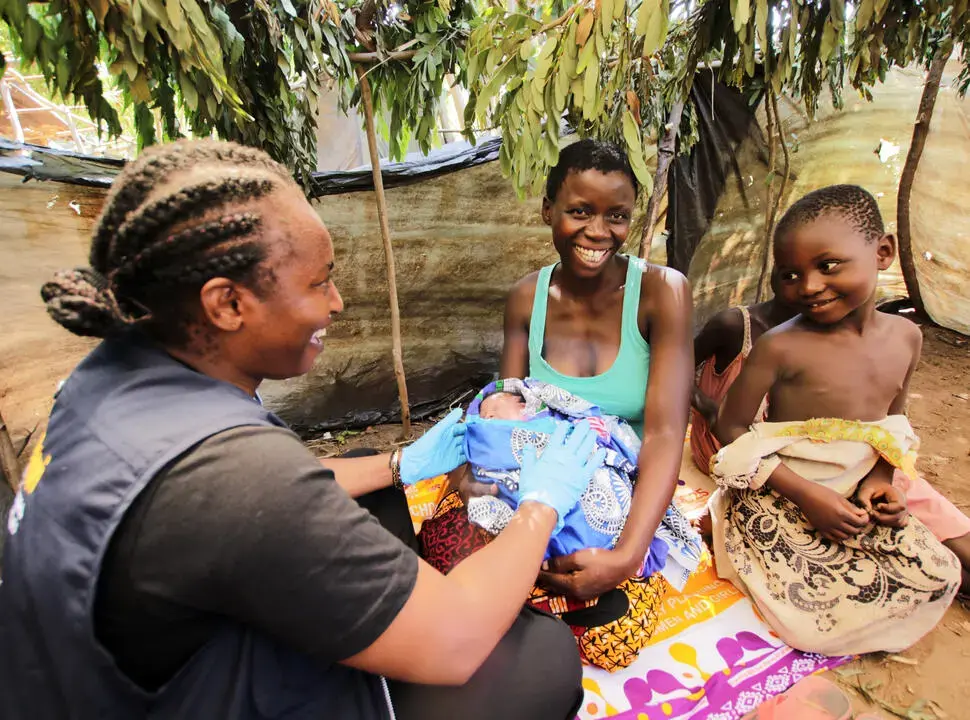
Eliza, 30, was nine months pregnant when the cyclone battered the city of Nsanje in Malawi, the country hardest hit by the storm.
“At first, it started as mere drizzle, but suddenly the intensity grew and it started pouring down in sheets,” she recalls. “I heard a huge thud from outside and immediately knew that part of the wall had collapsed.”
Eliza and her family left home and sought shelter at a makeshift camp, which had no running water. There, she went into labour.
Fortunately, despite disruptions to travel and services, an ambulance managed to make its way to her. “I arrived at the hospital around 10 p.m. At around 2 a.m., I gave birth to a baby girl,” says Eliza, now a mother of four.
[Pictured above] Eliza's newborn receives a checkup from Fainess Yobe, a UNFPA technical officer and a trained midwife and nurse. © UNFPA Malawi/Eldson Chagara
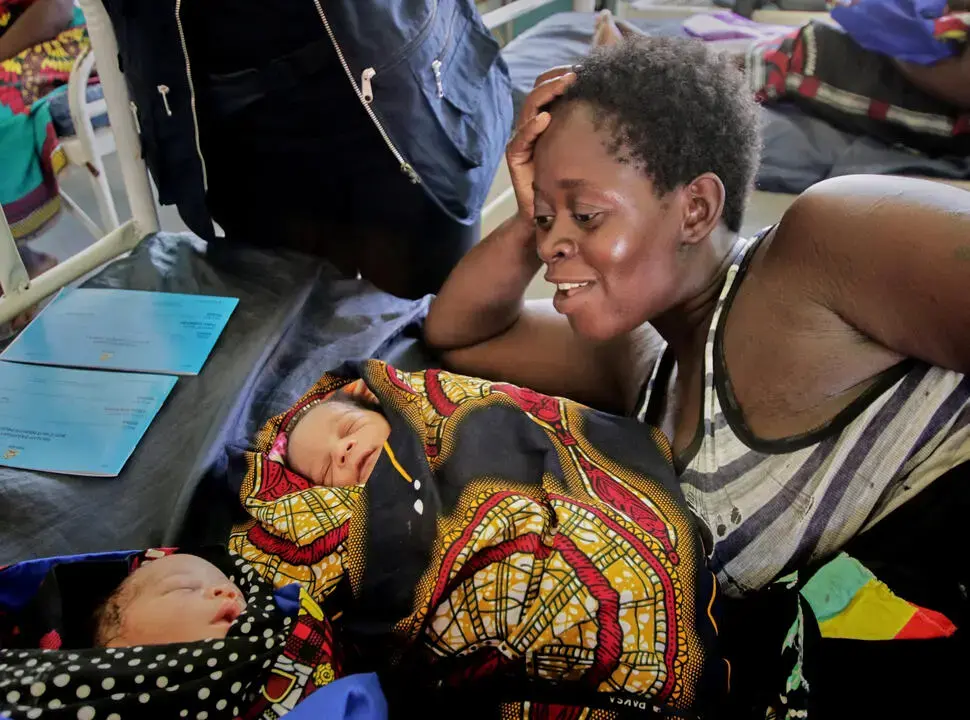
After a two-hour ambulance journey, Mercy, 37, gave birth to healthy twin boys, also in the city of Nsanje.
Mercy had been planning to deliver at her nearest health centre in Ndamera, but the electricity supply had been cut off by the storm.
“It was exciting and a bit scary at the same time,” she says, describing how it felt to learn she was having twins. “I am so grateful that I had a safe delivery. I don’t know what could have happened if the ambulance didn’t come in time.”
[Pictured above] Mercy at the maternity ward with her twin boys. © UNFPA Malawi/Eldson Chagara
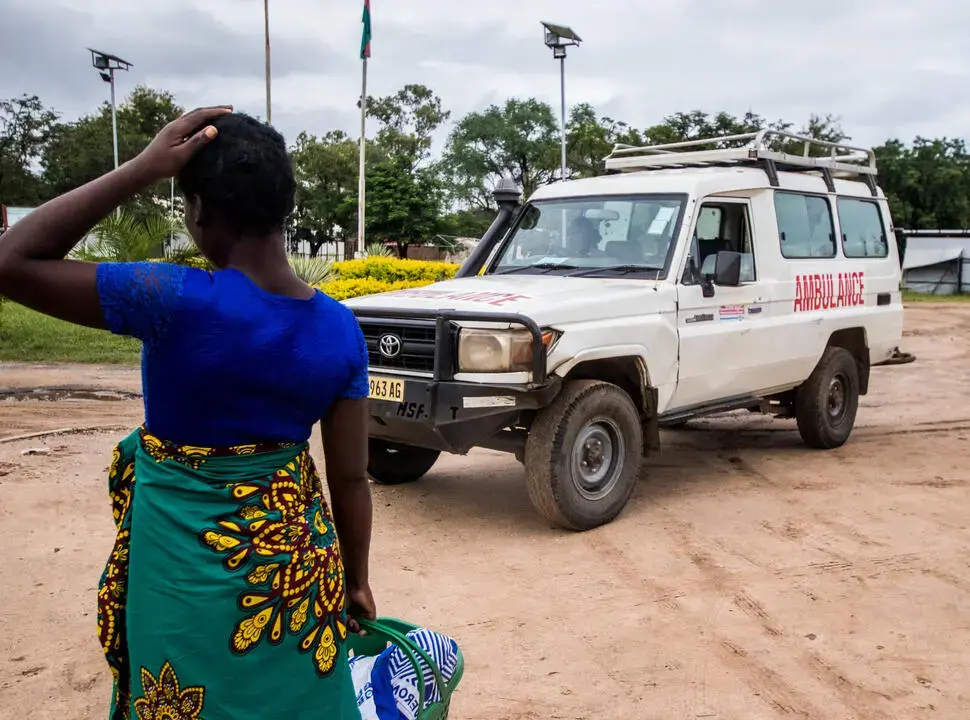
Thanks to recent repairs of four ambulances, both Eliza and Mercy were able to make it to the hospital to deliver.
The repairs were supported by UNFPA in order to meet an increase in demand in the wake of the storm.
A staggering 87 health facilities were damaged in Malawi during the cyclone. The closure of local clinics means more emergency journeys.
[Pictured above] UNFPA supported the repair of four ambulances in southern Malawi. © UNFPA Malawi/Eldson Chagara
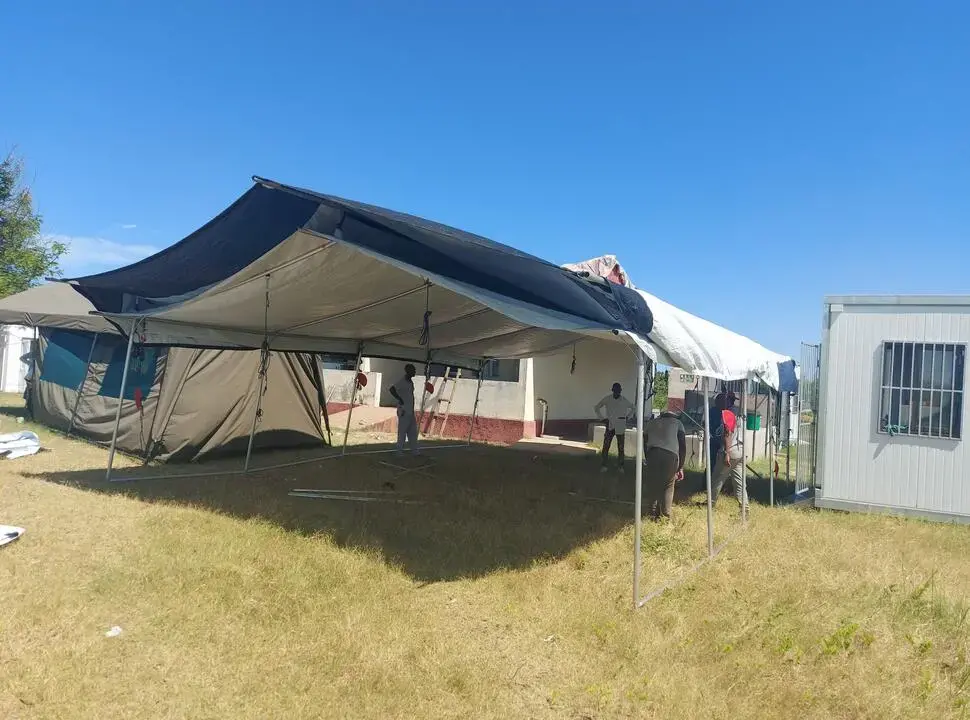
In the Zambezia province of Mozambique, where many local facilities have been damaged or destroyed, UNFPA installed temporary health facilities in six tents, including maternity wards.
Here, staff members are dealing with a triple crisis for thousands of pregnant women – cyclone, flood, and a cholera outbreak, which increases the risk of stillbirth.
“Managing cholera cases in pregnancy is very difficult because you need to prevent and treat both cholera and obstetric complications,” says Dr. Marilena Urso, a UNFPA maternal health specialist. “Time is of the essence, as healthcare providers must immediately intervene while monitoring fetal well-being and preventing the spread of cholera itself.”
[Pictured above] UNFPA tents being erected in Zambezia following storm damage. © UNFPA Mozambique/Helder Xavier
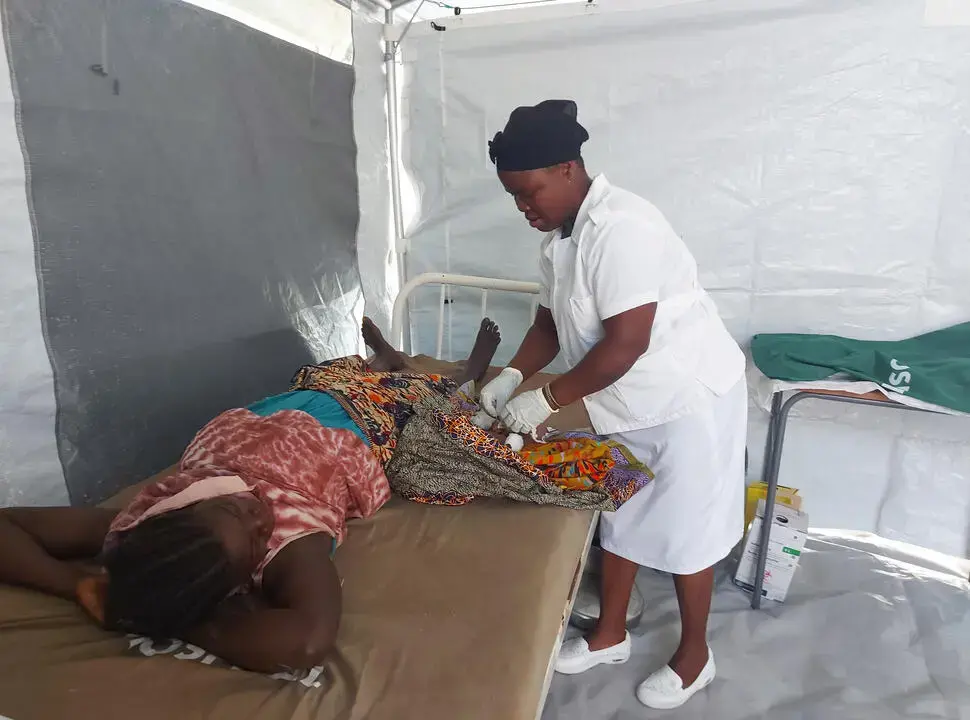
The first patients to be treated inside the new tents were Diana, 23, and her newborn baby.
Diana had given birth at home, but the following day the UNFPA tents opened, allowing her and her newborn son to receive postnatal care from skilled workers.
“Fortunately, mother and baby are in good health,” says nurse Lica Estevão, who provided assistance.
[Pictured above] Diana and her baby received postnatal care at a medical centre temporarily operating out of a tent. © UNFPA Mozambique/Helder Xavier
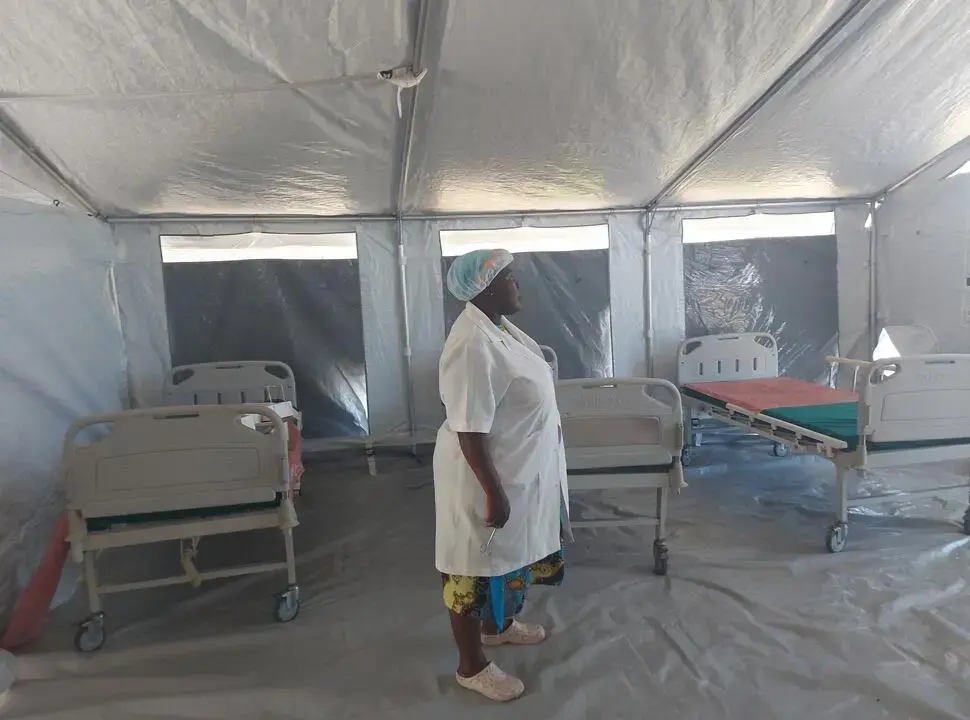
Rosana Henriques, a nurse in the city of Quelimane in Zambezia, describes the new tents as a “breath of fresh air.”
She explains that previously, there was a lack of privacy, as the storm damage had forced her team to work out of a single room in their facility. In the tent where she now works, there is a separate room for the maternity ward, giving people some space.\
[Pictured above] Rosana stands in a newly erected tent where women can give birth with the support of skilled staff. © UNFPA Mozambique/Helder Xavier
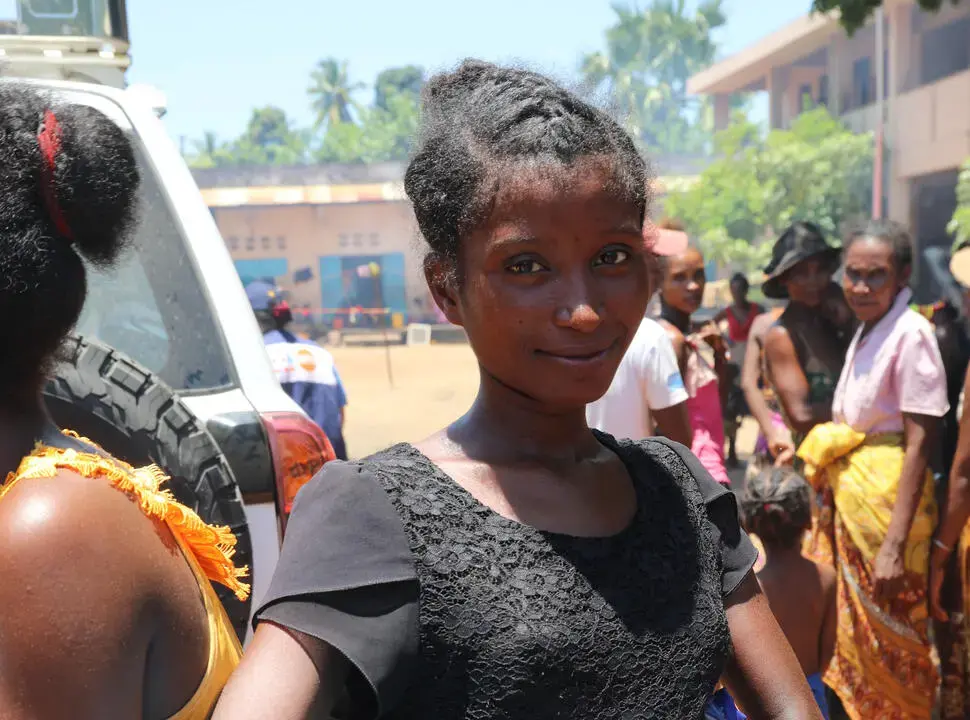
When Cyclone Freddy arrived in Madagascar, the country was busy recovering from another devastating storm – Cyclone Cheneso – which had hit a month earlier, in January.
Sadify, 18, was eight months pregnant when the first cyclone hit.
“The rain fell for more than a week,” recalls Sadify, who received UNFPA support at a temporary site after being forced to leave home amid the crisis.
[Pictured above] Sadify received UNFPA support following Cyclone Cheneso. © UNFPA Madagascar/ Hanta Andremanisa
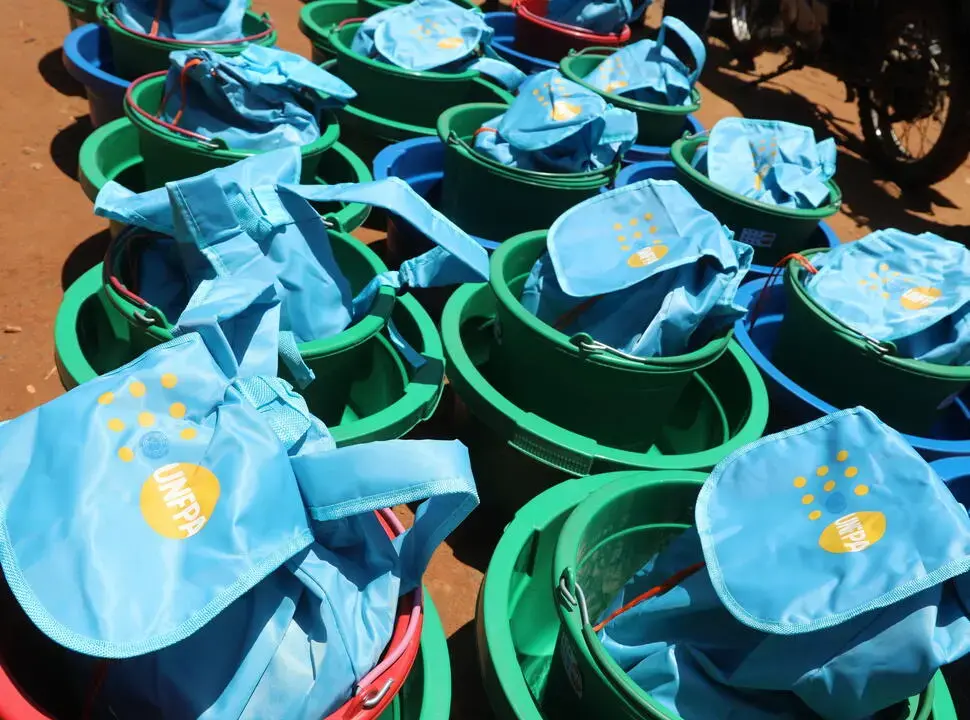
Part of UNFPA’s initial emergency response involves providing dignity and childbirth kits that include health and hygiene supplies to meet the most immediate of needs.
Sadify was unable to pack many belongings when she left her home after Cyclone Cheneso. “This kit that I just received will help us bounce back and better prepare for the arrival of our baby,” she says.
Dignity kits contain hygiene and washing items, a flashlight, a towel and a basin, while childbirth kits contain a plastic bag for the placenta, an umbilical cord tie, gauze tissue, a pair of disposable examination gloves and a razor blade and supplies for midwives.
[Pictured above] Dignity kits help meet the immediate needs of women and girls following a crisis. © UNFPA Madagascar/ Hanta Andremanisa
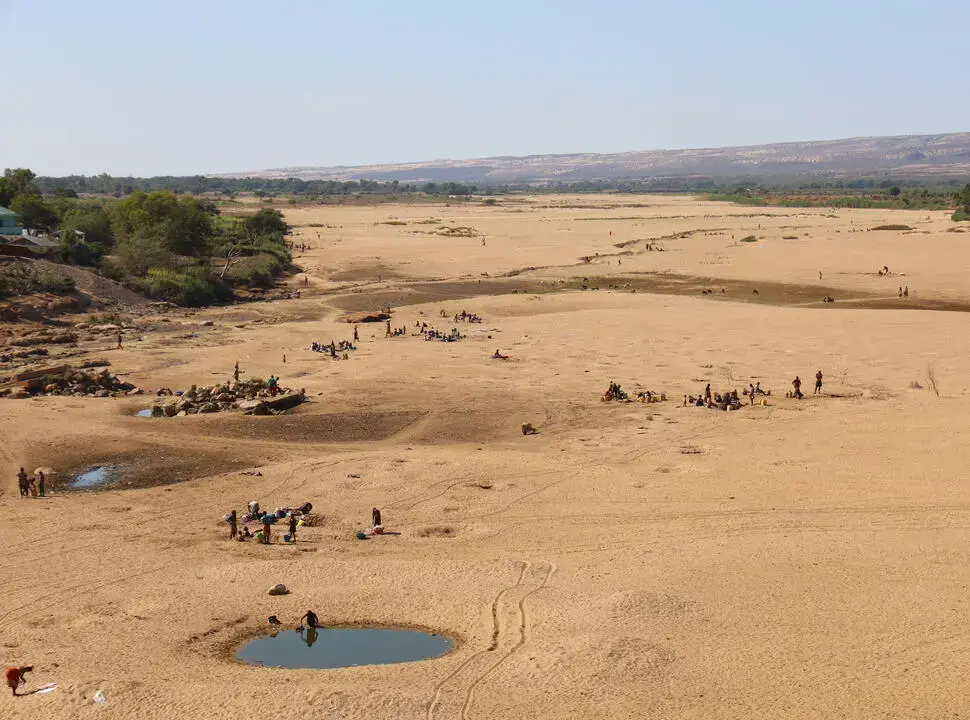
November to April is considered the cyclone season for East and Southern Africa – but cyclones are just one element of the region’s significant climate challenges.
The drought in Madagascar’s Grand Sud region, considered the worst in 40 years, has been going on since 2018. More than 70 per cent of the country’s land is used for agriculture, and cyclones, floods and drought have all caused food shortages.
Whether there’s too much water or not enough, there is an impact on women and girls’ sexual and reproductive health and rights – and their safety. During a crisis, incidences of gender-based violence increase, while at the same time, access to essential services is impeded. UNFPA works to close this gap and to provide support and safe spaces for women and girls.
[Pictured above] The drought in Madagascar’s Grand Sud region has been going on since 2018. © UNFPA Madagascar/Melvis Kimbi
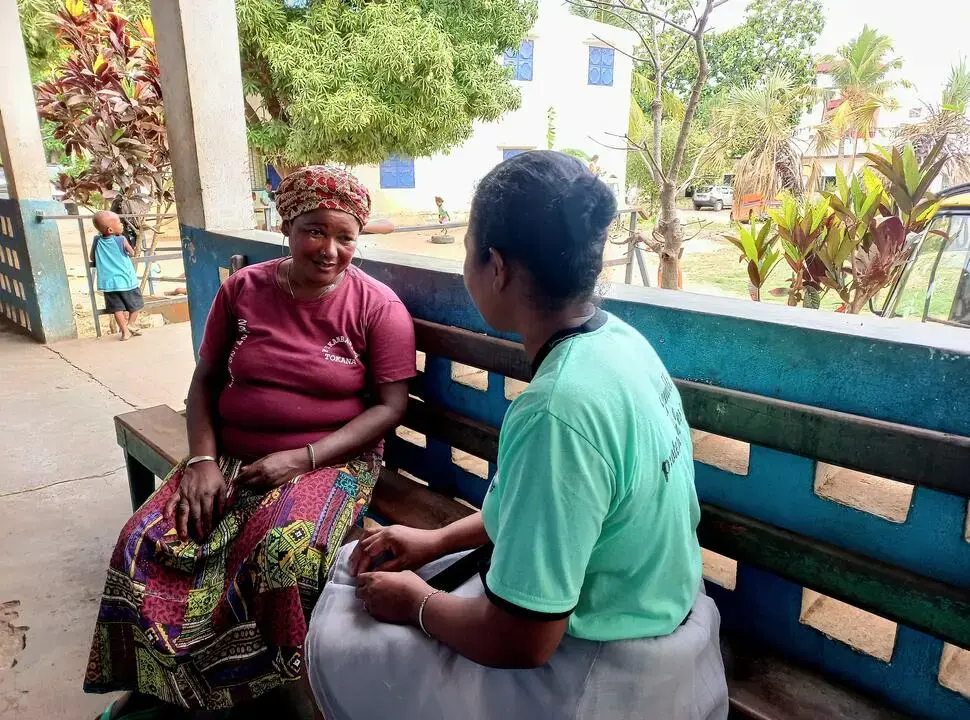
Amid a crisis, it’s also crucial that family planning services remain accessible so that women are in control of their reproductive decisions.
For Pela Judith, 25, being able to choose not to have more children is one way to cope with the climate crisis in Madagascar.
“The droughts have changed many things. Now everything has become expensive,” she says. “I am not even able to feed my four children, so giving birth to another child is not in my plans anymore.”
[Pictured above] Pela Judith explains how the Grand Sud drought has changed her family planning decisions. © UNFPA Madagascar/ Hanta Andremanisa
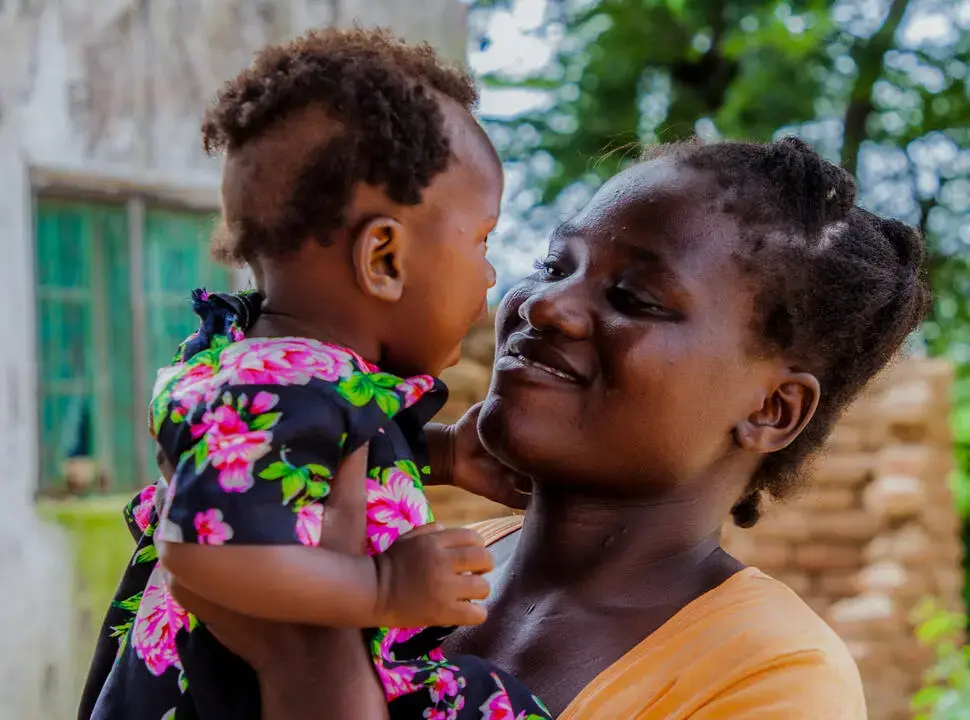
After being uprooted by Cyclone Ana in 2022 in Malawi, Monica, who was six months pregnant with daughter Rehana at the time, is also using family planning services amid the crisis.
“We made the hard decision to abandon our land, which was owned by the family for generations,” she says. “The Cyclone Ana experience was a close shave with death, and we knew that next time, we wouldn’t be that lucky if we didn’t move.”
Monica accessed pre- and post-natal and sexual and reproductive health services supported by UNFPA. She opted for a contraception method that helps her plan her life around the crisis: “I got a five-year family planning method. This will allow us to raise our three children well and also to rebuild our lives.”
[Pictured above] Monica with daughter Rehana in the village of Jambo in Bangula, Malawi. © UNFPA Malawi/Eldson Chagara
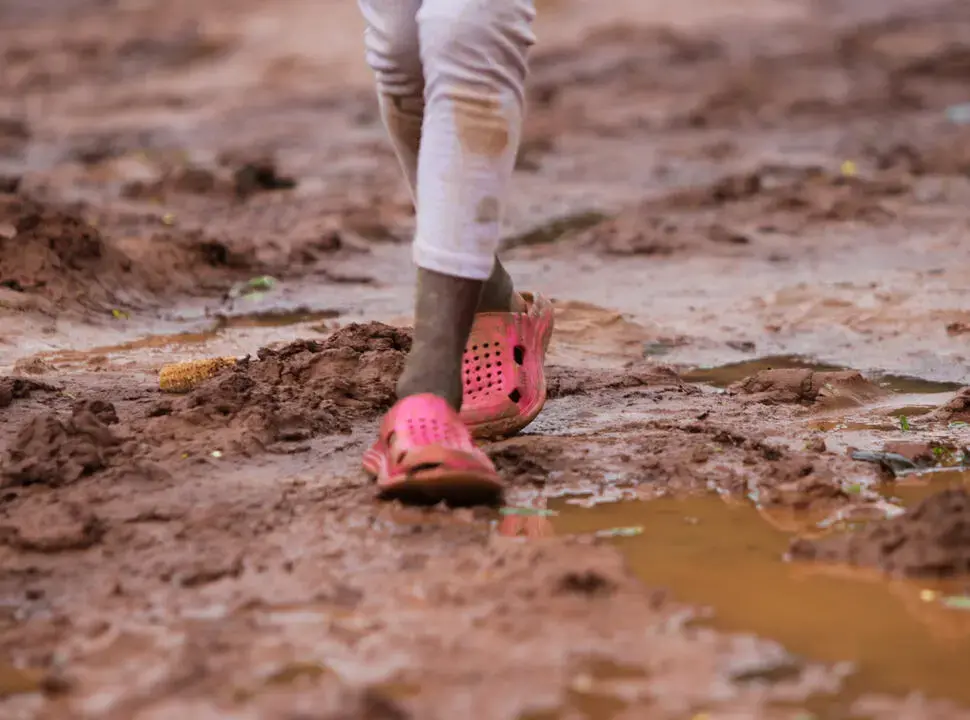
UNFPA and its partners aim to provide sustained support for women and girls throughout a crisis.
We are also working toward long-term change, so that women and young people – those most affected by the climate crisis – can design solutions, and essential health services can continue to provide life-saving care.
[Pictured above] A young girl walks on waterlogged ground at a temporary camp following Cyclone Freddy in Blantyre, Malawi. © UNFPA Malawi/Eldson Chagara
Sujets associés
Diaporama
Motos, hôpitaux mobiles et jeunes mamans : répondre aux besoins immenses des femmes et des filles de la Corne de l’Afrique
22 Mai 2023
1/13
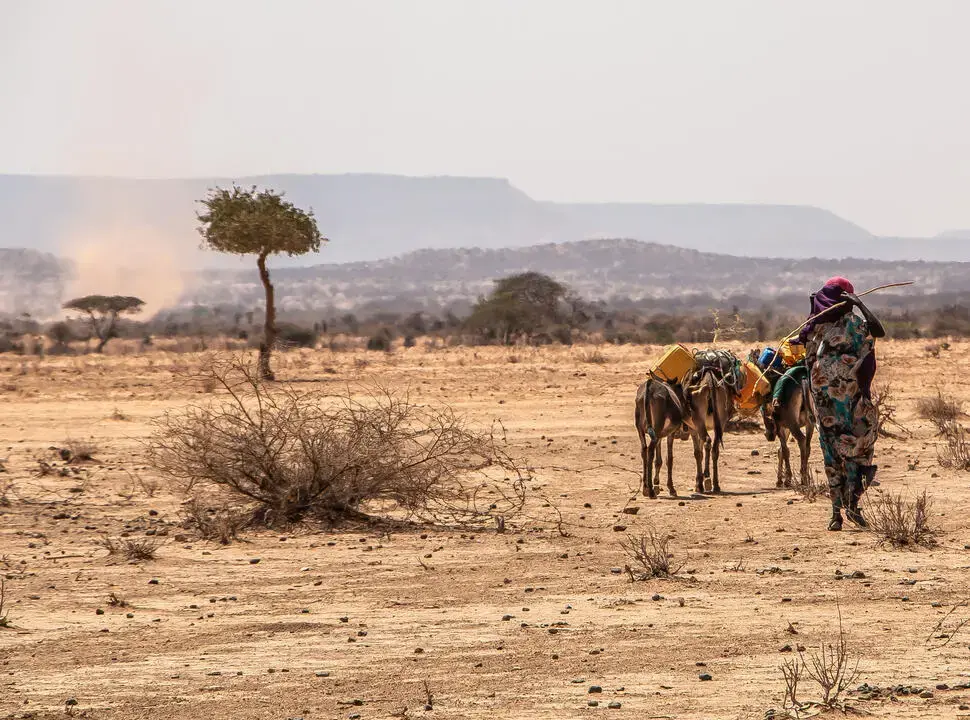
The extent of the Horn of Africa crisis is difficult to conceive. The region is experiencing its worst drought in more than 40 years.
The number of people affected is startling, the needs are immense, and the response is woefully inadequate. Failed crops and water shortages, compounded by conflict in the region and beyond, have led to food scarcity and rocketing prices. Millions of people from Somalia, Ethiopia and Kenya are struggling to survive, with many people leaving their homes each day, forced to seek safety and resources.
Recent heavy rain and flash flooding have caused further displacement and destruction. While the rains are important for human and livestock survival, recovery from six consecutive seasons of poor rainfall will take time.
[Pictured above] A woman guides donkeys carrying jerry cans on the outskirts of the Gabi'as informal settlement in Ethiopia. © UNFPA/Paula Seijo
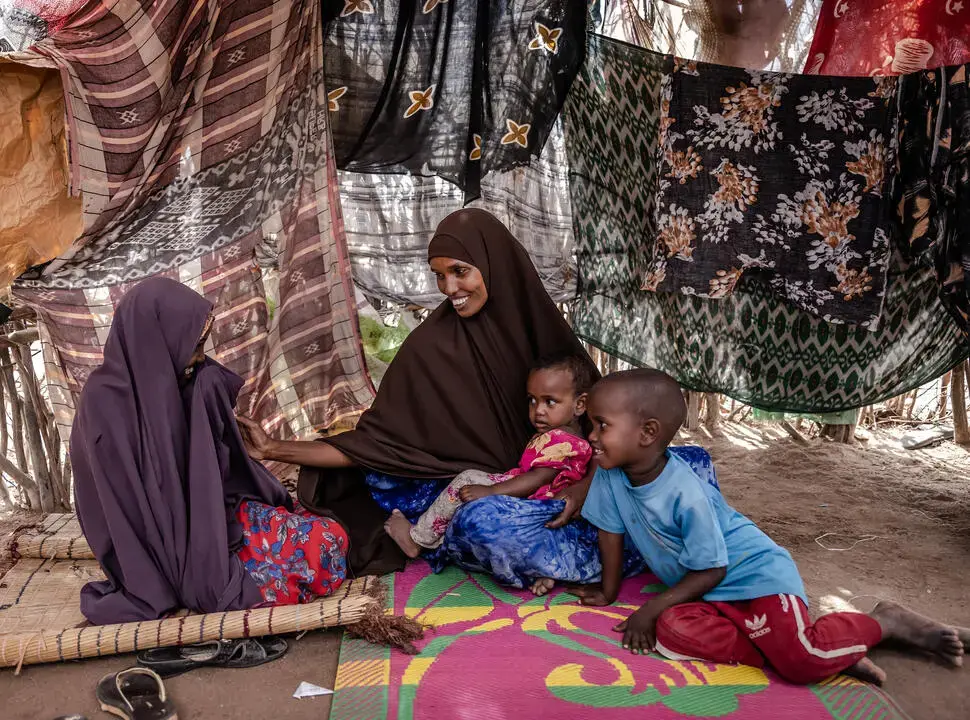
“It breaks my heart to see my kids hungry and thirsty,” says Fatuma, 30, a mother of four.
“Drought has come with a lot of problems for us. Water is scarce, and we can only have one meal per day.”
[Pictured above] Fatuma and her children, in the hut where they live in the village of Garsen in Garissa County, Kenya, do not have enough to eat or drink. © UNFPA/Luis Tato
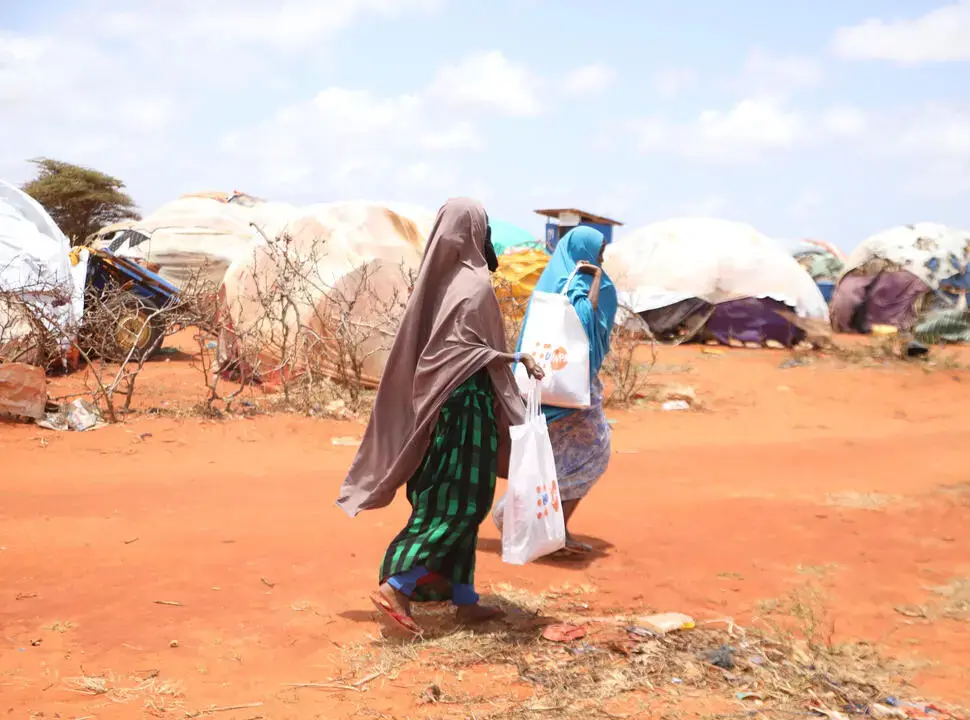
For the women and girls who are living amid this climate crisis, there are increased risks.
Cases of child and forced marriage, female genital mutilation, rape and other forms of violence have all risen sharply. There is a large unmet need for contraception, and across the region, hundreds of thousands of pregnant women have been left struggling to access maternal health services.
[Pictured above] Women with UNFPA dignity kits containing hygiene supplies at a camp for internally displaced people in Kismayo, Somalia. © UNFPA Somalia
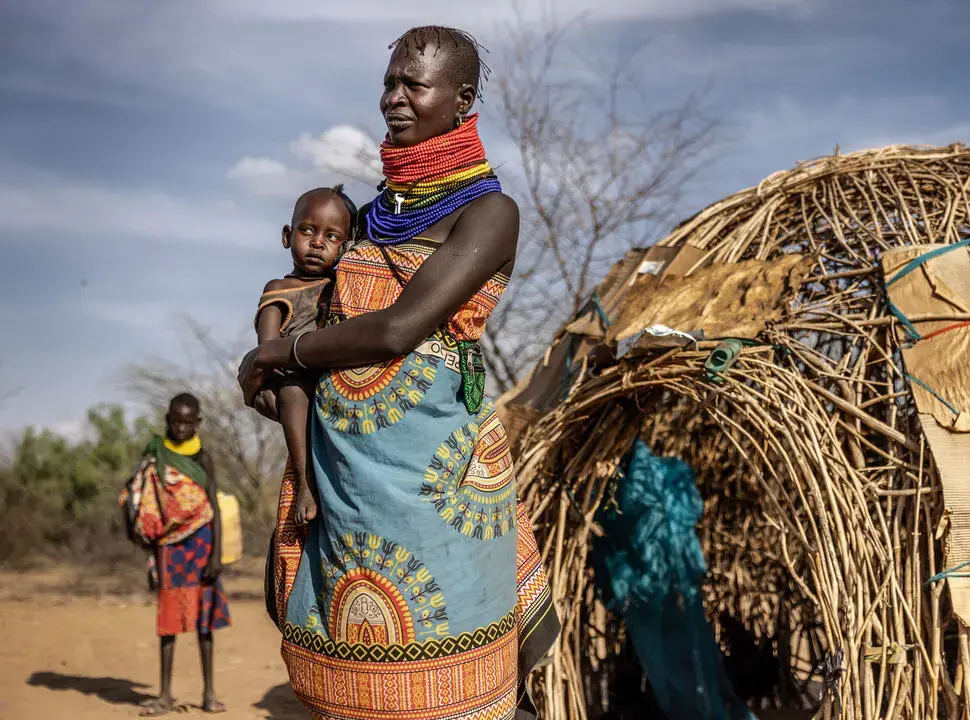
Catherine, 30, is pregnant with her fourth child. She is concerned about what will happen when she goes into labour.
With her nearest health centre a 10-kilometre walk away, and water in short supply, she is not always able to trek to the clinic for antenatal check-ups.
“Usually, when it is time to deliver, my husband will take me to the centre on a motorbike,” she says. “But with him often gone in search of pasture, I have to be ready to fend for myself if need be.”
[Pictured above] Catherine outside her home in the village of Lochorepetet in Turkana, Kenya. © UNFPA/Luis Tato
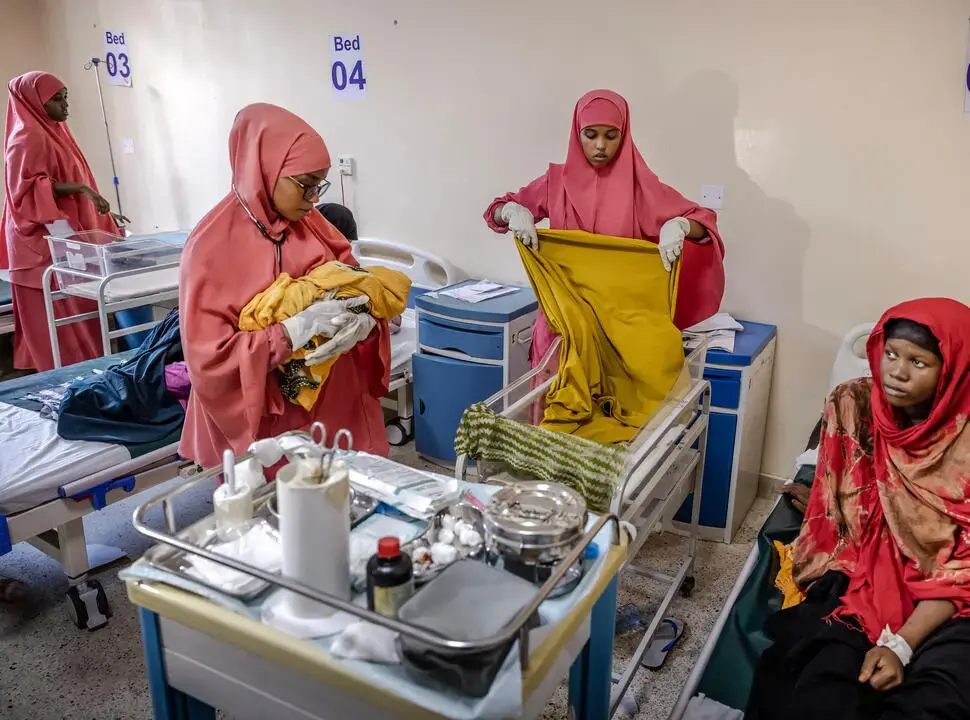
UNFPA-trained midwives are giving more women the chance to have a safe birth. The maternal mortality rate in Somalia is among the highest globally. Access to professional obstetric services can be the difference between life and death for mothers and newborns.
To get to Banadir Hospital in Mogadishu, Isnina travelled from a drought-affected area in Somalia’s Kahda district. Midwife Muno, who assisted with the birth, is also from an area that has been impacted, in the Lower Shabelle.
[Pictured above] Isnina (right) received support from midwives including Muno, who holds her newborn baby at Banadir Hospital in Mogadishu. © UNFPA/Luis Tato
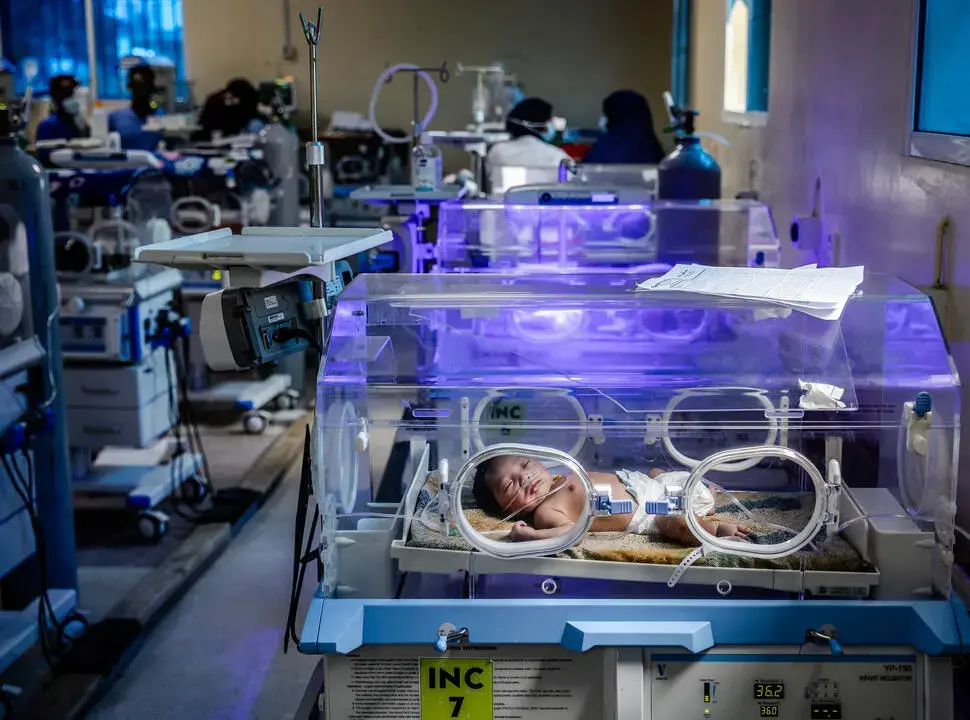
The intensive care unit for newborns at Banadir Hospital is fully funded and supported by UNFPA.
It’s vital that when women and babies need emergency medical care, they can reach it. One pregnant woman or newborn dies every seven seconds globally. Women living in crisis are among those at a higher risk. UNFPA is striving to end preventable deaths.
[Pictured above] A baby receives vital care at Banadir Hospital in Mogadishu. © UNFPA/Luis Tato
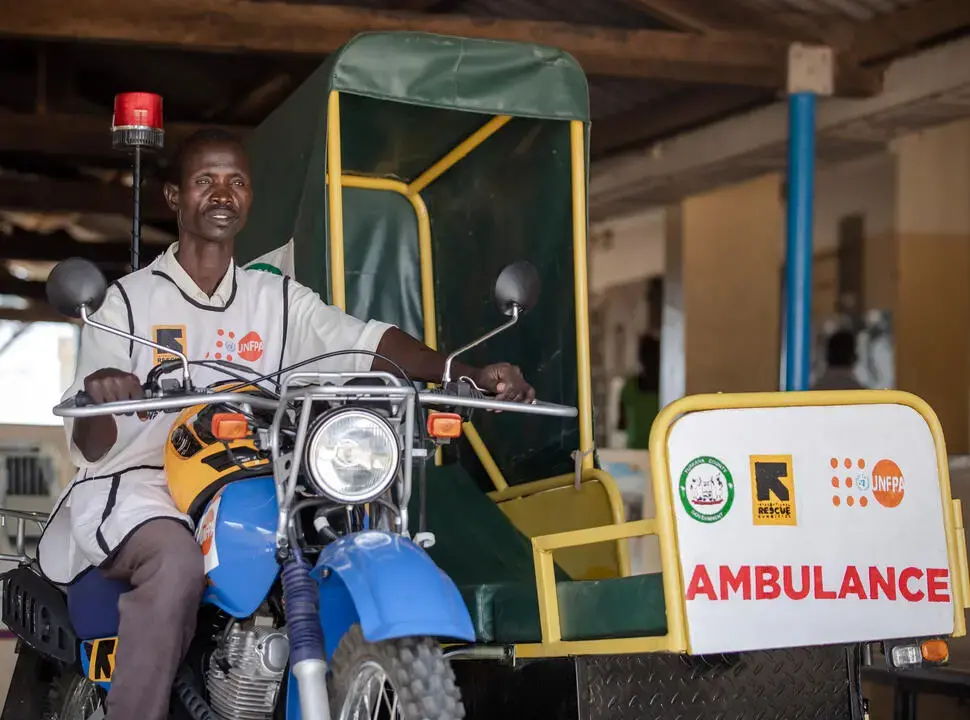
For women like Catherine who may be unable to get to a maternity facility, UNFPA supports a range of mobile services and initiatives to reach people, such as this motorcycle ambulance, driven by Mark, who transports women to deliver safely.
A community health volunteer, Mark says, “The hardship brought on by the drought has left many women weak and malnourished. I cannot imagine them giving birth without the support of a skilled health professional. In the past, women have given birth on the roadside while trekking to hospital because they live too far from a health facility. With the motorcycle ambulance, even if a woman delivers on the way, she is able to do so in a dignified manner, on a comfortable stretcher and with the help of a healthcare worker and myself.”
[Pictured above] A motorcycle ambulance provided by UNFPA supports the work of Katilu Sub-County Hospital in Turkana County, Kenya. © UNFPA/Luis Tato
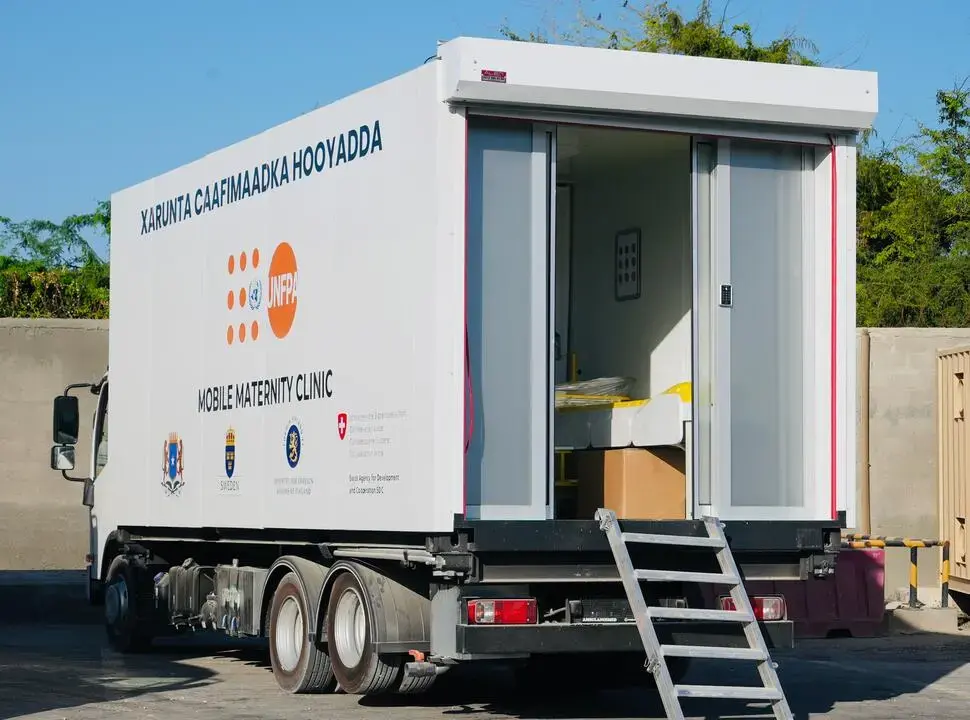
Launched in March 2023, five mobile maternity clinics in Somalia will provide safe deliveries and other essential services.
The truck-mounted emergency obstetric and newborn care units are expected to reach between 250,000 and 375,000 people in five districts. Additionally, the units provide contraception and family planning services to reduce the unmet need, as well as specialist medical care for women who have been raped.
Niyi Ojuolape, UNFPA’s country representative, describes the clinics as a “game-changer,” noting that they “improve access to the hardest to reach and the marginalized populations, promoting equity in the humanitarian response.”
[Pictured above] Five mobile maternity clinics were procured by UNFPA via the Somalia Multi Partner Trust Fund. © UNFPA Somalia/Mohamud Abdisamad
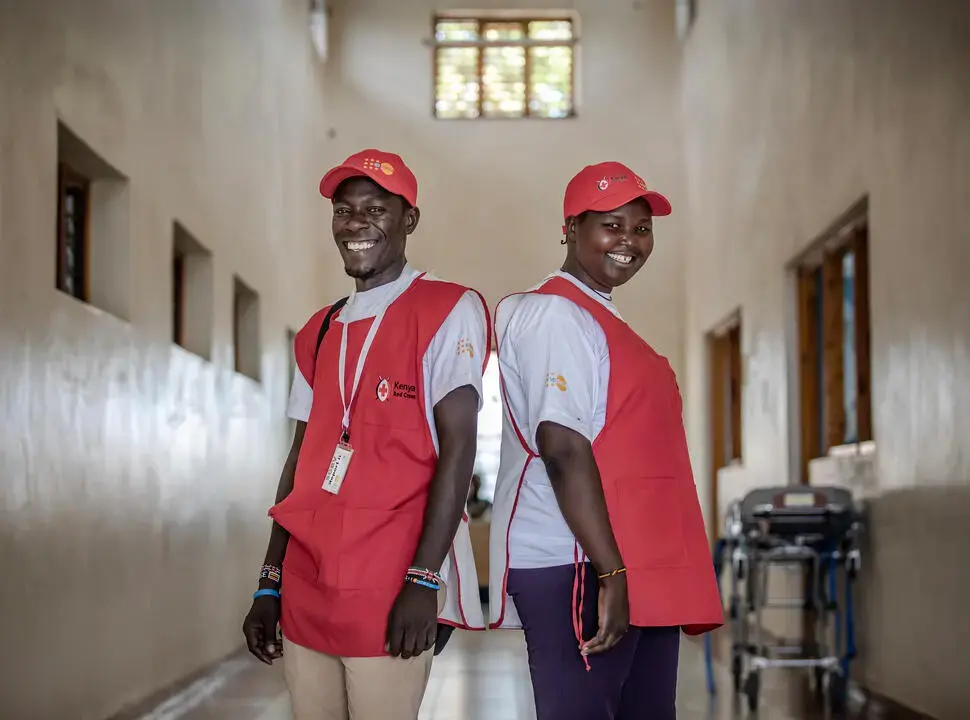
Kashindi and Queen live and work in the Kalobeyei settlement for refugees in Turkana, Kenya. Like Mark, they are volunteers and “safe motherhood promoters.”
With UNFPA support, they carry out house visits and support displaced people with essential pre- and postnatal services.
[Pictured above] Health volunteers Kashindi (left) and Queen at the maternity wing of the Natukobenyo Health Centre. © UNFPA/Luis Tato
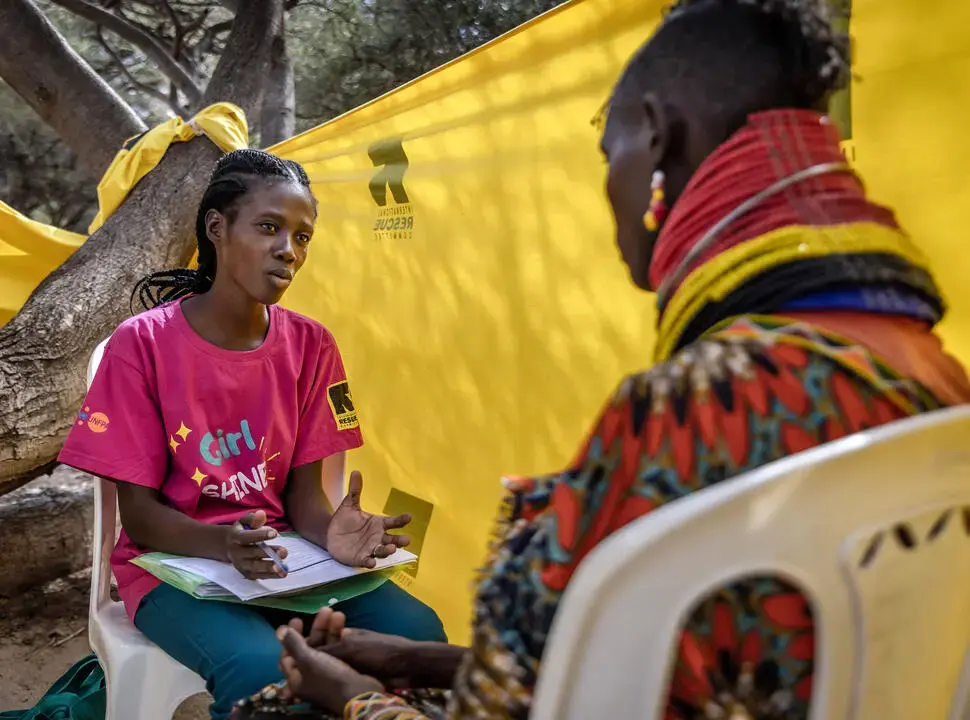
With women and girls facing increased threats to their personal safety, protection services are a key element of UNFPA’s response.
The reported figures are alarming. For example:
- In the Somali region of Ethiopia, child marriage increased by 131 per cent in the first half of 2022 compared with the same period the previous year.
- Drought-affected areas of Somalia saw a 60 per cent increase in gender-based violence last year.
- Around two-thirds of women and girls in four northern counties of Kenya said their biggest safety concerns were domestic violence and forced marriage.
Services and support are overstretched or non-existent. We need to do more.
[Pictured above] A counselor discusses gender-based violence with a woman in a remote, drought-affected area near Katilu,Turkana South, Kenya. © UNFPA/Luis Tato
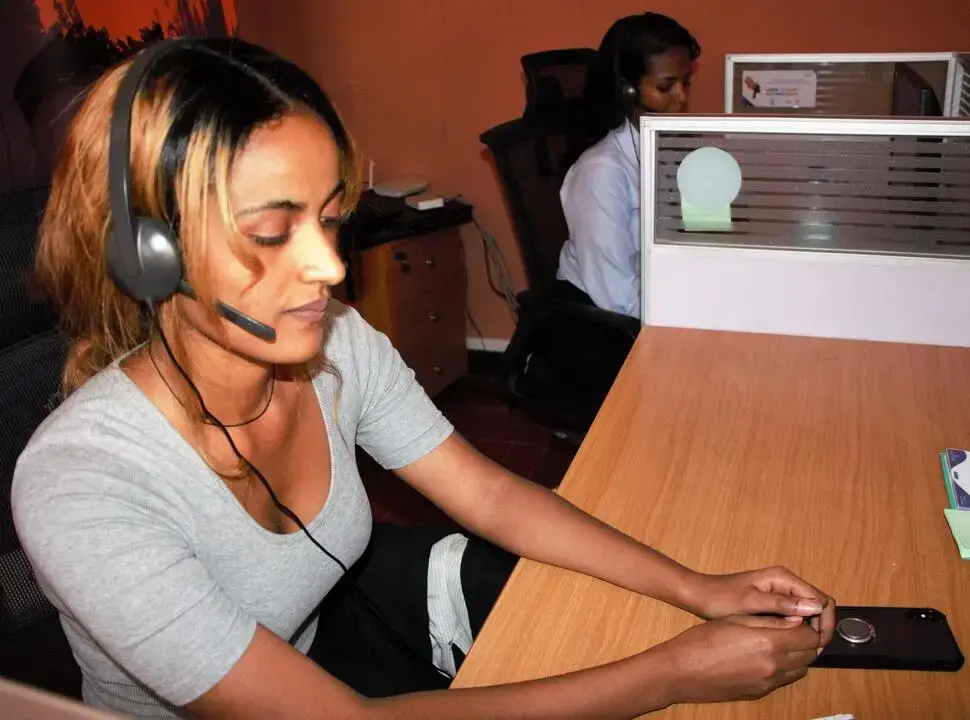
Across Ethiopia, including drought-affected areas, women and girls can call 7711 to speak to a legal expert and receive advice and quick access to legal-aid services.
The UNFPA-supported hotline was established in 2019 and is free to call. Run by the Ethiopian Woman Lawyers Association, it receives up to 15 calls daily in three languages: Amharic, Oromiffa and Tigrigna.
“Most calls are from women who seek advice about violence in marriage, divorce and child support. Gender-based violence cases are also common,” says Feven Gaddisa, a lawyer at the call centre. “Sometimes we receive calls from women in imminent physical danger, which is the hard part of our job. We quickly connect them with EWLA focal persons in their area. It helps that we have offices and focal points in most [districts]. There is usually someone to support them quickly.”
If callers are in danger, she and her colleagues refer women and girls to safe houses for shelter and psychosocial support.
[Pictured above] Lawyer Feven Gaddisa supports women via hotline, giving advice on legal aid. © UNFPA Ethiopia
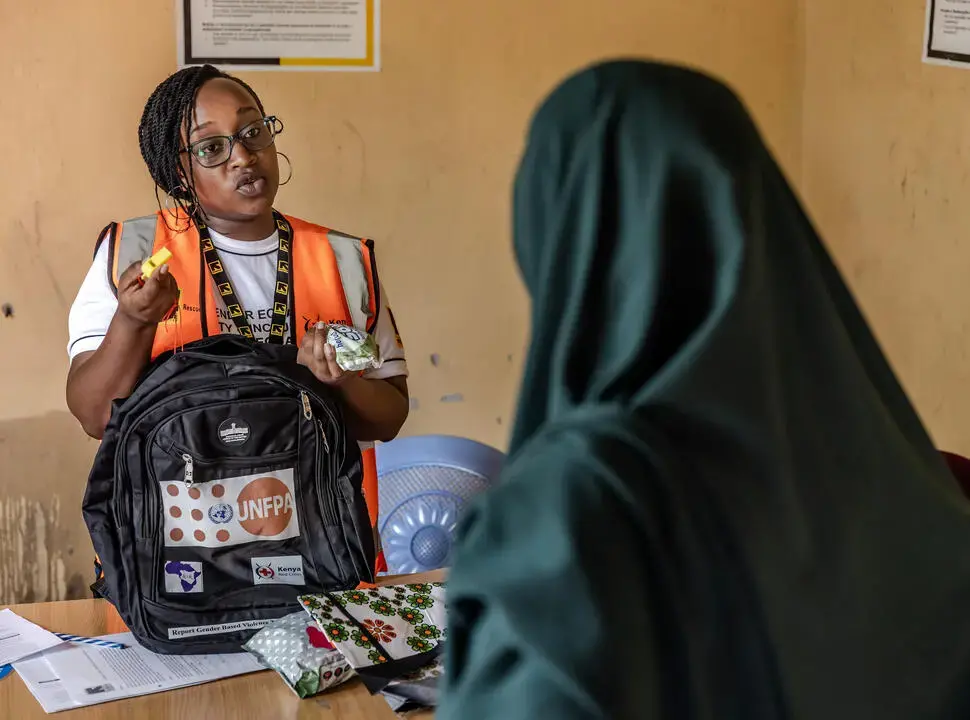
A refugee from Somalia has recently arrived in Hagadera camp in Garissa, Kenya.
UNFPA estimates that around 28,000 women of reproductive age are at risk of sexual violence in drought-affected areas of Kenya alone, if interventions are not put in place to mitigate.
“In Hagadera camp, we have had a nearly 20 per cent increase in the population since May 2022, which causes a huge strain on available resources,” says Jane Ambale, a senior women protection and empowerment officer with the International Rescue Committee. UNFPA is supporting the IRC to conduct screening for gender-based violence among new arrivals. “Our goal is to identify women and girls who are survivors or at risk of gender-based violence, and to provide them the critical information and services they need,” she says.
[Pictured above] Jane Ambale provides support to a woman who has recently arrived in Hagadera, including a UNFPA dignity kit, containing a whistle and essential hygiene items. © UNFPA/Luis Tato
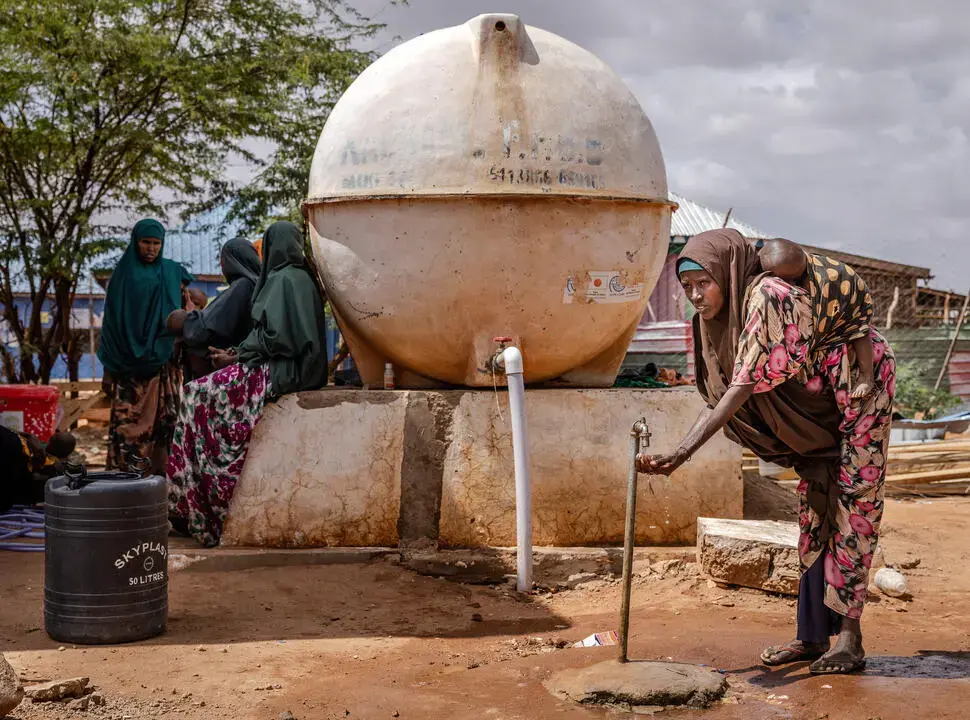
With risks to women and girls spiralling, life-saving services need to be ramped up. However, the demand significantly outweighs the investment into the crisis response.
With increased support from the international community, UNFPA can do more for women – who are already struggling to survive – in order to protect them from violence and provide access to safe births.
[Pictured above] A tap outside the Kabassa Health Centre in Doolow, Somalia. Water scarcity is just one of the overlapping crises facing women and girls living amid the climate crisis in the Horn of Africa. © UNFPA/Luis Tato