

UNITED NATIONS, New York – UNFPA, together with the Government of Iceland and the Government of Burkina Faso, convened a high-level event titled “Smart Solutions for a Safer Future: Using AI to End Female Genital Mutilation” at United Nations Headquarters in New York on Thursday. Held during the 16 Days of Activism Against Gender-based Violence, the event brought together UN Member States, donors, strategic partners and civil society to spotlight the critical role of technology and artificial intelligence in accelerating efforts to eliminate female genital mutilation.
“As we meet, 230 million women and girls worldwide are living with the lasting consequences of female genital mutilation – a grave form of gender-based violence. Every girl that has had to endure this harmful practice is one girl too many,” said UNFPA Executive Director Diene Keita.
Attendees discussed the challenges and opportunities of leveraging AI for change, including its potential to improve data-driven decision-making, enhance community engagement and awareness, and to counter mis/disinformation about female genital mutilation. A core focus was the need to ensure human rights are considered and supported throughout the design and deployment of technology to prevent harm and ensure safety, security and privacy.
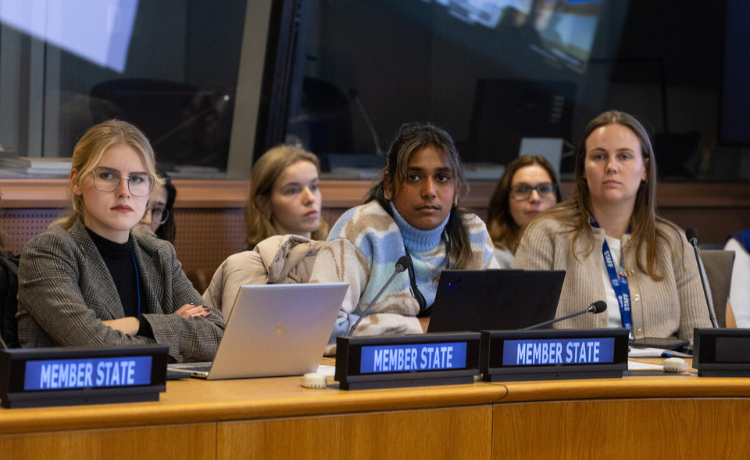
“We all know that the scourge of [female genital mutilation] is most prevalent in areas where access to innovative technologies – particularly the internet and artificial intelligence – is the most limited. Leveraging these technologies to protect girls and women from FGM is a real challenge but it also represents a genuine opportunity when we consider the collective expertise and resources available worldwide,” highlighted H.E. Mr. Oumarou Ganou, Permanent Representative of Burkina Faso in New York.
“Artificial intelligence offers enormous potential, from predicting high-risk communities and enabling confidential reporting, to supporting real-time data collection, policy monitoring, evidence-based decision-making, and digital education that empowers women and girls with factual information about their rights and health,” said Mr. Syndoph Endoni, Charge D’Affairs of the Permanent Mission of Nigeria in New York.
The investment case: A call for sustained funding
UNFPA, in partnership with UNICEF, leads the largest global programme to accelerate the elimination of female genital mutilation. The Joint Programme’s interventions are designed and implemented in close collaboration with governments, national and grassroots community organizations and leaders, and other key stakeholders in 18 countries across Africa and Asia. These interventions are evidence-based and draw on technical support from UNFPA and UNICEF.
Attendees emphasized the returns that could be generated from investing in the UNFPA-UNICEF Joint Programme on the Elimination of Female Genital Mutilation. For example:
- Every $1 invested in ending female genital mutilation yields a return of $10;
- An investment of $2.8 billion could prevent 20 million cases and generate $27.9 billion in benefits; and
- The treatment of health complications related to female genital mutilation is estimated to cost health systems $1.4 billion per year, a figure projected to increase if elimination is not achieved.
The current phase of the Joint Programme, which aims to end female genital mutilation by 2030, faces a funding gap of $163.7 million.
“We cannot afford to risk the progress made in ending FGM. We must adapt and evolve. AI and smart solutions have the potential to reach girls at risk. It can be used to educate them on the harms of female genital mutilation and create safe spaces to have difficult conversations around FGM. It can increase awareness among various stakeholders and communities, who are crucial partners in eliminating FGM,” said H.E. Anna Jóhannsdóttir, Permanent Representative of Iceland to the United Nations
Watch the event recording here.


