
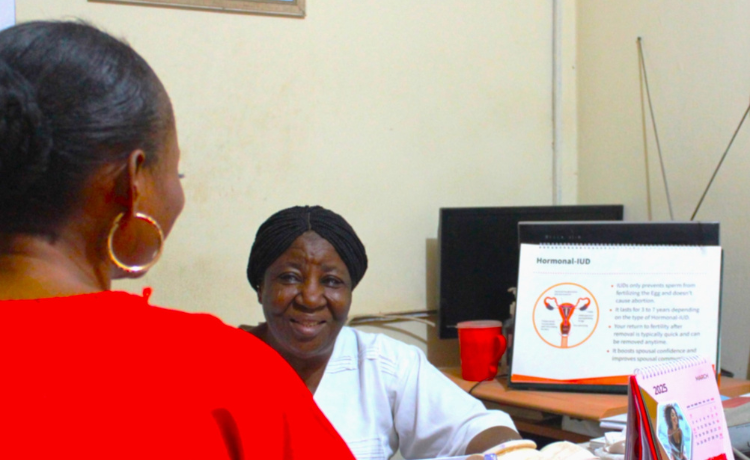
BAYELSA STATE, Nigeria – At 22 years old, Belema*, a mother of two from Bayelsa State, Nigeria, knew she wasn't ready for another pregnancy. She visited her local government primary health centre three times in search of contraception, but each time she was met with the same response: they were out of stock. Fearing she might become pregnant but exhausted by the lack of options, Belema eventually gave up.
Her experience is common in a state where only 3 in every 100 women are currently using a modern method of contraception, and where nearly 30 per cent of those in need of family planning cannot access it.
A collaboration in Nigeria between UNFPA, the United Nations Population Fund, which is the UN’s sexual and reproductive health agency, and the Children’s Investment Fund Foundation (CIFF), an independent philanthropic organization, aims to change this narrative. When the programme, ‘Family Planning Commodity Financing in Nigeria’ began strengthening distribution of contraceptives in July 2025, Belema breathed a sigh of relief.
“I just wanted to rest before having another child,” she told UNFPA. “When I finally had the implant, it changed my life.”
The need for intervention
The programme operates in seven states – Bauchi, Bayelsa, Ebonyi, Gombe, Jigawa, Kogi and Sokoto – which were chosen for their low contraceptive uptake coupled with high unintended fertility rates. In all seven, modern contraceptive use is significantly below the national average of 12 per cent. Bauchi and Sokoto significantly exceed the national fertility rate of 5.3 per cent – at 7.2 and 7 per cent respectively – and adolescent pregnancies are also often alarmingly prevalent, reaching 40.7 per cent in Bauchi, for example.
The programme was designed to align with the Government of Nigeria's primary family planning objectives, which are guided by national policies as well as FP2030 commitments, and that aim to more than double modern contraceptive use among all women to 27 per cent by 2030.
For women like Belema, obtaining her choice of contraception was also hampered by a lack of supply, as chronic underfunding had led to delays in both procurement and distribution. Stock-out rates for family planning commodities in Bayelsa, where Belema lives, were as high as 38 per cent in 2024, with more than half of health facilities or service points in the state running out of essential contraceptive options.
Building a future-ready delivery system
Over the last few months, the partnership has made significant strides to redress the imbalance between supply procurement and delivery. To bridge the gap between central warehouses and local clinics, the programme is providing logistics support and hiring private shipping and warehouse companies to handle future deliveries, ensuring last mile delivery. The programme is also launching electronic warehouse management systems to replace manual paper records; this includes training 40 staff members and providing them with computers and printers to monitor stock levels in real time.
Capacity building with local technical teams is also helping to better predict future needs and plan orders so clinics don’t run out of supplies – safeguarding the health, autonomy and well-being of thousands of women like Belema.
*Name changed for privacy and protection


