
1
1
News
27 July 2023
Publisher
UNFPA EECA
Publication date
Sep 2023
Resources
News
17 August 2023
Publisher
UNFPA EECA
Publication date
Jul 2023
Resources
Slideshow
21 June 2023
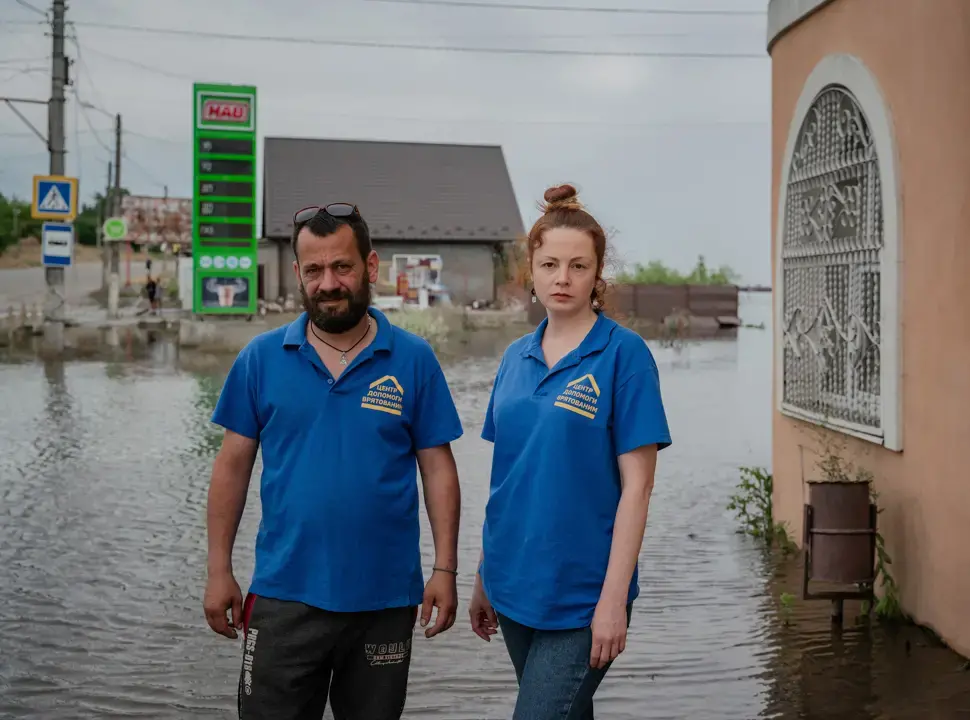
In the early hours of 6 June, the sound of explosions were heard before the Nova Kakhovka dam collapsed. The dam, on the Dnipro River, lies about 30km east of the city of Kherson. As torrents of water were unleashed, thousands of people were displaced in the region, parts of which were submerged underwater.
Iryna Tolstykh, 39, is a psychologist and coordinator of the UNFPA-supported Survivor Relief Centre who woke to news that the vast and vital dam had been destroyed, as a direct consequence of Russia’s invasion of Ukraine. She has pivoted from counselling to relief efforts in the city that is her home. Here she shares her days in the aftermath of the breach.
“I’ll tell you one thing: I really, really want to live. I love life more than ever.” says Iryna. “I love my arms and legs, because I never thought it would be so easy to lose them. I love my home, because it is where I recover. I value people so much. It is only with a person that you can get warm, that you can share your grief and know that you are not alone in this injustice. A lot of unnecessary things have disappeared, and only the real things remain.”
[Pictured above] Iryna, a psychologist with UNFPA (right) and her colleague Andrii, a driver, have been responding to the devastating crisis in her city of Kherson.
© UNFPA Ukraine/Danylo Pavlov
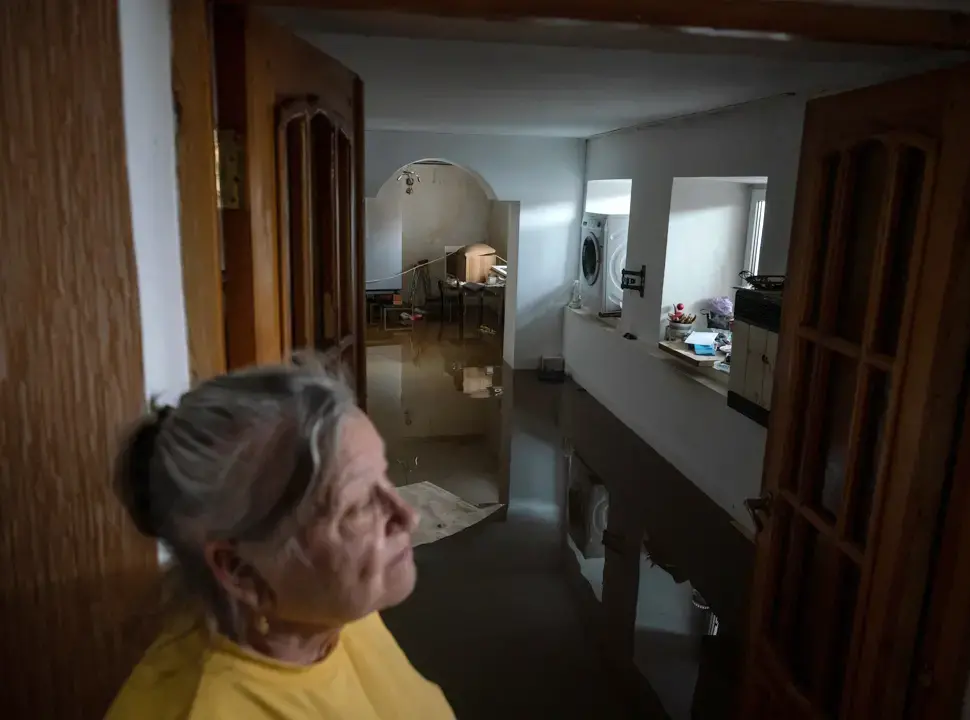
At 7 a.m. on 6 June, Iryna answered a phone call from a friend. “She was in a very anxious state. Her family needed help relocating. When she told me the dam had been blown up, I couldn’t believe it,” Iryna recalls. “I understood that it was a fact, but my mind could not comprehend it. Everyone has known since childhood how scary [the prospect] was - in school we learned how much Kherson would flood if the dam was destroyed.”
Iryna immediately set to work with her colleagues to rescue and re-house residents to higher ground, including their own families and friends. “We had to react quickly,” she says.
[Pictured above] Once the dam was destroyed, many people who had stayed in their homes since the occupation began in 2022 had no choice but to evacuate.
© UNFPA Ukraine/Danylo Pavlov
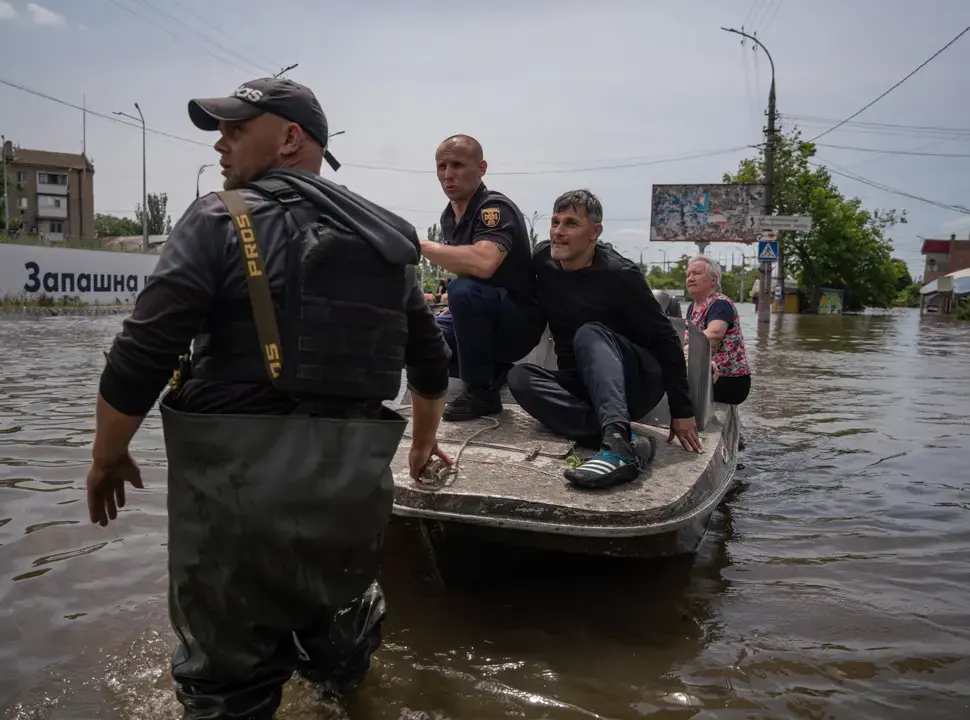
The dam held back a reservoir so large that locals call it the Kakhovka Sea. Its destruction is the largest environmental disaster in Ukraine since the Chernobyl nuclear accident in 1986.
“The word ‘horror’ is not enough,” says Iryna. “This is a global grief, a global catastrophe.”
The disaster has killed or injured unconfirmed numbers as humanitarian needs soar, including the need for clean drinking water, food and access to health services. Military hostilities are adding to the challenges with reports of several attacks affecting civilians and hindering rescue operations.
[Pictured above] The dam’s reservoir spanned an area of more than 2,000 square kilometres. © UNFPA Ukraine/Danylo Pavlov
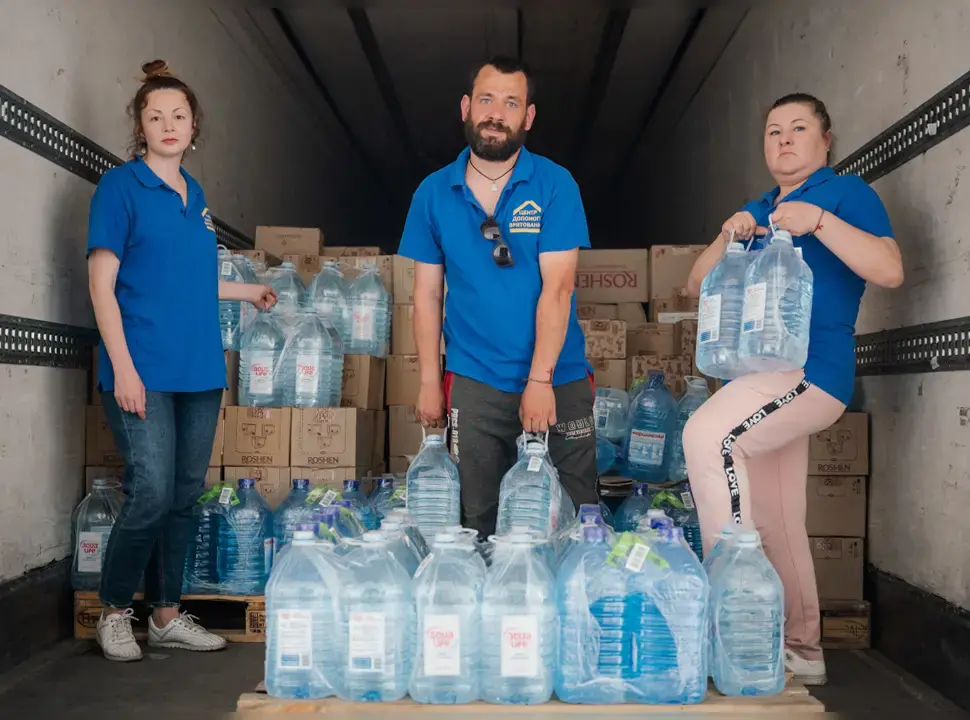
The Survivor Relief Centre (SRC) was founded by the Ukrainian government in December 2022, with support from UNFPA, to provide services to people affected by sexual violence following Russia’s invasion of Ukraine.
SRC operates across 11 cities through dedicated sites or mobile teams. The Kherson team of three–Iryna, Andrii, and their colleague, Anna, a social worker–has always been mobile to operate around shelling.
When the dam was destroyed they refocused their efforts on the overwhelming rescue and humanitarian needs in the city.
[Pictured above] From left: Iryna, Andrii and their colleague Anna, a social worker, support fellow residents around the clock. © UNFPA Ukraine/Danylo Pavlov
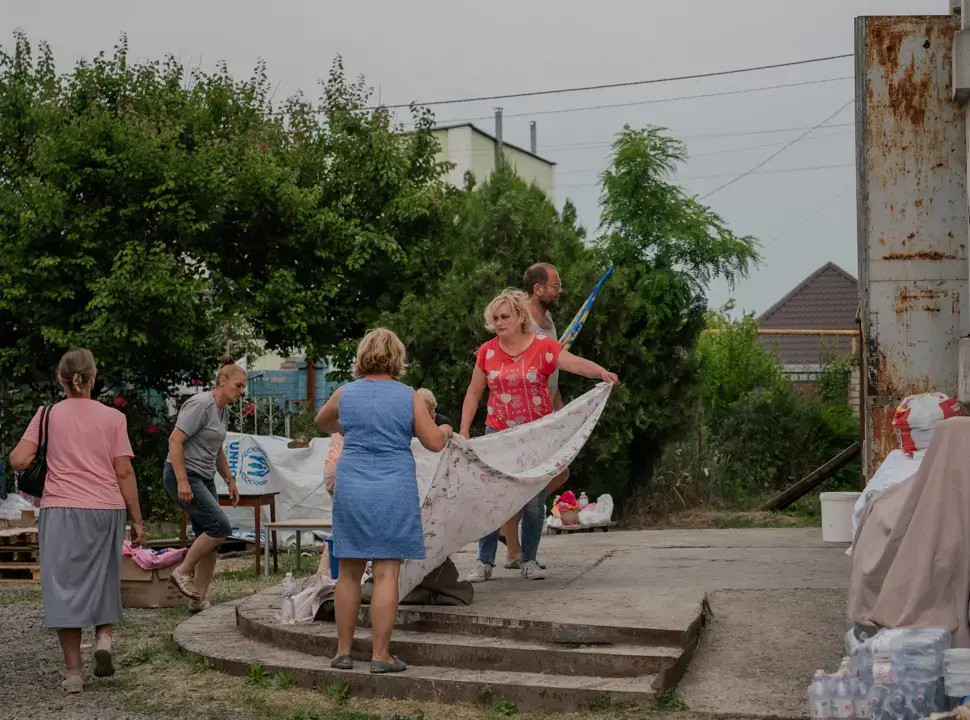
“Before the Kakhovka Dam was blown up, the SRC was organizing meetings with advocacy partners and arranging events with village heads,” says Iryna. “We dealt with the fact that many people considered sexual violence to only mean rape. Harassment, obscene statements, unwanted touching and coercion to have sex were not considered sexual violence.” The SRC raises awareness and provides counselling to those affected.
[Pictured above] Volunteers and survivors rally together to support each other. © UNFPA Ukraine/Danylo Pavlov
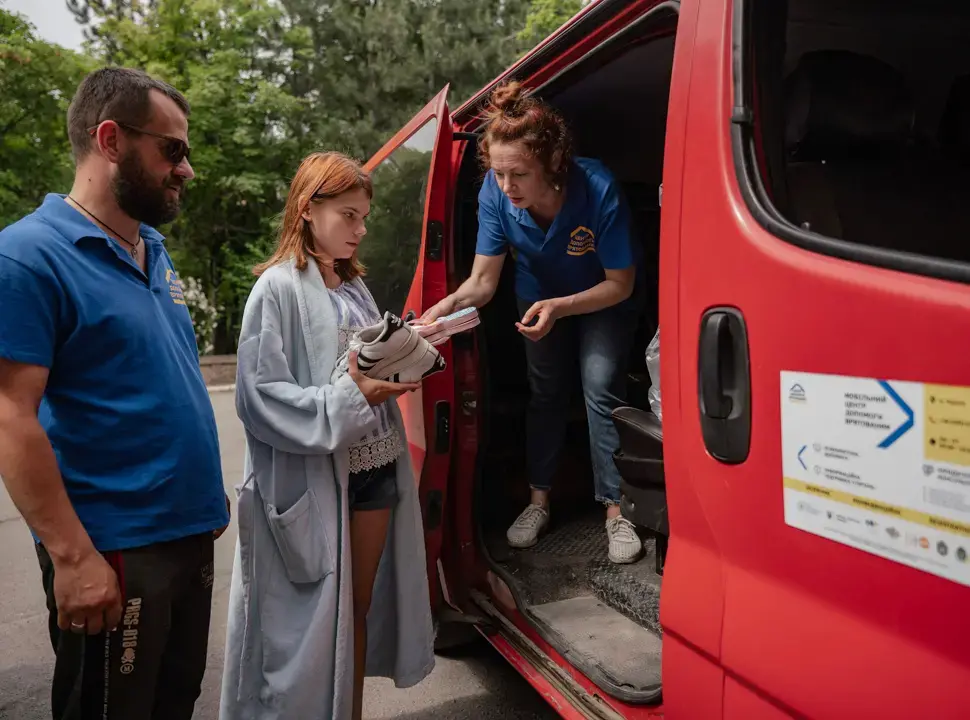
On the first day of the devastating news, as water began to pour from the dam walls, Iryna recalls how they could still evacuate people by van. “We were relocating people with disabilities, the elderly, people with children and animals. The city authorities opened shelters [in parts of the city on higher ground] and settled people there.”
[Pictured above] Iryna helps distribute donated supplies including shoes and clothing to residents who were evacuated with just the clothes on their backs. © UNFPA Ukraine/Danylo Pavlov
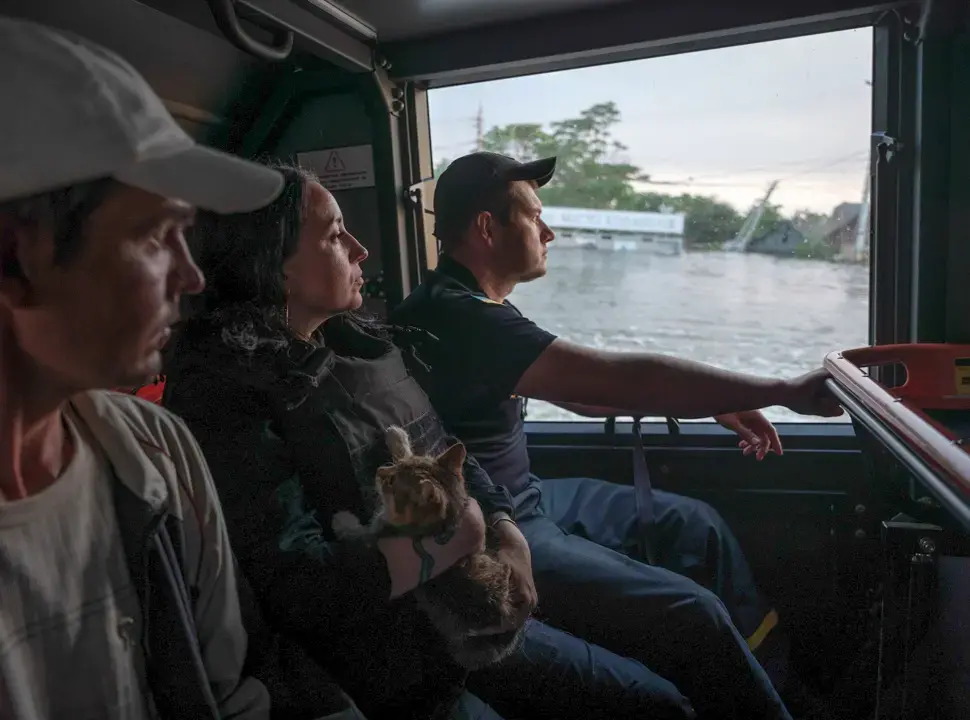
By the second day, water levels had risen drastically. The only way to get around was by boat.
“Lots of people have summer cottages on the river called ‘dacha’, so there were always lots of boats in the city - every second person had one. When Russian troops left the city, they shot the boats to sink them so that residents or the Armed Forces could not use them. Now when we need the boats the most, there are not many of them.”
[Pictured above] Rescuers and evacuees travel by boat around flooded roads. “Places I loved have simply disappeared,” says Iryna © UNFPA Ukraine/Danylo Pavlov
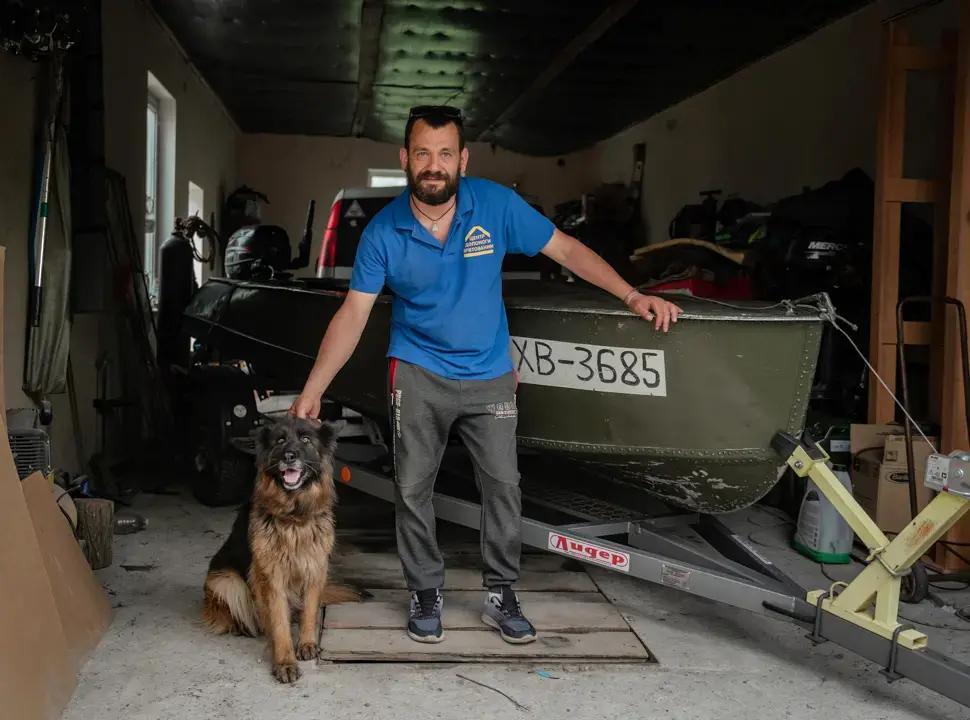
Iryna has high praise for her teammates, Anna and Andrii.
“Andrii drives round in his boat, helping people from roofs, untethering animals, and rescuing anyone he can find.”
“Anna helps our military administration at the warehouse receive humanitarian aid that is brought from all over Ukraine and distributes it to shelters. She also works to resettle people to other locations.”
[Pictured above] The team has met people reluctant to leave their flooded homes if it means t abandoning their beloved animals. Andrii has saved all kinds of animals, including dogs, cats and goats. “Many dogs were sitting on roofs, and I saw many dogs swimming,” he says. © UNFPA Ukraine/Danylo Pavlov
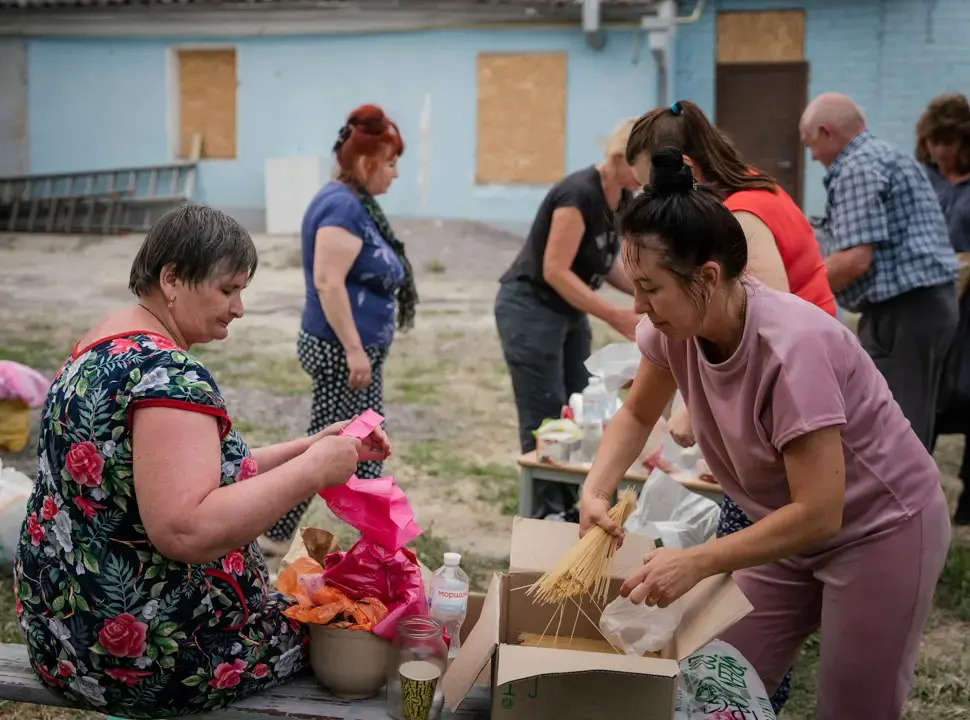
“I provide psychological assistance to evacuees in shelters, working with children who are disoriented, and calming down elderly people who are terrified,” says Iryna.
She also coordinates volunteers, funds, and donations of lifesaving resources from individuals, other SRC sites and NGOs, as well as deliveries of water purification tablets for “people left without drinking water in the Kherson summer heat”; UNFPA dignity kits, and a generator that came from Odesa, about 200km away.
[Pictured above] Volunteers organize the donated supplies, preparing them for distribution. “A grandmother asked for our help, not for herself but food for her cat,” Iryna says.
© UNFPA Ukraine/Danylo Pavlov
Iryna and colleagues begin each day at 6 a.m. and go to bed around 1 or 2 a.m.
“Our sleep is of poor quality. Everyone working on this effort is in such a state of concentration that we hardly feel our own bodies.”
[Pictured above] The team has been working long hours every day. © UNFPA Ukraine/Danylo Pavlov
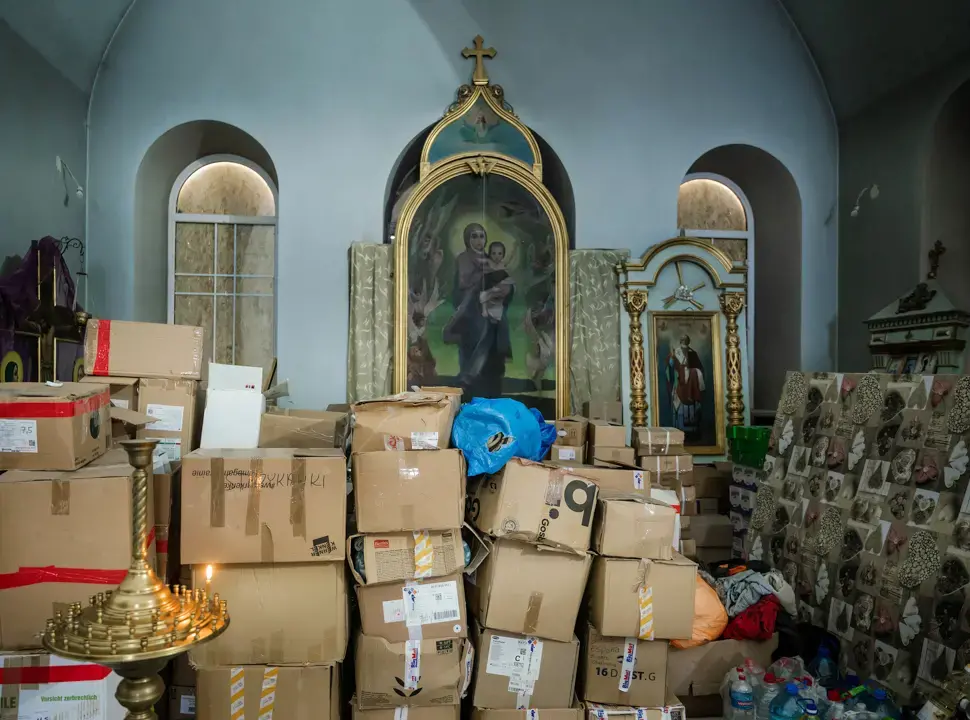
“Our work is hampered by shelling,” Iryna says. “For example, yesterday (13 June), there was very heavy shelling, and I had to stay in the basement. After that, I needed a lot of time to recover.”
[Pictured above] A church is used to store drinking water, food and other essential supplies. © UNFPA Ukraine/Danylo Pavlov
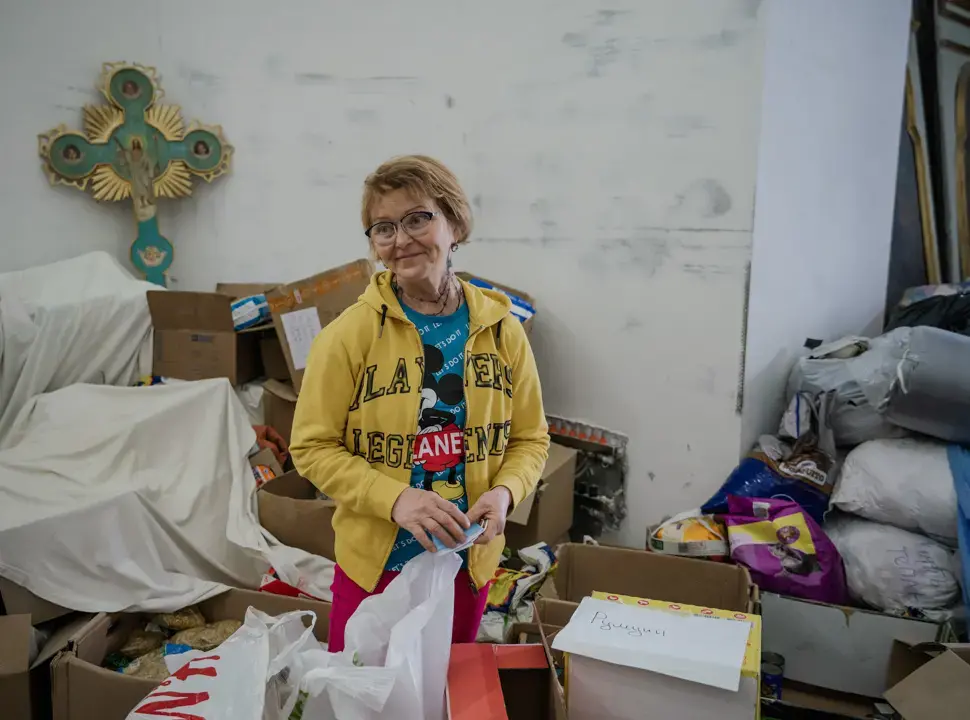
“What survivors need most of all is to be transported to a warm dry place, to a warm dry bed, and given hot tea. They need to be cared for,” Iryna explains. “When they receive sympathy, care and hot lunches, they begin to ‘thaw’.”
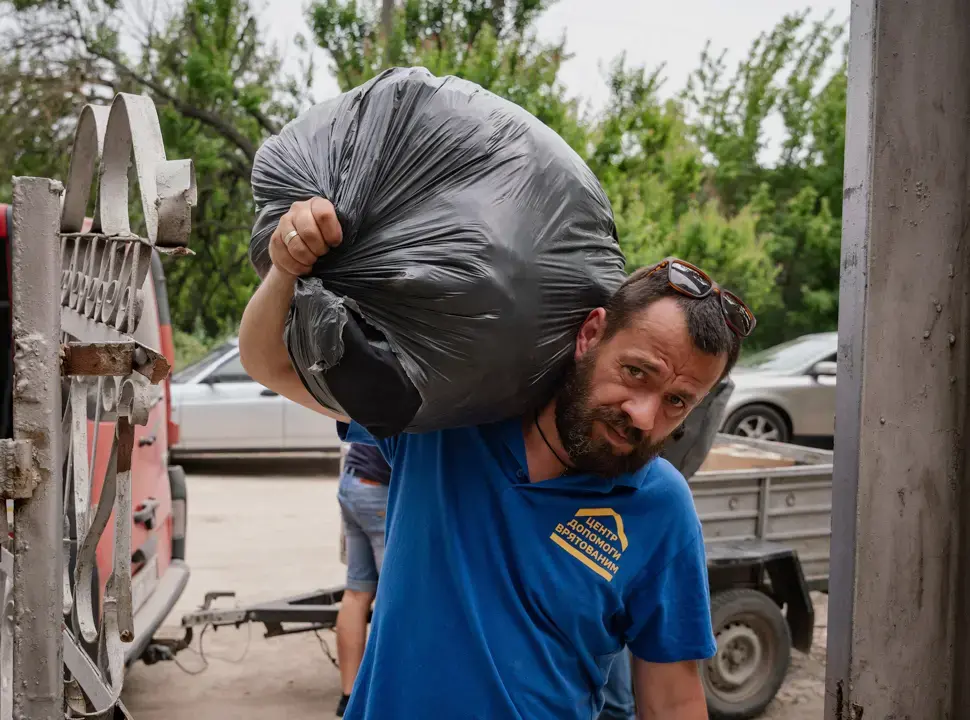
[Pictured above] Iryna coordinates volunteers, like the one pictured, who have come together to help other survivors. © UNFPA Ukraine/Danylo Pavlov
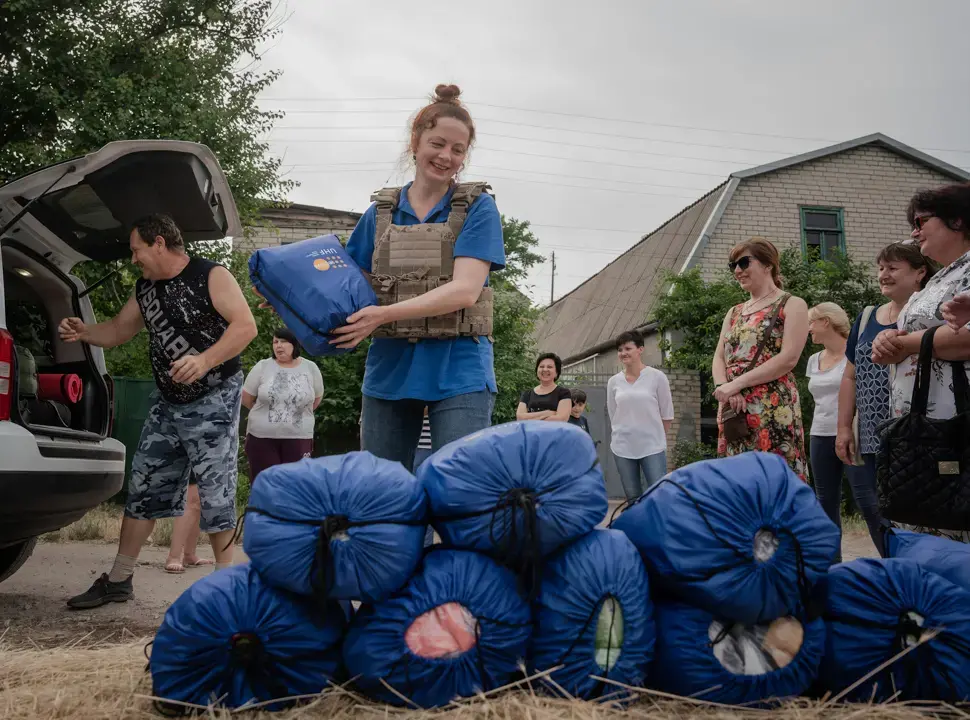
“When people receive blankets, dry clothes and hygiene products, they feel they are not alone with their grief, that they are supported by thousands of people. It is very difficult and painful for them, but seeing help provides people with a sense of strength,” says Iryna.
“We distribute dignity kits to women and teenage girls, and babushka kits to older women. We take most of the kits to the areas that have suffered the most, where people have nothing left.”
[Pictured above] Iryna unloads kits containing essential supplies to meet people’s immediate needs. © UNFPA Ukraine/Danylo Pavlov
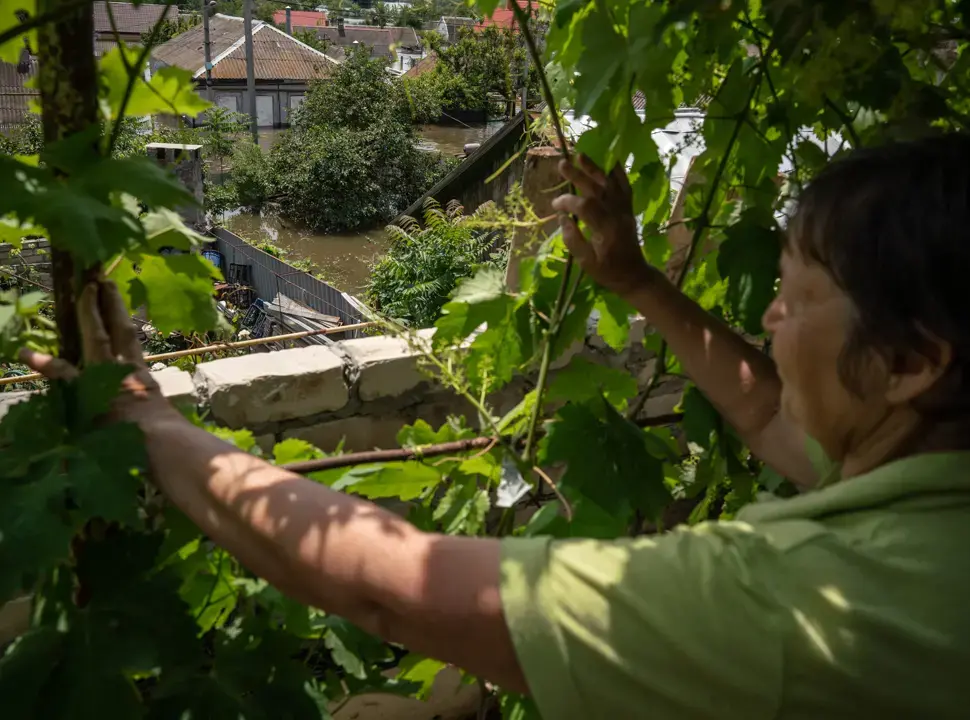
Iryna is concerned about what receding water levels will reveal.
“When the water goes down, there may be corpses of animals and people. Cemeteries were washed away, and in this heat it will be an even more terrible process to deal with. We currently do not have the specialists who can cope with this challenge,” says Iryna.
“My biggest fear is the potential of various epidemics.”
[Pictured above] Water levels are now receding. © UNFPA Ukraine/Danylo Pavlov
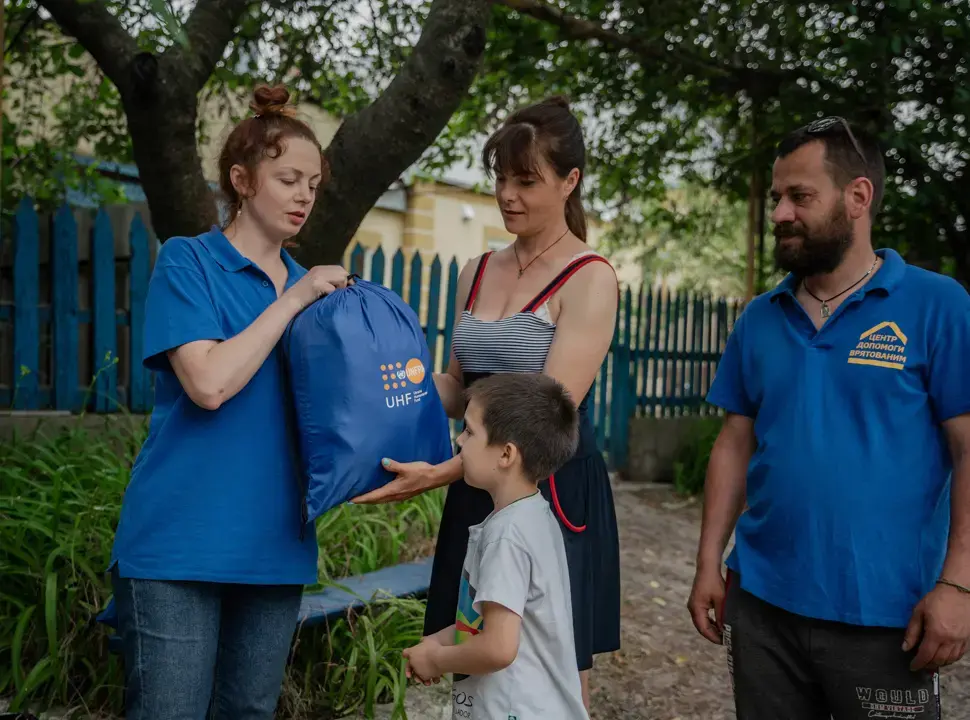
“This tragedy scares me because, despite the fact that we live in a progressive time, where we talk about tolerance, respect and values, there are still people who are ready to wipe entire cities off the face of the earth.”
“I feel powerless because I cannot change it.”
[Pictured above] In January 2022, Kherson’s population was almost 280,000. It is reported that only 20% of its inhabitants remain in the city. © UNFPA Ukraine/Danylo Pavlov
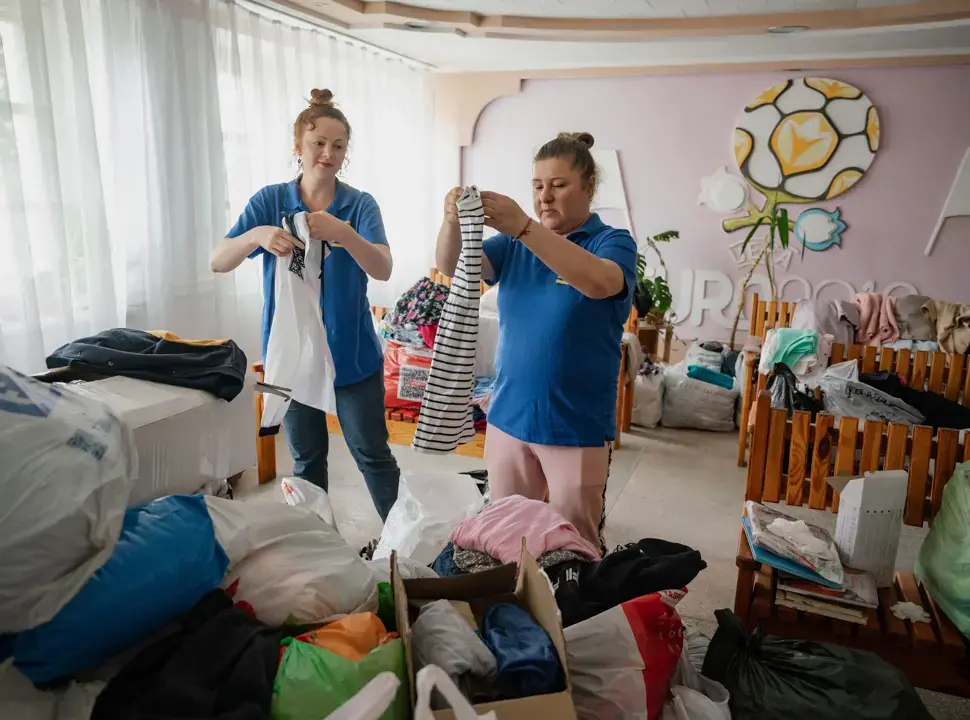
“On the other hand, I am very grateful that I have this job and this team, and that Anna, Andrii and I can help. As a resident of Kherson, as a person for whom everything dear is being destroyed - doing our job helps us avoid despair.”
[Pictured above] Iryna and Anna sort through donations. © UNFPA Ukraine/Danylo Pavlov
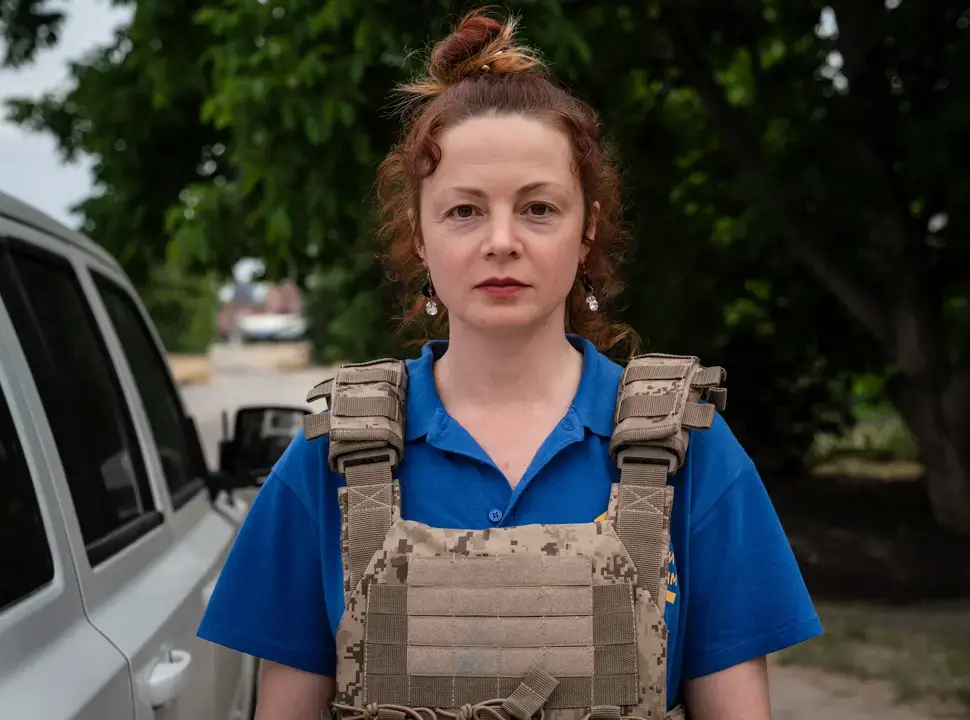
Despite only sleeping 4-5 hours each night, Iryna wishes she had more time.
“We are trying to reach a large number of people, and unfortunately, we are not made of iron, we are not robots. If we were more resilient, stronger, and had more hours in the day, we could help more. But we are ordinary people.”
[Pictured above] Iryna, a psychologist-turned-rescue worker, works under the risk of attack to support her community. © UNFPA Ukraine/Danylo Pavlov
Video
19 June 2023
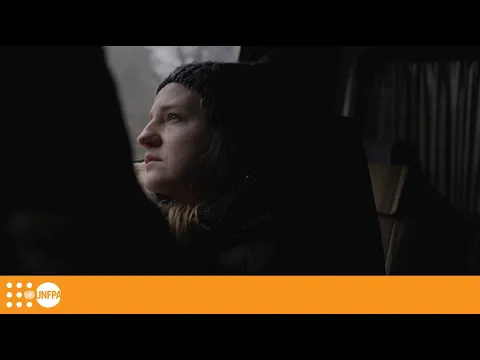
https://youtu.be/-ulVopdcE10
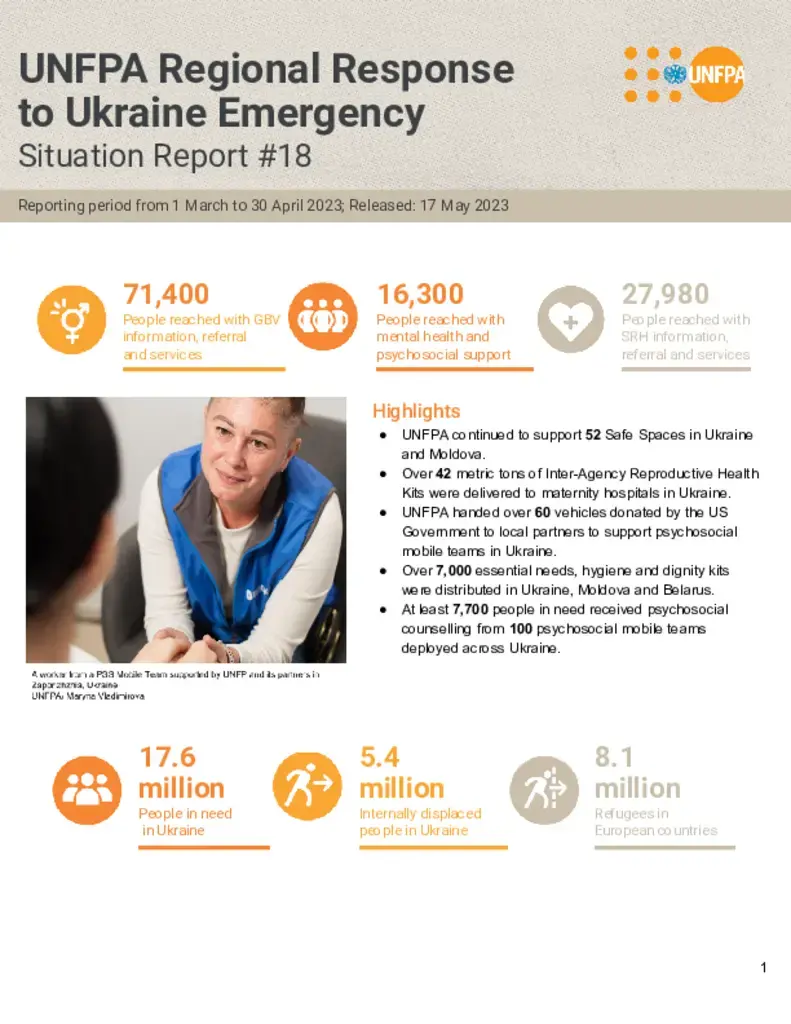
Discover the often hidden impact on domestic and sexual violence of Russia’s full-scale invasion of Ukraine.
UNFPA’s film ‘Behind the Silence’ speaks to the Ukrainians providing vital support to survivors to uncover the scale of the problem.
Publisher
UNFPA EECA
Publication date
May 2023
Resources
Video
09 June 2023
https://www.youtube.com/watch?v=U8xgEQb1QJ0
Discover the real-life stories of three Ukrainian mothers who each gave birth amidst the chaos of the war in Ukraine.
Anna and her 2-month-old baby trapped beneath the Azovstal Steel Plant. Maryana, a frontline medic captured by Russian soldiers in Mariupol while pregnant. Ania who gave birth in an occupied city without electricity or water and with limited medical care.
Slideshow
14 May 2023
Since the beginning of the full-scale Russian invasion of Ukraine, 1 in 3 babies have been delivered in a UNFPA-supported hospital.
Despite the dangers – there have been more than 850 verified attacks on health care facilities – obstetrician Olena Mokhonko has helped women deliver as many as 70 babies a month at Chernihiv Maternity Hospital.
She joined four of those women to celebrate their children’s first birthdays and to hear the mothers share their experiences of giving birth in a city under fire. Here, they tell their stories.
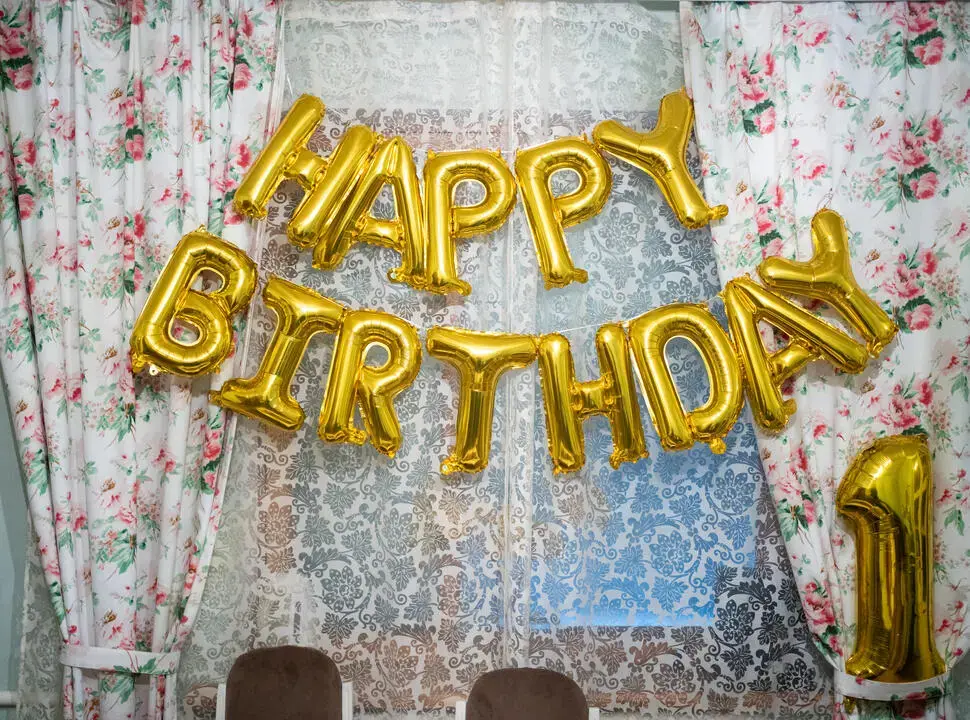
[Pictured above] At a poignant birthday party, mothers join the obstetrician who delivered their babies amid war. © UNFPA Ukraine/Serhii Korovayny
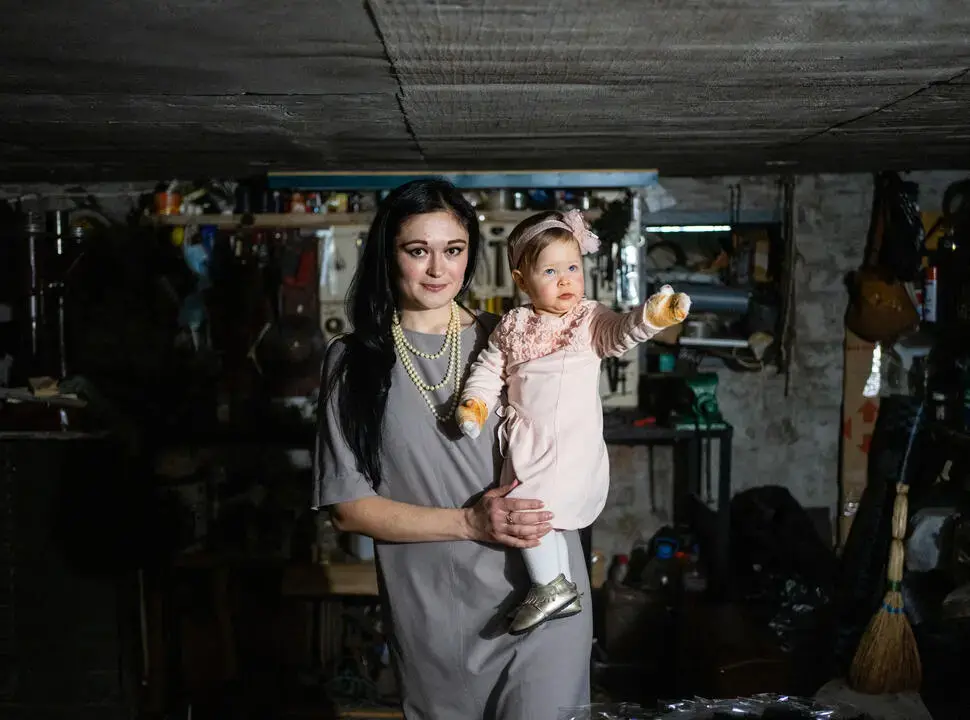
In the last few weeks of her pregnancy, Nina’s birthing plan changed drastically as the conflict grew. Knowing that she might not be able to get to the hospital, she created a Plan B.
“I was preparing to give birth in the basement,” she says, recalling how her community rallied around her. “People from our neighbourhood had different stocks of food; some had cereals, some canned food...everyone had some food or hygiene supplies, so we had the basics. I found a perinatal psychologist on the Internet – there was still a connection at this time – and asked her what to do in my situation. She explained everything to me in detail: how to cut the umbilical cord, how to check the placenta.”
[Pictured above] Nina with Yulia in the bomb shelter where she sought safety before and after giving birth. © UNFPA Ukraine/Serhii Korovayny
When the time came, Nina called an ambulance but was told the staff could respond only to gunshot wounds. A volunteer took her to the maternity hospital, so she didn’t need to go through with the basement birth, but extreme challenges remained.
Nina recalls the system in place at the hospital: “If there were no missile attacks, we were taken to the first floor and gave birth in the corridor – far from the windows. But when the security situation was critical, we were lowered into the bomb shelter. It was pure horror: Babies were crying; women were giving birth. I gave birth in the corridor. Other women were lying next to me or giving birth.”
Despite the chaos, she says, “The medical staff worked very harmoniously. The director of the maternity hospital personally walked around the first floor, checked how we were feeling, and worried about everyone.”
[Pictured above] Neighbours pooled their resources and tidied up Nina’s basement, adding carpets for warmth, for her return from the hospital. © UNFPA Ukraine/Serhii Korovayny
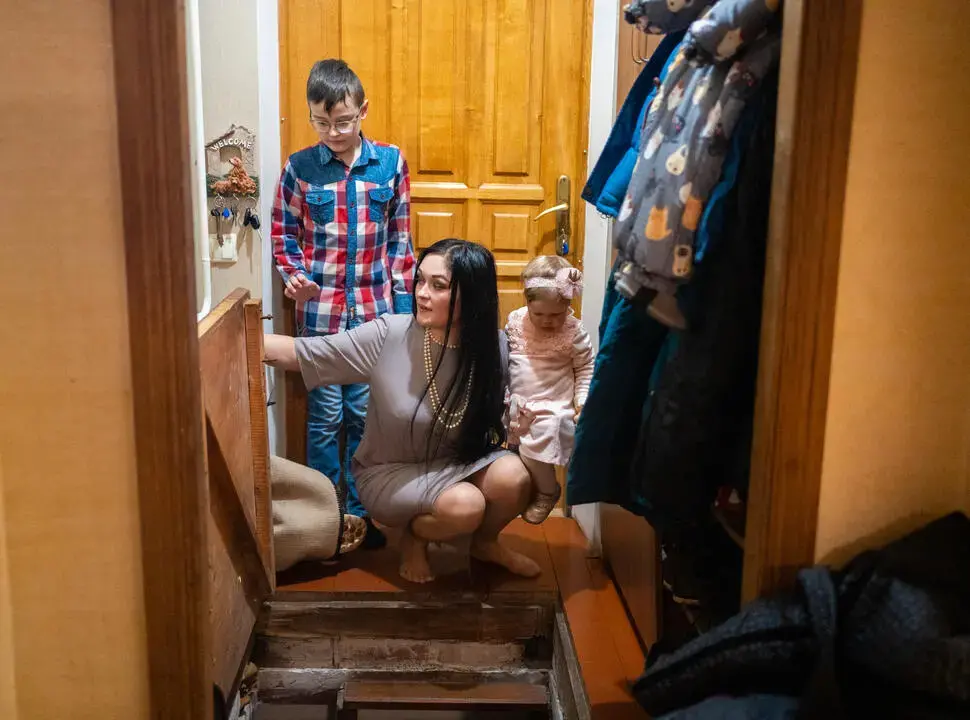
Nina received quick and efficient postpartum care and was discharged with baby Yulia. Heavy bombardment continued as she arrived home. “We were in the basement all the time. When it quietened down a bit, we only went upstairs to use the toilet or to quickly prepare food.”
“At night, the hum of the planes made it impossible to sleep and the baby would wake up, asking to be fed.”
[Pictured above] Nina and children at the entrance to their basement. © UNFPA Ukraine/Serhii Korovayny
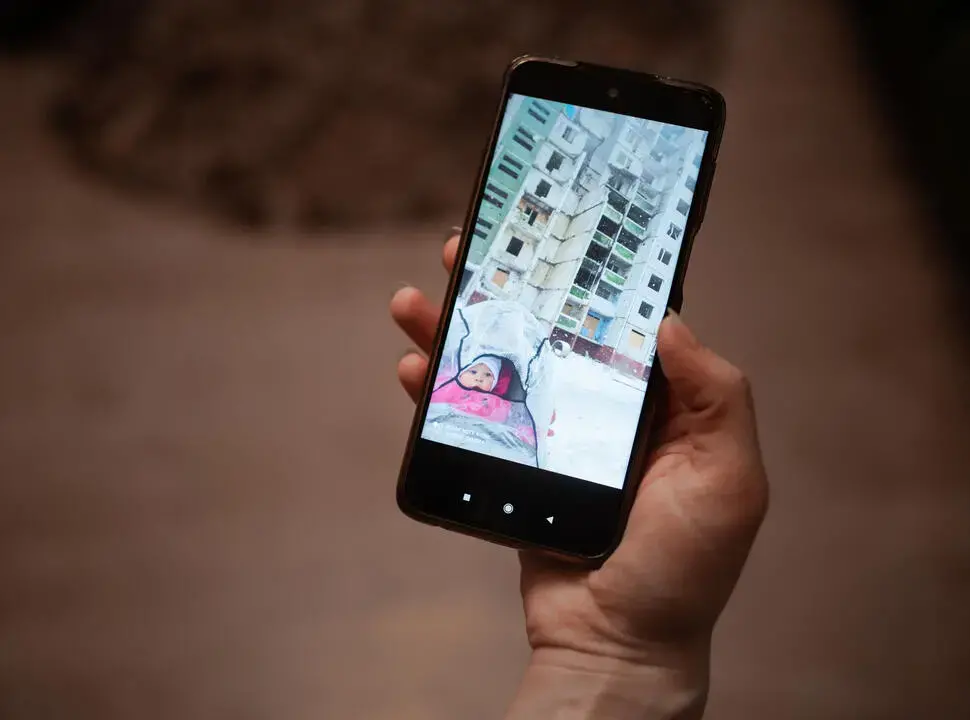
On 18 March, when Yulia was 11 days old, Nina took her children and left on an evacuation bus. “The city was in smoke, without lighting,” Nina recalls. “Data was taken from each of the passengers, and it was recorded who was sitting where, so that in the case of a shooting, the bodies could be identified.”
[Pictured above] Extreme baby pictures: Yulia in her pram outside a damaged building in the neighbourhood. © UNFPA Ukraine/Serhii Korovayny
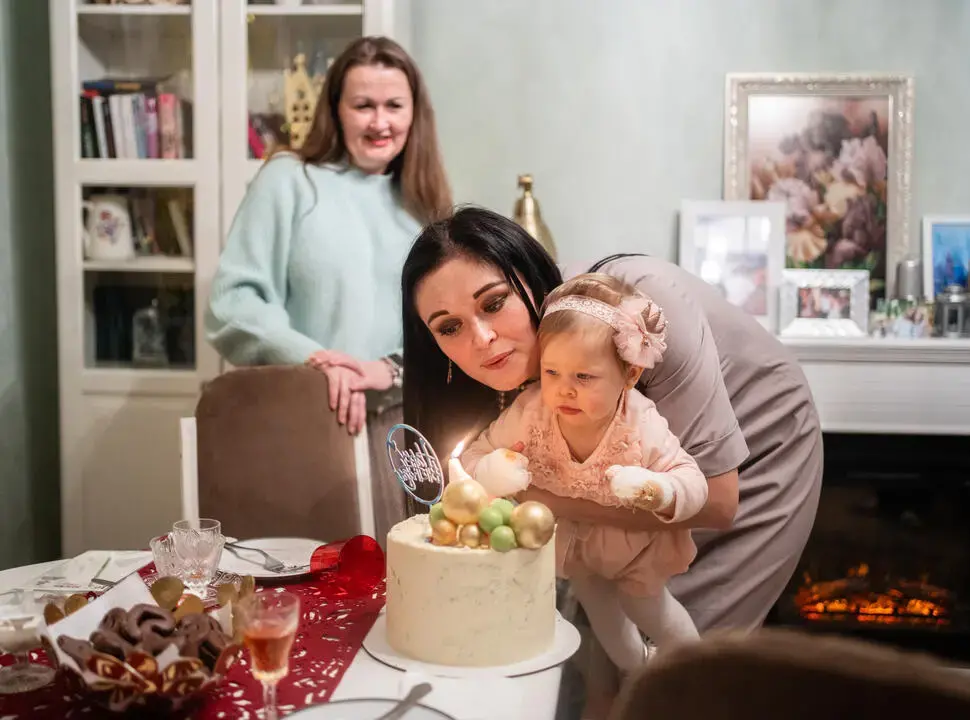
Nina spent two months in Poland before returning home. “It is important for me that my children walk on their native streets, hear their native language. I am glad to wake up in my own house, and that my children are alive and healthy.”
[Pictured above] Obstetrician Olena shares in the birthday festivities as Nina blows out a candle. © UNFPA Ukraine/Serhii Korovayny
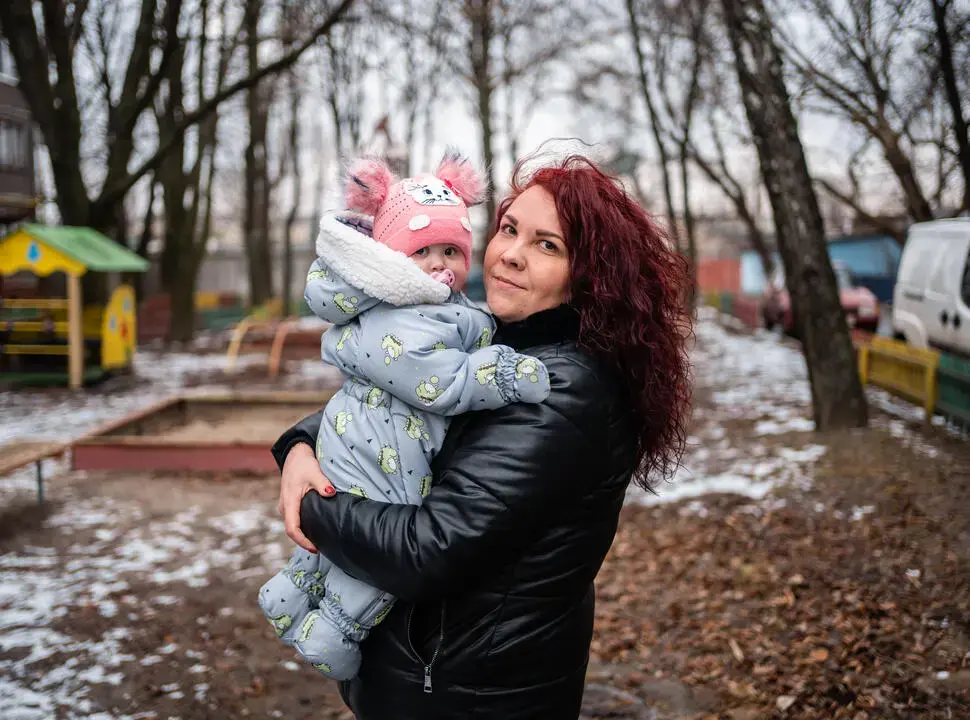
Iryna is a single parent. Her husband died two days before her daughter’s birth. “From the first days of the war, he went to defend our city,” she says. “I asked him not to go because I had to give birth, but he said, ‘Who but me?’ On 3 March, he came under fire and was wounded, and two days later he passed away.”
Iryna was in a bomb shelter when she heard the tragic news.
She gave birth in a cramped room – which she describes as a “small cupboard” – at the hospital on 7 March. Electricity and communications had been wiped out in the city, and the tiny room had been converted into an operating theatre, with a generator and other essential equipment. There, she gave birth by Cesarean section to Amelia.
“For the first week of her life, Amelia did not breathe,” she says, describing how her baby was transferred to the intensive care unit. “I was ready to give everything for her to survive. I understood that her father would not be brought back, but I hoped that everything would be okay with my daughter.”
[Pictured above] Iryna, a single parent, lost her husband, Serhiy, when he died fighting to protect their home city of Chernihiv. © UNFPA Ukraine/Serhii Korovayny
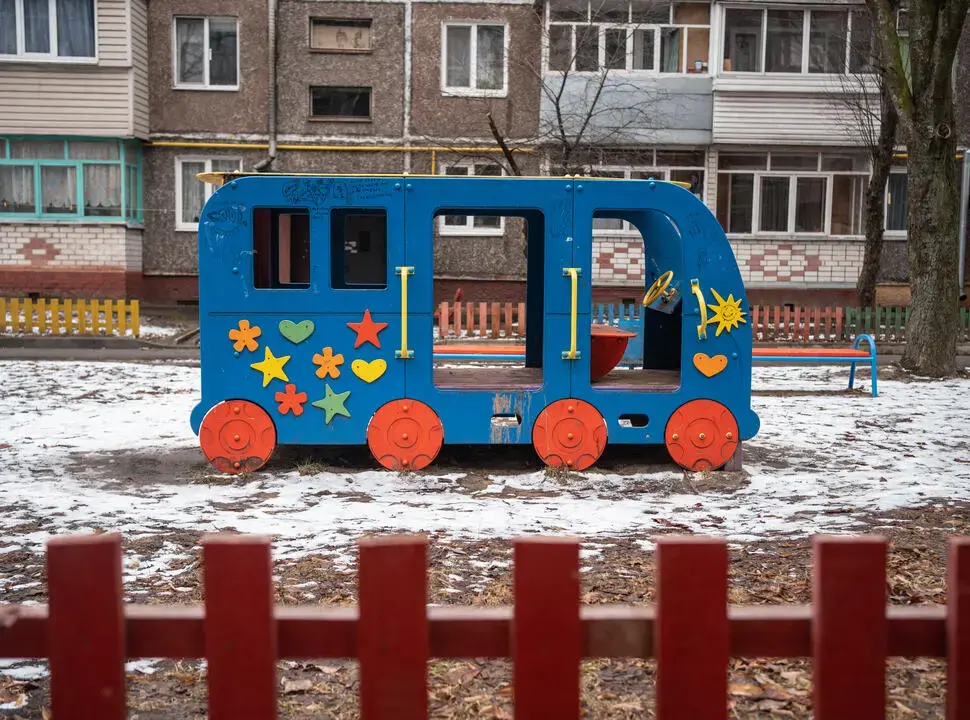
A week after she was born, Amelia began to breathe on her own. Iryna’s relief was immense. “When we were discharged, we immediately left the city,” she recalls. “Volunteers took us to the Khmelnytskyi region.” Iryna stayed there with her newborn for a month, but she was keen to get back. “The morgue workers had agreed not to bury Amelia’s dad until we returned, but we didn't have much time,” she says. As soon as Russian troops were pushed back from the city, she returned.
“Amelia was my salvation. If it weren't for her, I don't know how I would have survived everything. Only she gave me the strength to live on.”
[Pictured above] A playground near Iryna’s home in Chernihiv, where she returned after leaving for a month to seek safety. © UNFPA Ukraine/Serhii Korovayny
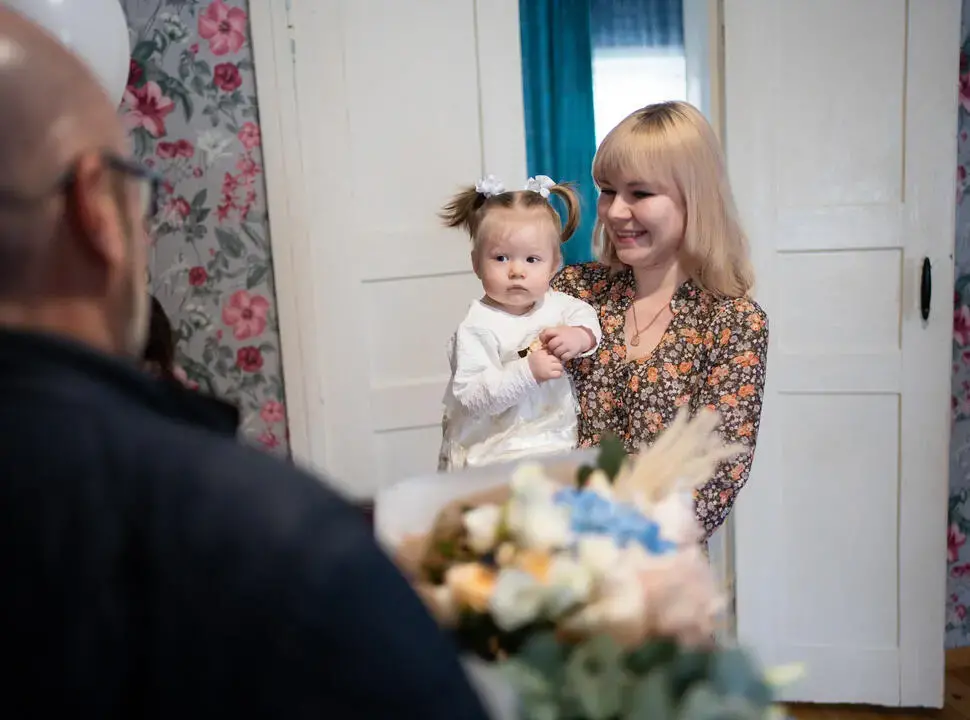
Kateryna’s contractions started while she was sheltering in a cellar. With her city under attack, she managed to find a route to the hospital, arriving by 5 p.m. She gave birth to Sofia in the hospital’s dark, busy corridor, before midnight on 7 March.
“When Sofia arrived, we were taken to the hospital bunker for safety,” Kateryna recalls. “We spent the first hours of her life underground.”
When Kateryna was discharged the next morning, she went to her sister’s home in Chernihiv, where the shelling continued. “We hid in the basement and stayed there for three days. It was cold; there was no light, no water,” she says. “I had to find food for the baby somewhere because I had no milk.”
[Pictured above] Kateryna receives flowers on Sofia’s first birthday. © UNFPA Ukraine/Serhii Korovayny
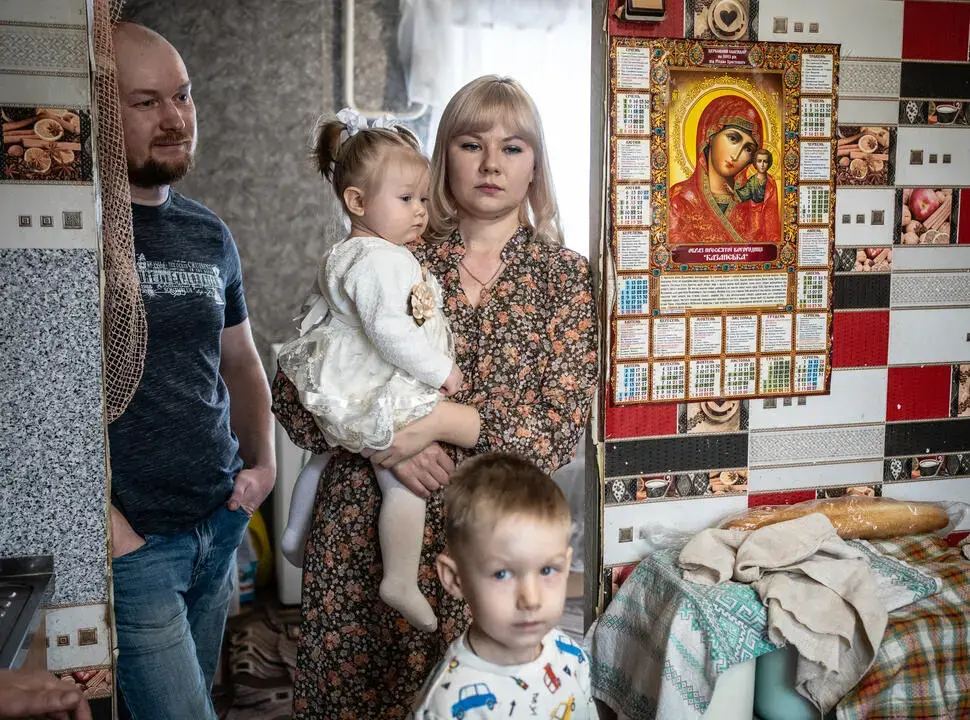
Her husband and 4-year-old son, Mykhailo, were staying with grandparents in their occupied village of Ivanivka, a 20-minute drive away. Being away from her son made her anxious and distressed, but she couldn’t reach him amid the conflict.
“My sister and I went to Lviv. During the month we stayed there, I cried every day. When our village was liberated, my son, Mykhailo, was brought to us,” she says. “My children and loved ones are the only joy that gave me strength to survive this year.”
[Pictured above] Kateryna, with her husband and two children, found it difficult to be separated from her family while giving birth. © UNFPA Ukraine/Serhii Korovayny
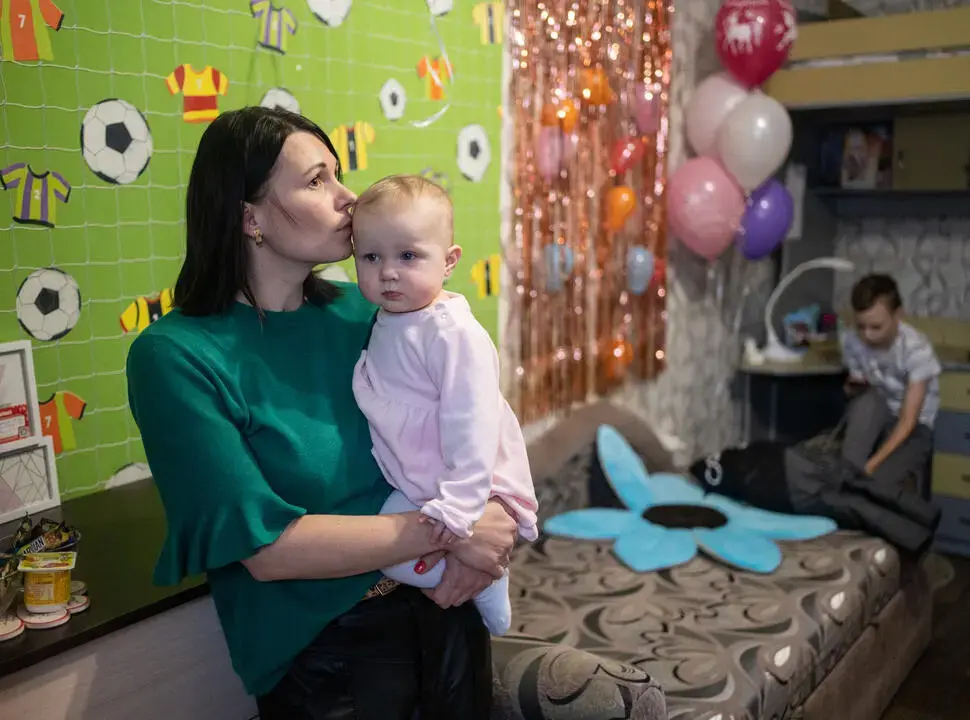
Maryna gave birth in the hospital’s corridor on the same night as Nina and Kateryna.
She describes how, in the weeks leading up to Diana’s birth, she was preparing for the baby’s arrival while also “waking up to the realization that war had begun.”
[Pictured above] Maryna reflects on the past year as the family celebrates Diana’s first birthday. © UNFPA Ukraine/Serhii Korovayny
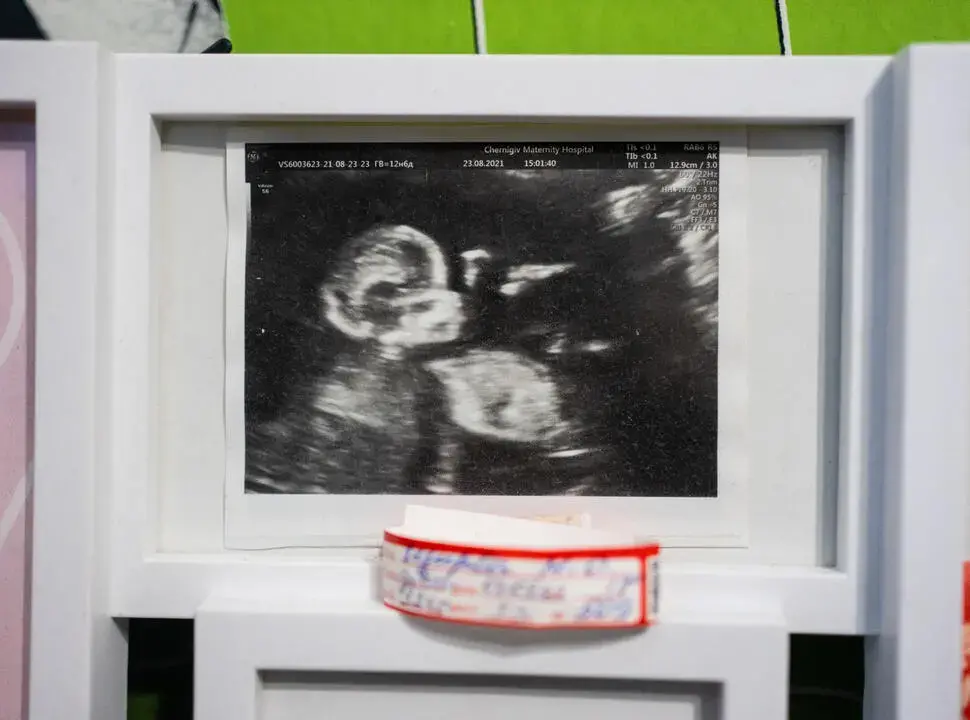
She arrived at the maternity hospital during the day on 7 March, keen to avoid travelling at night amid city curfews. “My greatest fear was the possibility of a bomb dropping on us,” she says. “Thankfully, the experience went smoothly.”
Despite the stress of giving birth amid the bombing, Maryna is grateful that all went well.
[Pictured above] Precious things: Maryna’s scan, taken at Chernihiv Maternity Hospital, and an ankle tag she wore during the birth. © UNFPA Ukraine/Serhii Korovayny
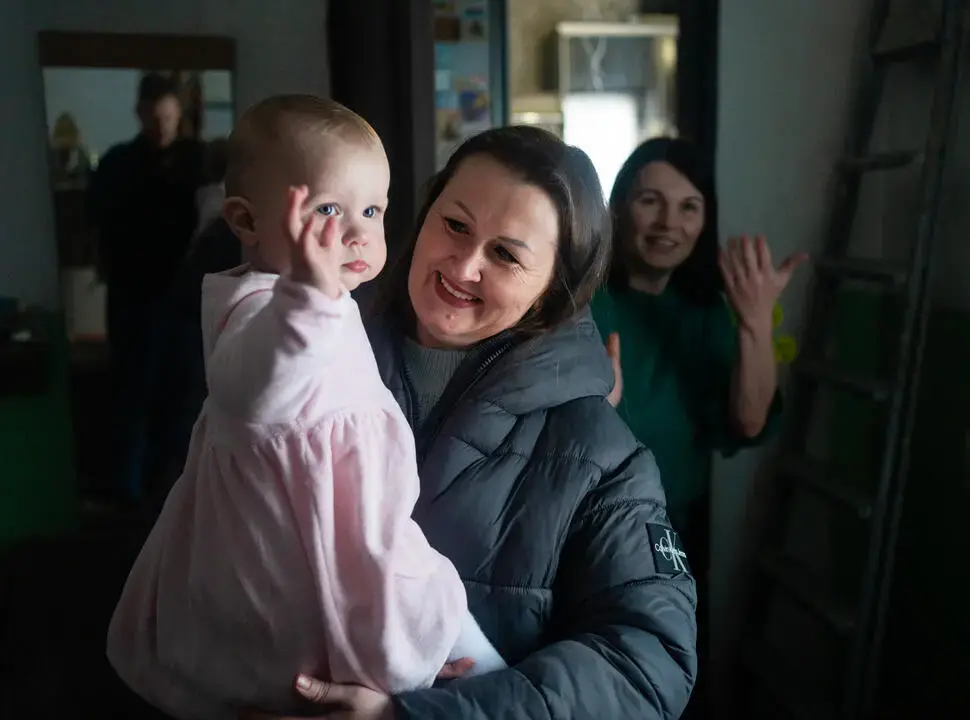
For the next two weeks, the family stayed in the basement with their newborn. “Although there was light from power generators, it was cold,” Maryna says. “We were among the lucky ones with some semblance of comfort.”
“We decided to leave Chernihiv because it was too dangerous to stay with a newborn. We went to Borzna in the Chernihiv region, where my husband's father lived,” she says. “One particular incident that stands out was when the footbridge we used to leave the city was blown up a day after we crossed it. If we had delayed our departure by just one day, we wouldn't have been able to leave.”
[Pictured above] Obstetrician Olena holds Diana on her first birthday. © UNFPA Ukraine/Serhii Korovayny
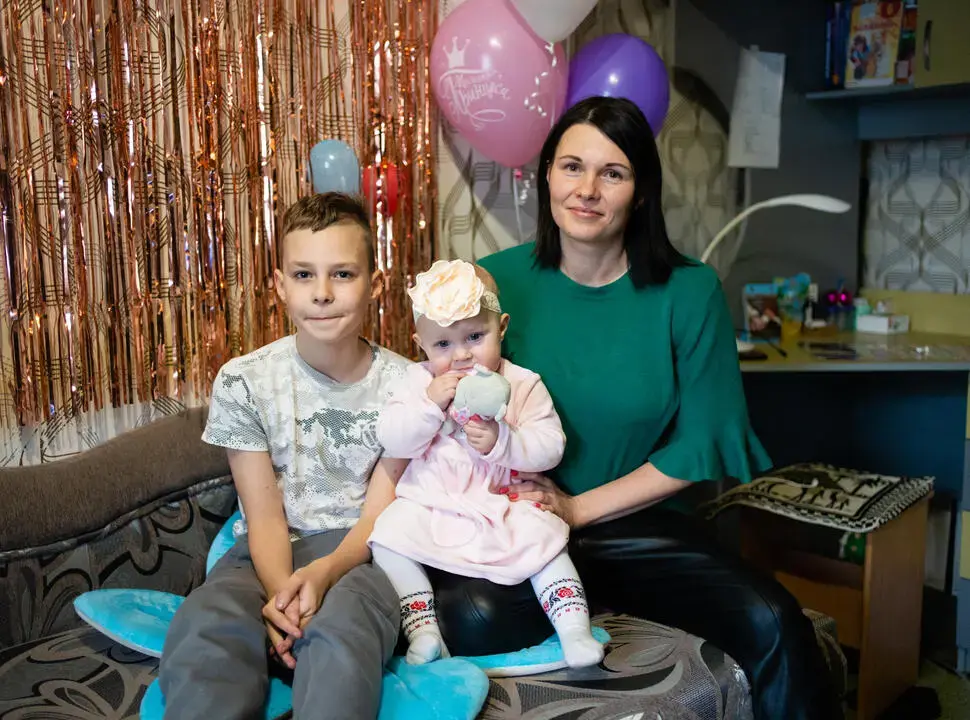
Her family is thrilled and relieved to welcome baby Diana. “Our first child, my son, had been eagerly waiting for his little sister. He helps us a lot and is excited to have a sibling. Our baby is the first girl in our big family, and we are grateful to be alive and healthy.”
[Pictured above] Arthur, 11, is excited to be a big brother to baby Diana. © UNFPA Ukraine/Serhii Korovayny
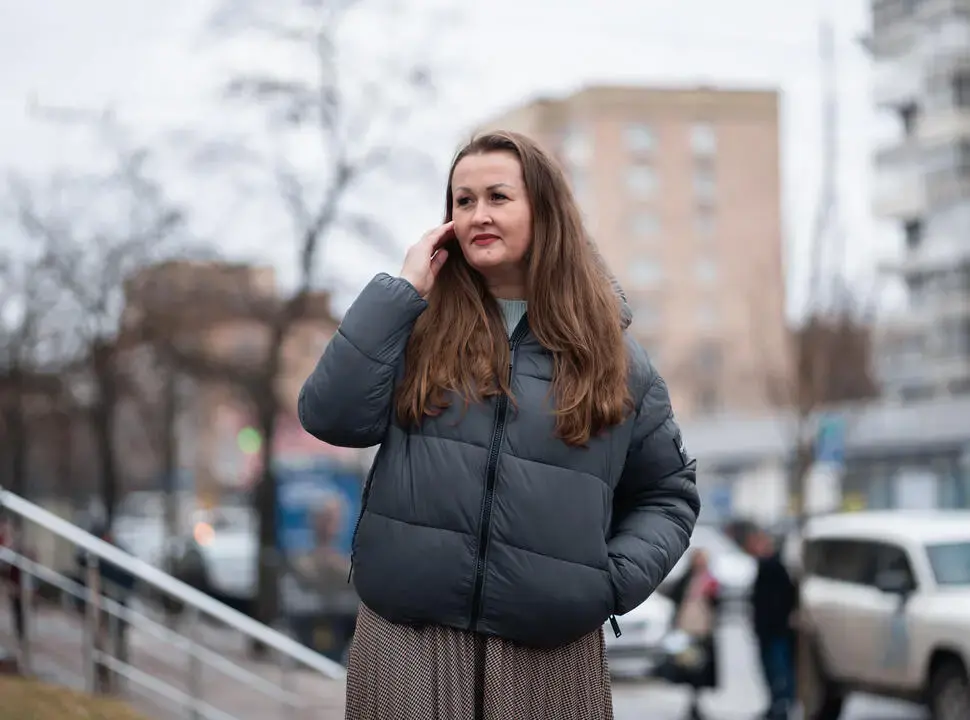
Olena Mokhonko has lived and worked in Chernihiv throughout the war. “I had to go to work because I am a doctor who took an oath to help others. In my work, what I love the most is seeing a father cry and witnessing the joy of parents as they welcome their child into the world,” she says. "When our city was occupied, my work changed dramatically. I had to perform deliveries and surgeries under extreme conditions. We moved all the necessary equipment to the bomb shelter and the first floor of our building.”
She describes how the relentless bombing affected life at home with her husband as well. “There was a time when we were so tired of the constant shelling that we no longer went to a bomb shelter. I still remember the sound of planes at night – my husband and I would hold hands, hear an explosion a few seconds later, and be grateful that the missile hadn't hit our house.”
[Pictured above] Olena has delivered babies throughout the war in her home city of Chernihiv. © UNFPA Ukraine/Serhii Korovayny
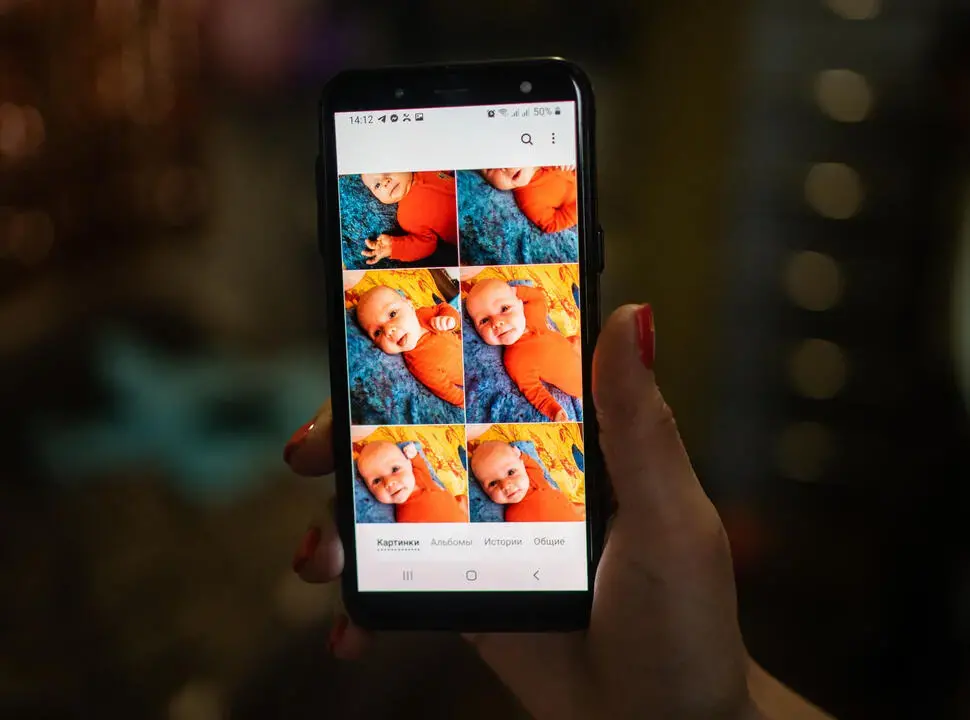
“As an obstetrician, I'm inspired by the strength and resilience of the Ukrainian women giving birth amidst the devastation caused by war. They are true heroines,” Olena says. “With the help of the international community and the determination of the Ukrainian people, I believe we can overcome these challenges and create a better future for our children.”
[Pictured above] Maryna’s photo gallery, bursting with baby pictures. © UNFPA Ukraine/Serhii Korovayny
Publisher
UNFPA EECA
Publication date
Mar 2023
Resources
