
1
News
One year on, Rohingya women and girls seek safety – and a chance to heal
24 August 2018
News
Health facilities, safe spaces reinforced as monsoon rains threaten Rohingya refugees
02 July 2018
1
News
Sexual and reproductive health needs immense among Rohingya refugees
29 June 2018
1
News
First monsoon rains descend on Rohingya refugee camps, omen of challenges ahead
27 April 2018
1
News
As Rohingya refugee crisis escalates, women emerge as front-line responders
06 December 2017
1
Slideshow
Amid Rohingya refugee crisis, women emerge as heroes
06 December 2017
1/15
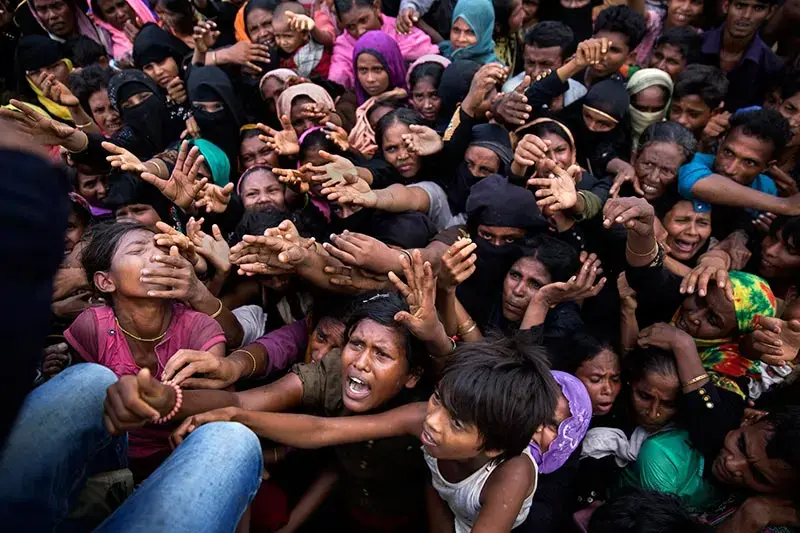
The border between Bangladesh and Myanmar is seeing the world’s the fastest growing refugee crisis. Aid workers are racing to reach those in need. Pictured: People struggle to get aid at the start of the crisis. ©UNFPA Bangladesh/Naymuzzaman Prince
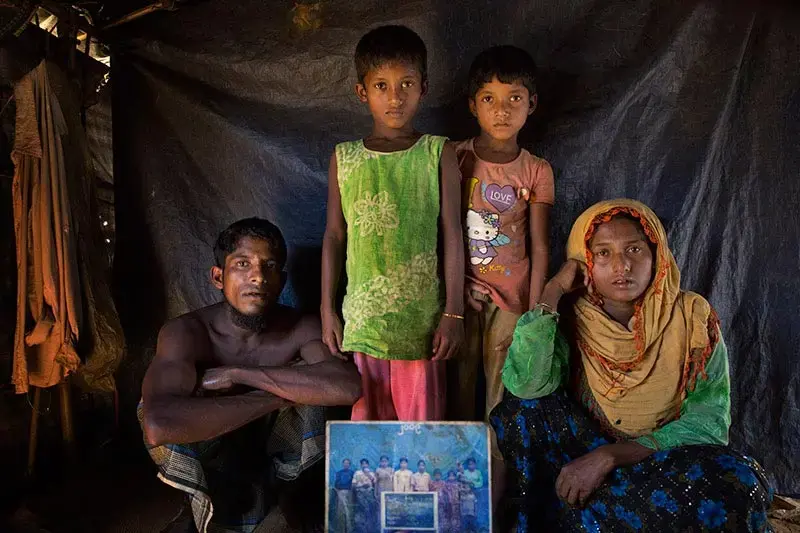
Many have experienced unimaginable grief. Kabir, Kulsum and their two children pose with a family portrait from home. The family is smaller now; their youngest child and eight other family members were killed. © UNFPA Bangladesh/Naymuzzaman Prince
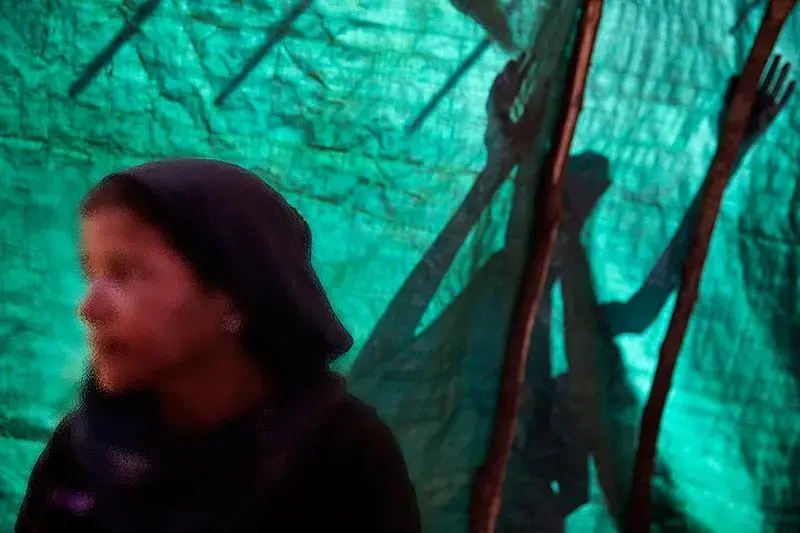
“The outside wounds are healing, but the inside wound will always be raw,” this woman said. Her home was burned, killing her husband and six family members. She was beaten and stabbed. Image blurred for her safety. © UNFPA Bangladesh/Naymuzzaman Prince
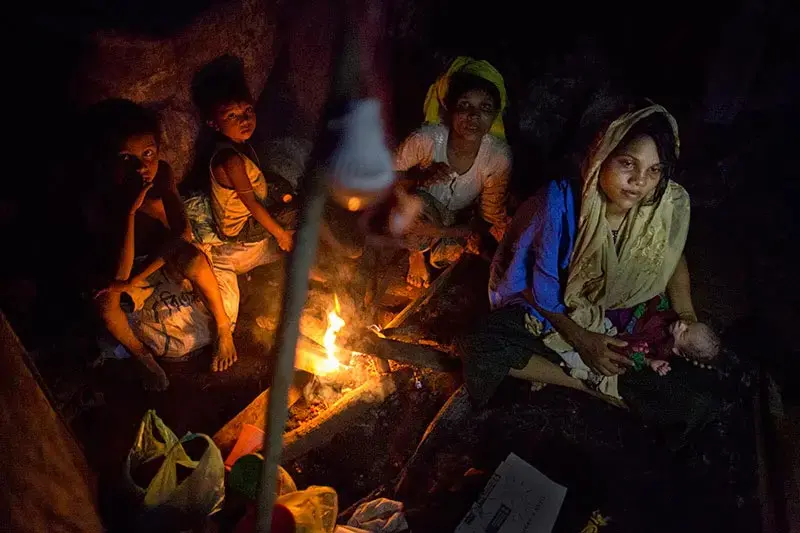
Even after they arrive, violence – especially gender-based violence – remains a concern. Many women are alone, or are now the heads of their families. © UNFPA Bangladesh/Naymuzzaman Prince
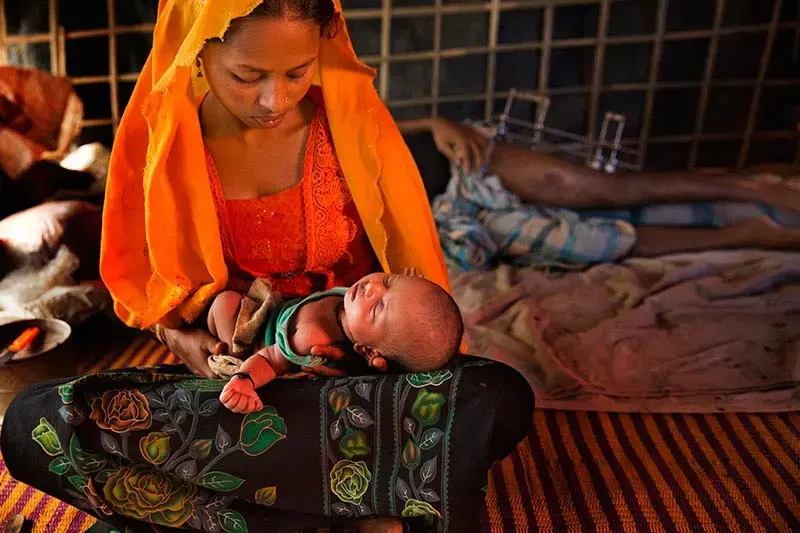
Women are in critical need of maternal health services. Merula’s baby was delivered inside this tent with the help of her mother. She now has three children to care for – in addition to her husband, who was shot. © UNFPA Bangladesh/Naymuzzaman Prince
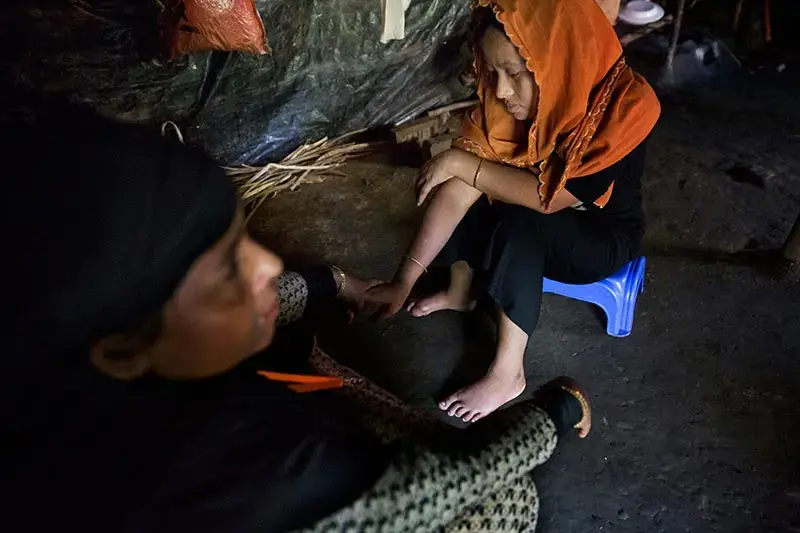
Yet women are emerging as leaders, connecting one another to aid and support. Monowala (left) is an outreach volunteer, connecting women and girls to UNFPA’s women-friendly spaces. © UNFPA Bangladesh/Naymuzzaman Prince
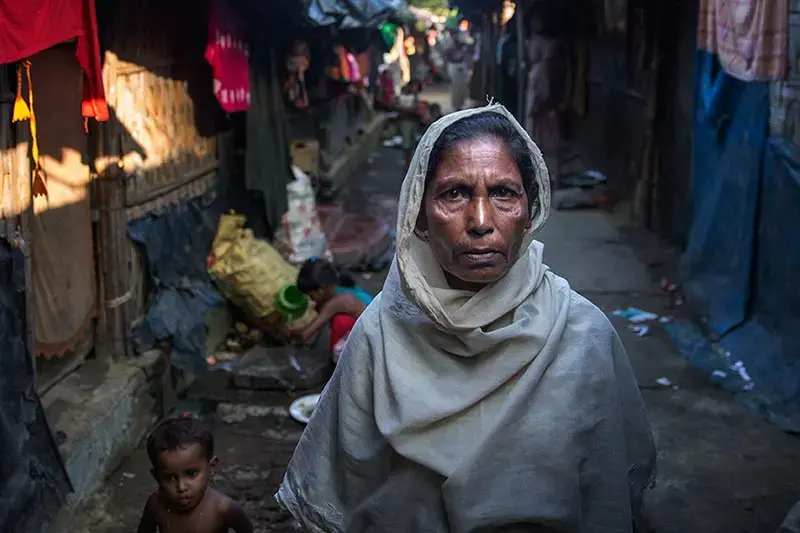
“Auntie Leila” is from the local Rohingya community. “Whenever I find a survivor of gender-based violence among new arrivals or around the streets, I make sure to bring them here” to one of the spaces, she said. © UNFPA Bangladesh/Naymuzzaman Prince
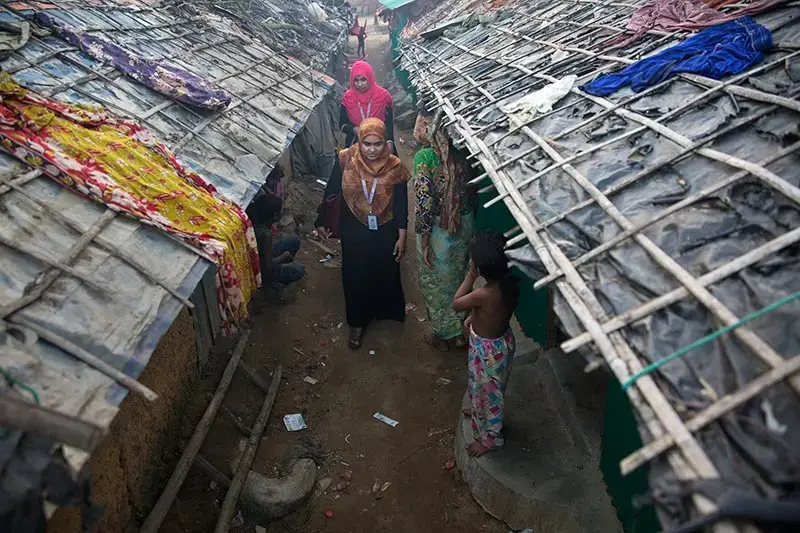
The safe spaces provide access to information, medical care and referrals to counselling. “It’s vital that women can access female service providers for support, said Rafia, a UNFPA caseworker. © UNFPA Bangladesh/Naymuzzaman Prince
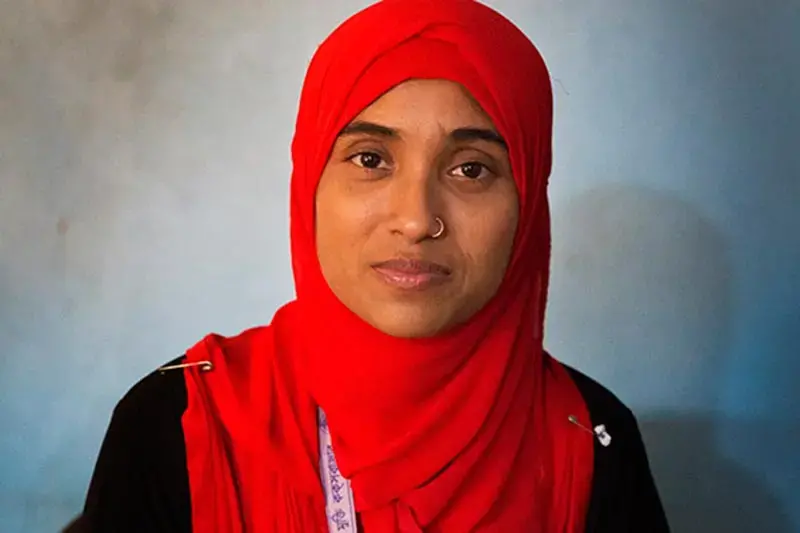
“It is very difficult work at times, but I am a woman and I see the misery of women through my own eyes,” said Sharmin Sultana, another caseworker. © UNFPA Bangladesh/Naymuzzaman Prince
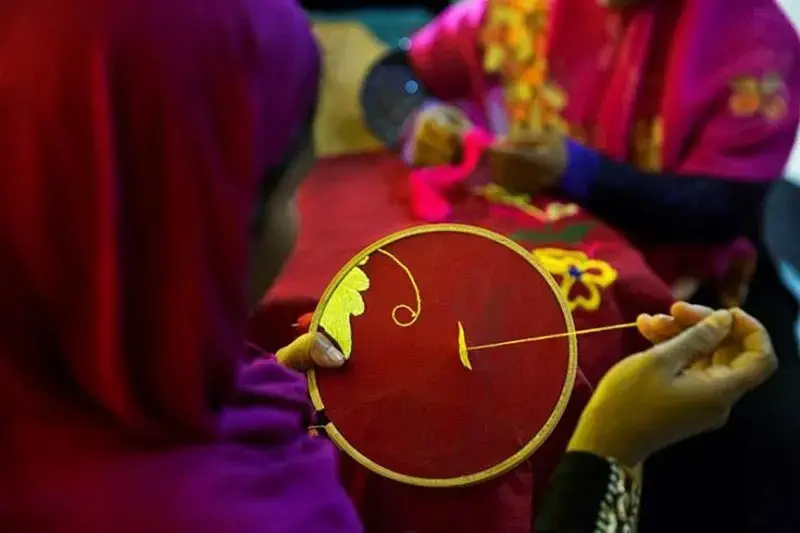
Women’s participation in public life is highly restricted. The safe spaces offer a place for women to come together. Here, women learn handicrafts and share stories. © UNFPA Bangladesh/Naymuzzaman Prince
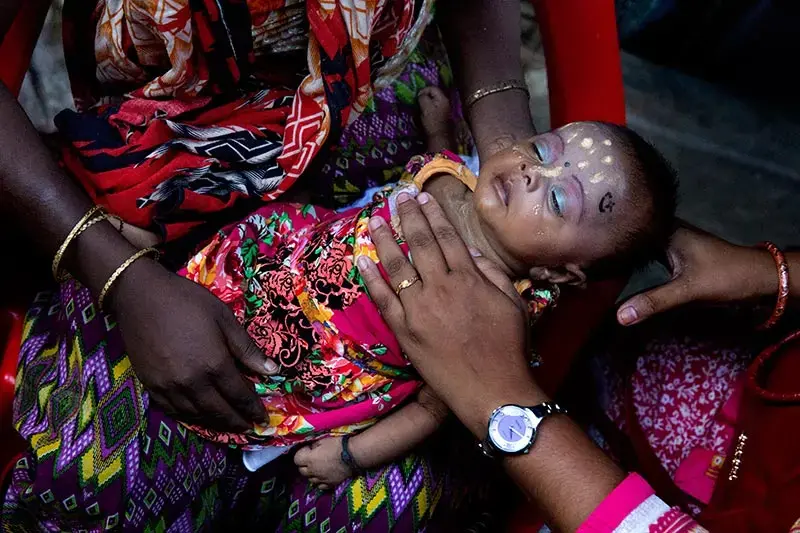
Aid worker Mosrafa greets a family in the Leda settlement. She says local women volunteers are essential. “They know the language and culture. Women are confident to share their stories with them.” © UNFPA Bangladesh/Naymuzzaman Prince
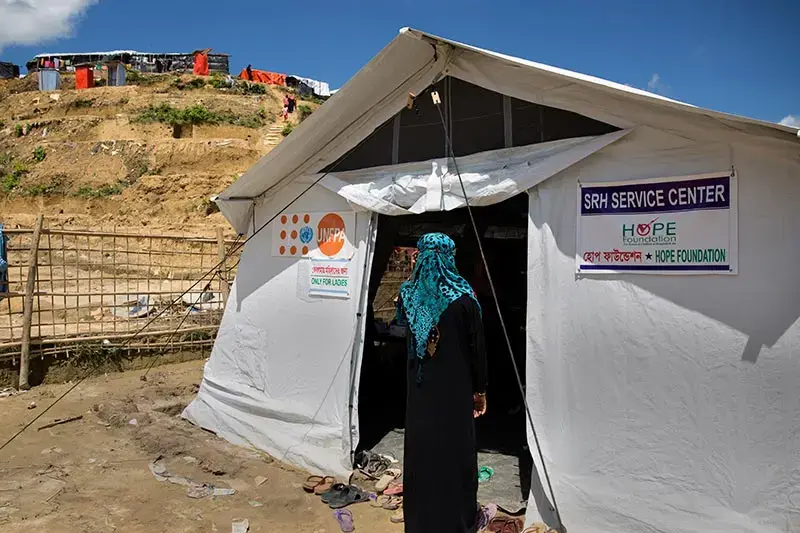
Midwives are also providing life-saving care, both at the safe spaces and at mobile clinics. In this clinic in Balukhali, a midwife named Sharifa built a birthing table from bamboo with her own hands. © UNFPA Bangladesh/Naymuzzaman Prince
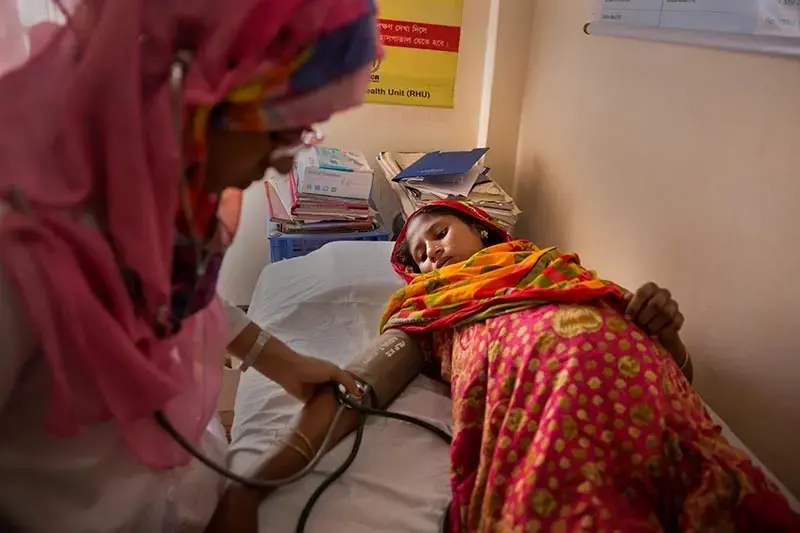
The midwives provide maternal care as well as clinical management of rape. Sabekun, 25 weeks pregnant, has an antenatal check-up after walking for seven days. “Now I feel more at peace,” she said. © UNFPA Bangladesh/Naymuzzaman Prince
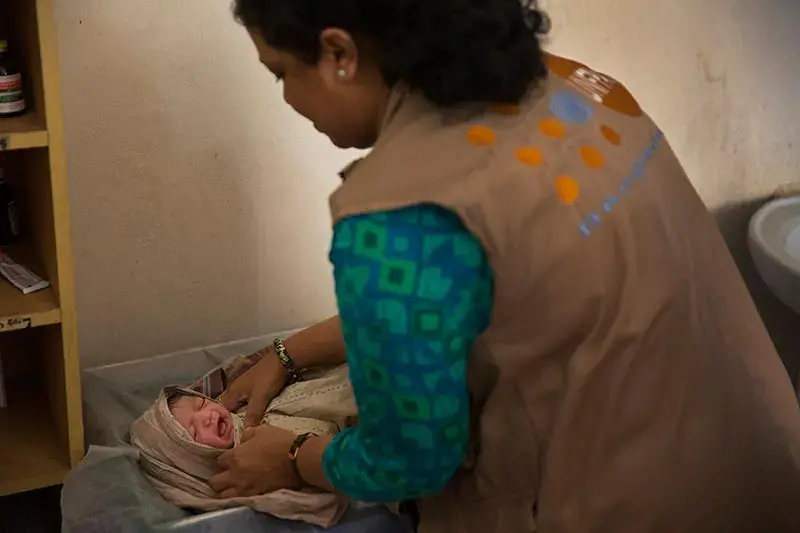
Midwife Rabeya stabilized the mother of this newborn. The mother arrived in a state of shock immediately after delivery. The baby was still attached to the placenta. © UNFPA Bangladesh/Naymuzzaman Prince
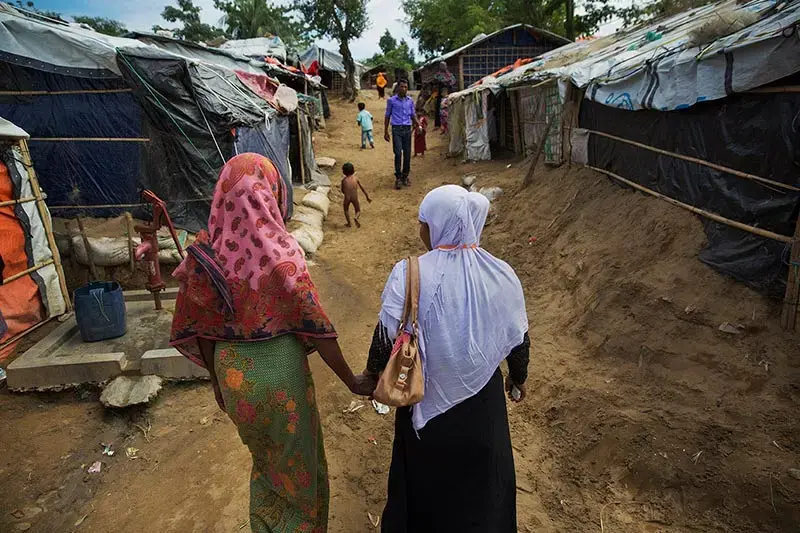
One Rohingya volunteer says solidarity among women could help to break stigma around rape. “We must share with each other and lift the burden of all the trauma.” © UNFPA Bangladesh/Naymuzzaman Prince
News
View from a camp in Myanmar – one family's story from before the recent crisis
04 December 2017
1
News
Sexual violence devastating, humanitarian needs mounting in Rohingya crisis
20 October 2017
1