
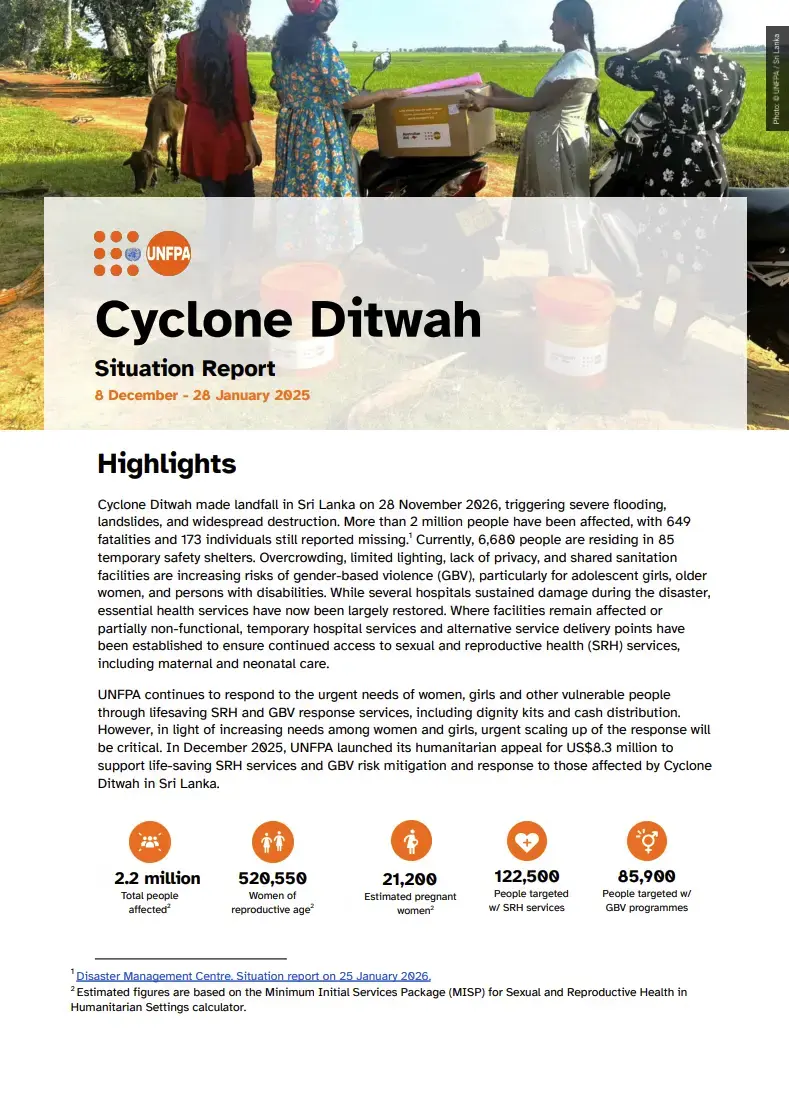

Sexual and reproductive health (SRH) services and protection from gender-based violence (GBV) have come under increased strain following Cyclone Ditwah, which caused severe flooding and landslides across Sri Lanka and affected more than two million people. Displacement into overcrowded safety centres, combined with limited privacy, poor lighting, and shared sanitation facilities, has heightened risks for women, adolescent girls, older persons, and people with disabilities. Damage to health infrastructure and disrupted livelihoods have further increased risks for pregnant and lactating women, even as essential maternal and neonatal care is gradually being restored through temporary and alternative service delivery points.
UNFPA’s response has focused on maintaining access to life-saving care while reducing protection risks in the most affected districts. Support has included the provision of dignity kits, menstrual hygiene kits, maternity and reproductive health supplies, alongside targeted cash assistance to pregnant women to help cover transport, medicines, nutrition, and other immediate health-related costs. These interventions have been paired with community-based information sessions on maternal danger signs, menstrual health, safety, and available services, as well as efforts to strengthen referral pathways, conduct safety audits in shelters, and reinforce accountability to affected populations.
To sustain these efforts, UNFPA launched an appeal for US$8.3 million in early December to support critical health and protection services for populations affected by the cyclone. To date, only a limited share of the required funding has been secured, supplemented by modest in-kind contributions. As the response moves into early recovery, additional resources remain essential to maintain continuity of care, address ongoing protection risks, and support women and girls to recover with safety, dignity, and access to essential services.


