
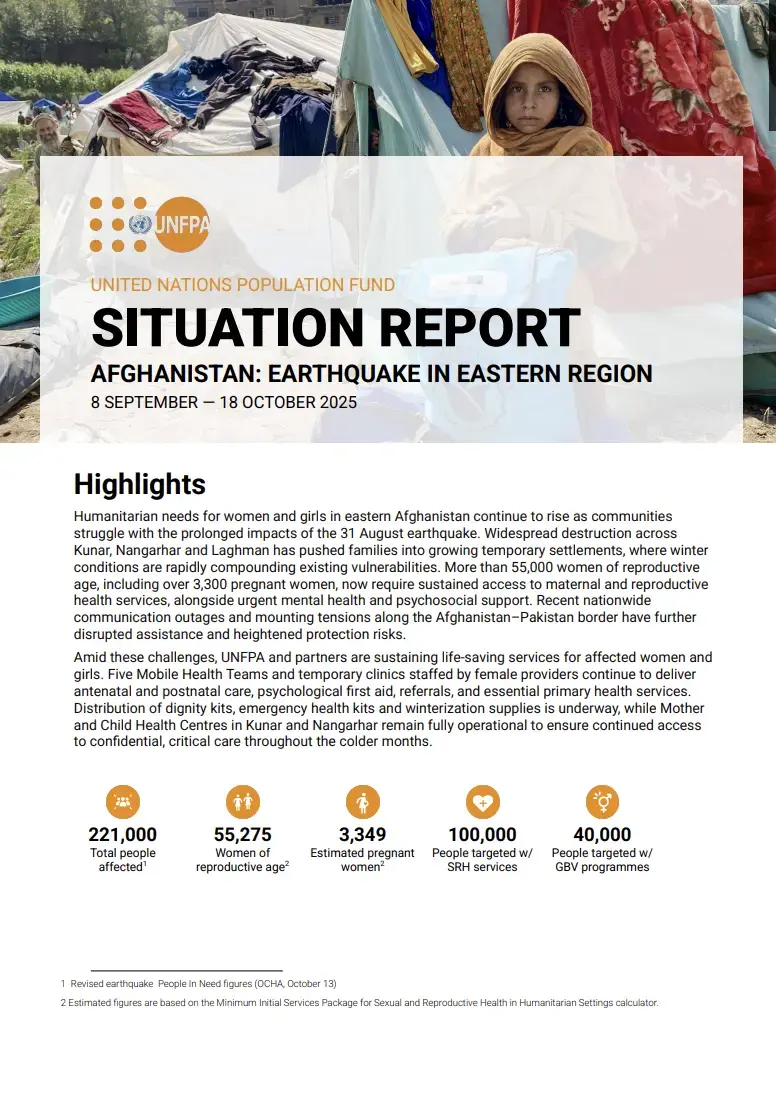

Women and girls in eastern Afghanistan continue to face escalating risks following the 31 August earthquake, with widespread destruction in Kunar, Nangarhar and Laghman forcing thousands into overcrowded temporary settlements. The combined impacts of displacement, harsh winter conditions, and ongoing returns from neighbouring countries are straining access to essential sexual and reproductive health (SRH) services and heightening exposure to gender-based violence (GBV). More than 55,000 women of reproductive age — including over 3,300 pregnant women — require sustained care, while communication blackouts and rising instability along the Afghanistan–Pakistan border continue to disrupt assistance and limit safe access to support.
UNFPA and partners are maintaining life-saving services despite these constraints, operating Mobile Health Teams and Mother and Child Health Centres that remain fully functional and staffed by female providers. Women and girls are receiving antenatal and postnatal care, psychological first aid, GBV response services, dignity kits, and emergency reproductive health supplies. Psychosocial counselling centres in Kunar and Nangarhar are supporting survivors of trauma, while updated GBV referral pathways, community engagement mechanisms, and safety audits are reinforcing protection across affected districts.
To scale up SRH and GBV services, replenish emergency stocks, and sustain operations through winter, UNFPA requires US$5 million. To date, US$2 million has been mobilized, including surge staffing support through NORCAP. Additional funding is urgently needed to ensure continuity of essential services for women and girls most at risk.


