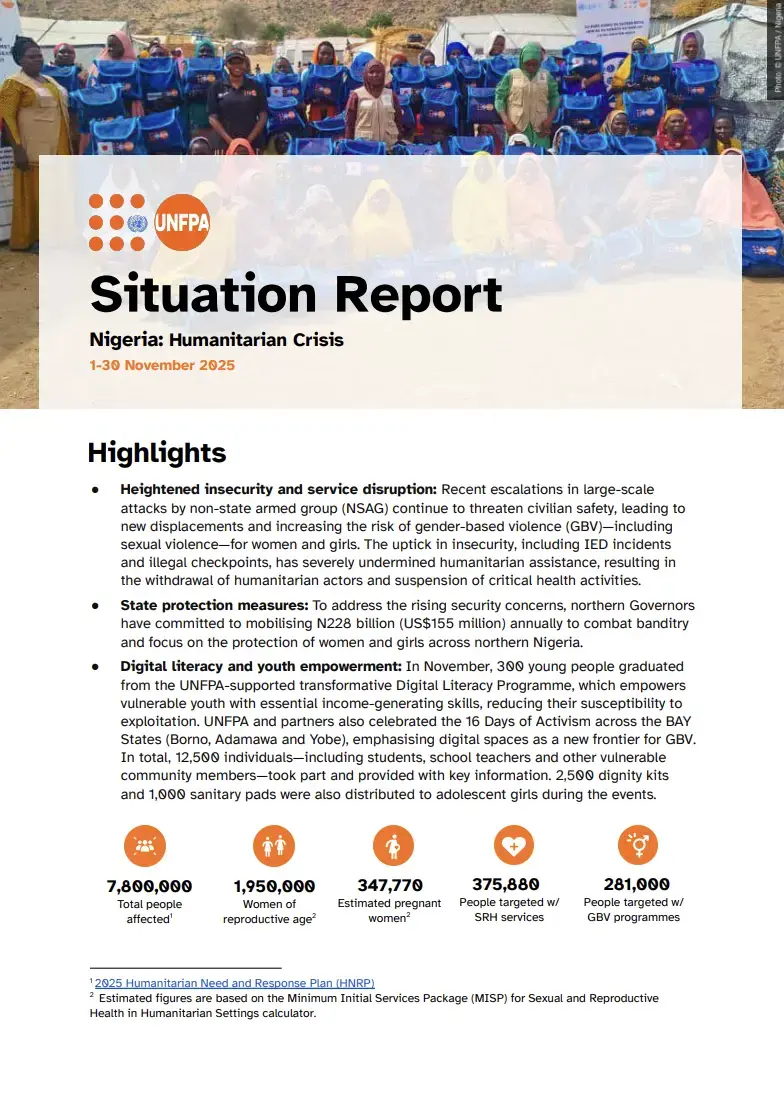

The humanitarian situation in Nigeria's Borno, Adamawa, and Yobe (BAY) States is dire, marked by 14 years of conflict, insecurity, and displacement that have severely compromised health services and livelihoods for an estimated 16 million people. Women and girls face intensified risks of abduction, and the region has an alarmingly high maternal mortality rate of 1,848 per 100,000 live births, compounded by limited access to maternal and child health services and high malnutrition rates. The deteriorating security further restricts humanitarian movement and access to essential protection and health services.
In response to this volatile context, UNFPA continued to deliver critical sexual and reproductive health (SRH) and gender-based violence (GBV) services, reaching over 10,000 people with SRH services, including antenatal care and skilled deliveries. Furthermore, almost 5,000 women and girls received comprehensive GBV services such as case management and psychosocial support, and over 21,000 individuals were reached with GBV awareness information. UNFPA also empowered adolescents and youth through vocational skills and digital literacy programmes to foster economic independence and build resilience.
UNFPA Nigeria led the GBV Area of Responsibility (AoR) sub-sector team to help Benue State establish a GBV Technical Working Group and supported the planning of the 16 Days of Activism across the BAY States. The Call to Action (CtA) team, hosted by UNFPA, participated in the 2025 humanitarian programme review and 2026 planning meeting to ensure strategic priorities were addressed. The CtA Secretariat also updated its Roadmap 2022–2025, welcoming five new local NGO partners and underscoring the initiative’s continued relevance and strong partner engagement.
Despite the critical needs and robust response, UNFPA faces a significant funding shortfall. In 2025, UNFPA required US$15.7 million but, as of November 2025, had only received US$3.7 million, resulting in a funding gap of US$11.9 million (76.2 per cent). This substantial deficit jeopardizes UNFPA’s ability to deliver life-saving SRH and GBV services, putting the lives and well-being of women and girls in Nigeria at severe risk.


