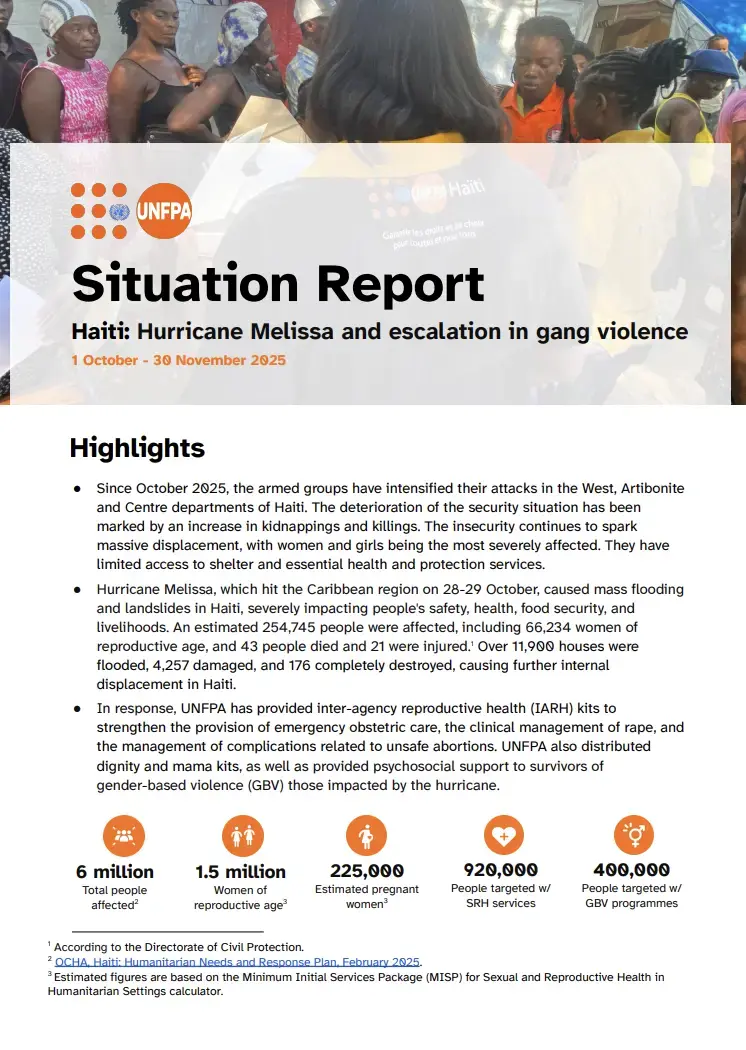

Haiti has experienced a severe escalation of violence from armed groups since October 2025, primarily in the West, Artibonite, and Centre departments. This has led to an increase in kidnappings, killings, and massive internal displacement, with women and girls being the most affected and facing limited access to essential services. Simultaneously, the situation was compounded by Hurricane Melissa, which caused widespread flooding and landslides, impacting over 254,000 people, including 66,000 women of reproductive age. The dual crisis has severely hampered humanitarian access, forcing UNFPA and partners to postpone some distributions and mobile clinics due to insecurity.
Despite significant funding and access challenges, UNFPA and its implementing partners have continued to deliver critical services. UNFPA Haiti has deployed integrated Sexual and Reproductive Health (SRH) and Gender-Based Violence (GBV) mobile clinics. Key achievements include distributing 47 reproductive health kits to strengthen emergency obstetric care, assisting 456 deliveries, and providing medical assistance through 10 mobile clinics to 4,846 internally displaced persons and hurricane-affected individuals. For GBV, 1,563 women and girls received dignity kits, 500 women received emergency cash assistance, and 329 calls were made to the GBV hotline for psychosocial support and referrals. UNFPA also reached 8,471 people with awareness-raising activities on GBV and SRH.
Despite the urgent needs in Haiti, UNFPA is facing a severe funding shortfall. Of the US$28.9 million required in 2025 to strengthen and expand access to lifesaving SRH and GBV services, only US$4 million has been received, representing just 14% of the required funding. With the needs of women and girls escalating due to both insecurity and the hurricane's impact, additional and urgent financial support is critically required to ensure the continuation of these essential health and protection services.


