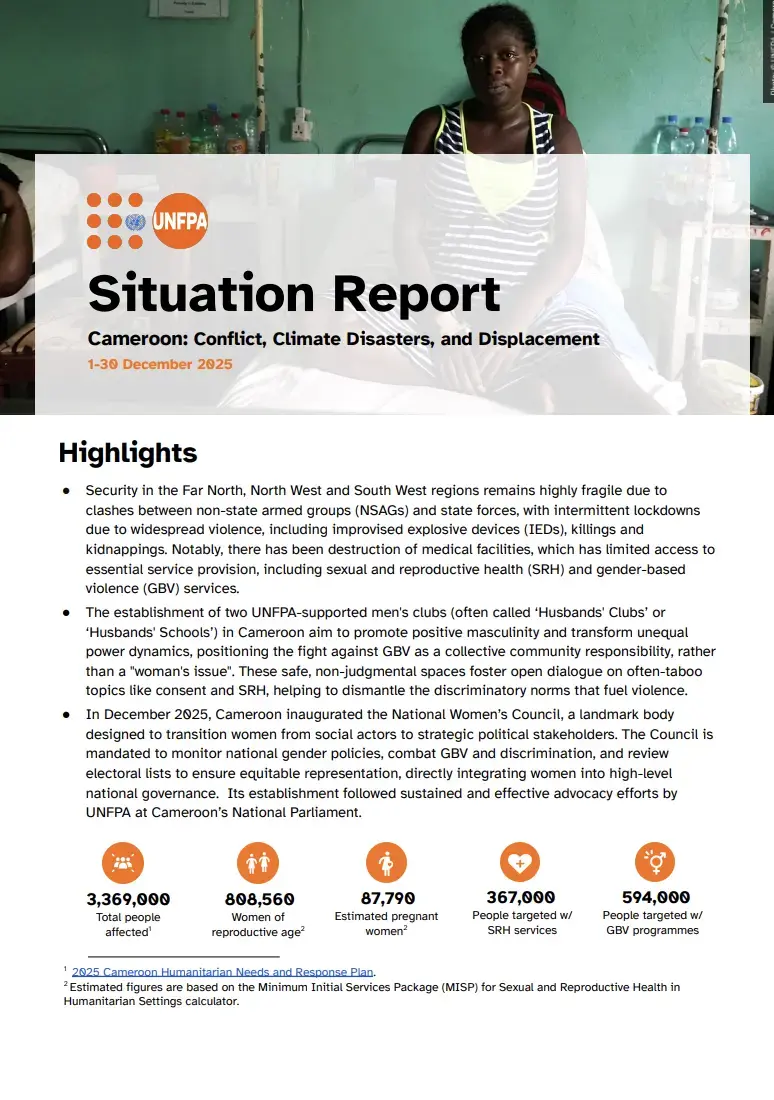

As of December 2025, Cameroon continued to be affected by a multifaceted humanitarian crisis due to persistent insecurity, climate shocks, and structural vulnerabilities. Ongoing violence in the Far North and the unresolved socio-political crisis in the North-West and South-West regions have caused displacement, disrupted livelihoods, and severely limited access to essential services, including healthcare and education. The East and Adamawa regions are also under strain from hosting a large number of refugees. These combined crises have resulted in prolonged displacement, heightened protection risks, particularly gender-based violence (GBV) against women and girls, and difficulty accessing essential sexual and reproductive health (SRH) care in hard-to-reach areas.
Despite severe movement restrictions that led to a 34% decline in antenatal consultations and a 70% reduction in skilled deliveries, UNFPA Cameroon deployed midwives who supported 580 skilled deliveries and referred 50 pregnant women with obstetric complications for specialized services. UNFPA also distributed 400 clean delivery kits and 300 baby boxes to mitigate high-risk home births. In the area of GBV, UNFPA Cameroon reached over 11,000 people through prevention, response, and capacity-building activities, with 60 per cent of survivors who sought medical assistance treated within the critical 72-hour window. Additionally, UNFPA activated referral mechanisms, enabling 1,400 women and girls to access Women and Girl Safe Spaces (WGSS) and psychosocial services.
In December, UNFPA Cameroon chaired the GBV Area of Responsibility's online campaign for the 16 Days of Activism, hosting eight webinars for 256 participants. In SRH, UNFPA coordinated training for community youth centre technicians, bringing together key ministries to develop joint action plans for strengthening girls’ leadership and protection by 2026. Furthermore, as the technical lead of the Mental Health and Psychosocial Support (MHPSS) Working Group, UNFPA spearheaded capacity-building for 32 front-line professionals and presented the 2026 Action Plan for the sector.
As of December 2025, UNFPA has received US$3.5 million in funding. However, with a requirement of US$9 million, the program faces a critical 61% funding gap. This shortfall severely compromises the provision of essential SRH and GBV services, placing thousands of vulnerable women and girls in Cameroon at heightened risk.


