
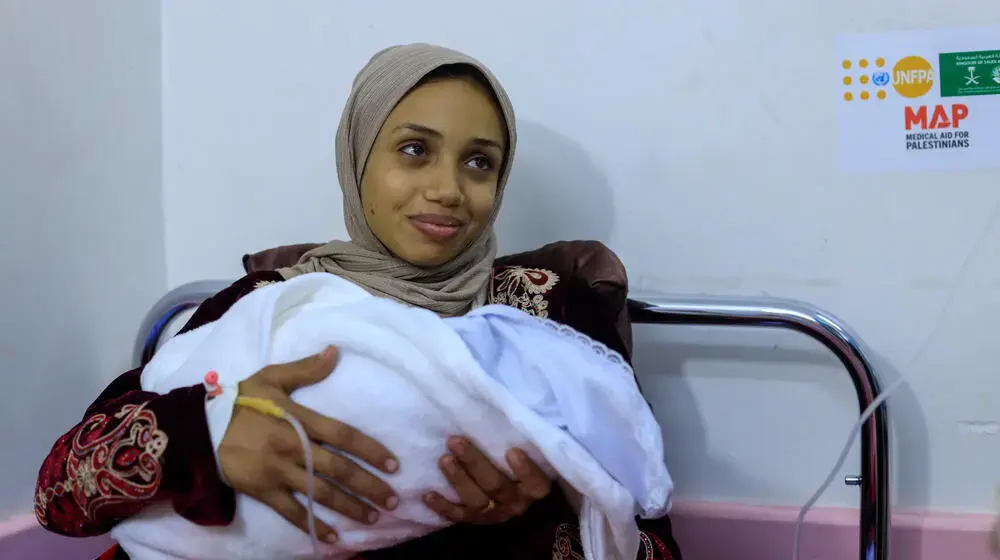
GAZA, The Occupied Palestinian Territory — When Rana learned she was pregnant, her joy was quickly overshadowed by another feeling – fear.
For Rana, as for many of the 55,000 pregnant women across Gaza seeking healthcare, the question was not if her baby would be born but where, and whether they would survive the delivery. “I thought I would have to give birth in a tent,” she recalled.
After two years of relentless attacks, Gaza’s health system has been shattered. Only a fraction of health facilities remain functional, and very few can provide emergency obstetric and newborn care. Health workers have been displaced, medicines are scarce, and neonatal units are overwhelmed, operating far beyond capacity with too few incubators and trained staff.
“As my due date approached, I was terrified. I didn’t know how I could bring a child into this world under these conditions,” she told UNFPA, the United Nations Population Fund, which is the UN’s sexual and reproductive health agency.
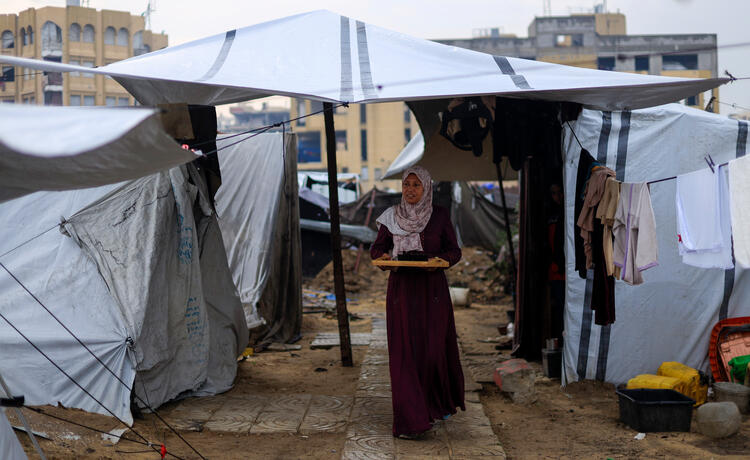
Like most of Gaza’s 2.1 million residents, Rana is displaced, living in a makeshift tent, exposed to severe winter conditions and heavy rains. Recent flooding has washed away shelters, destroyed belongings, and left families cold, soaked and prone to disease, with the risks of respiratory infections, diarrhoea, hepatitis and hypothermia increasing sharply.
Pregnant women, new mothers and newborns are among those most in danger, as tragically witnessed in Khan Younis, where a two-week-old baby recently died from hypothermia.
A lifeline when it mattered most
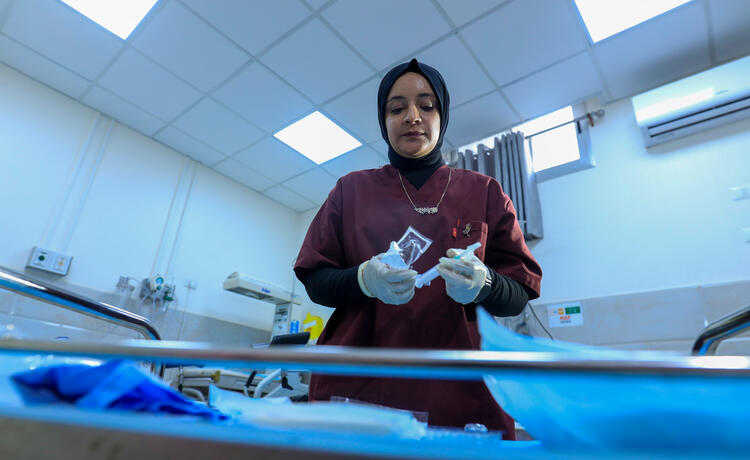
At a moment when Gaza’s health system has stretched beyond its limits, trained midwives and functioning health facilities are crucial in ensuring women and babies survive childbirth and the delicate post-partum period.
For Rana, this meant being able to give birth not in a flooded tent, but in a functional hospital, surrounded by health workers and with the equipment needed for a safe delivery.
Thankfully she was able to give birth in the Patient’s Friends Benevolent Society Hospital in Gaza City. This hospital, along with Al Khair Hospital in Khan Younis, was recently fully rehabilitated through UNFPA support and with funding from the Kingdom of Saudi Arabia through the King Salman Humanitarian Aid and Relief Centre (KSrelief).
At the hospital, midwife Nabila Masaoud was with Rana throughout her labour. She described how precarious conditions were before the facility was rehabilitated. “There were very few health workers, and much of the equipment had been damaged,” she told UNFPA.
“If a woman developed complications during childbirth, there was a real risk she wouldn’t survive. This support changed that. We were able to bring health workers back, cover their salaries, and replace equipment we had lost during the war.”
These and other initiatives have delivered immediate results for women and girls most in need in Gaza, some 240,000 of whom have already accessed essential reproductive health services, including family planning and maternal healthcare, with many more expected to be reached.
“Every woman deserves a safe delivery,” said midwife Nabila.
The fight for a first breath
With fewer than 2,000 hospital beds for over 2 million people in Gaza and ventilators for newborns in short supply, premature babies share cots and incubators, the tubes and monitors that keep them alive running on unstable electricity.
Midwife Heyam has been displaced multiple times in the past two years, but continues to work in overstretched maternity units wherever she goes.
The mother of six described days filled with continuous deliveries, barely any rest, and women arriving exhausted, malnourished and without having had any access to antenatal care: “There is a noticeable rise in cases of malnutrition and anaemia among postpartum women, as well as malnutrition and low birth weight among newborns due to poor maternal nutrition.”
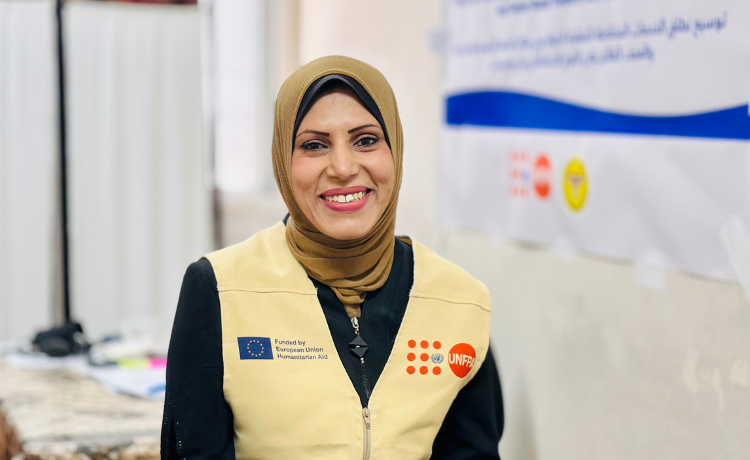
Recently, she has relocated to Gaza City, where she works at a primary health centre in Tal Al Hawa in Gaza City, run by the Palestinian Medical Relief Society. She and other midwives are supported by the European Union’s humanitarian office (ECHO) and UNFPA.
“Although I have been a midwife for many years, this year has been the most difficult,” she said. “The shortage of medicines and medical supplies has become part of my daily reality. Even the simplest items were often unavailable.”
A lifeline in the dark
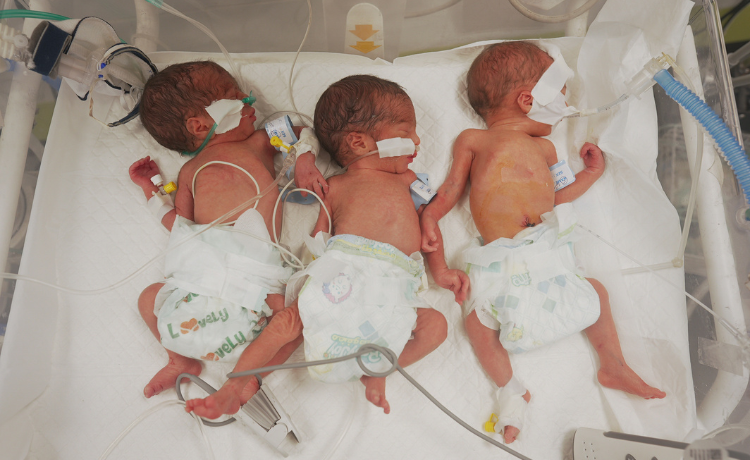
Some 150 babies are born every day in Gaza, yet essentials like water, soap and electricity are scarce. Rooms are packed with women who should be monitored for complications, but who are instead forced to give birth without privacy. For many, the journey to the hospital is itself a terrifying risk after repeated attacks on medical facilities.
Transportation is another major challenge, as Heyam explained. “I often had to walk long distances between homes and health centres, under the sun or in the rain. With every step, I told myself that this woman was waiting for me and that I carried a responsibility that could save the life of a mother or a child.”
But even in such trying circumstances, these midwives have stabilized mothers suffering from life-threatening haemorrhages, performed neonatal resuscitation with limited or nonexistent equipment, and helped women find the strength to bring a child into the world when they feel they have none.
Nabila, Heyam and their colleagues rely on targeted training and critical supplies to keep doing their jobs and saving lives. It’s what allows them to continue their work, to step in when an incubator is full or a mother is fading from exhaustion.
As Heyam explained, “Midwives are the first line of defence for the lives of mothers and newborns, and they must be supported and empowered to carry out their mission.”
“We in the field represent hope for women amid this darkness.”


