
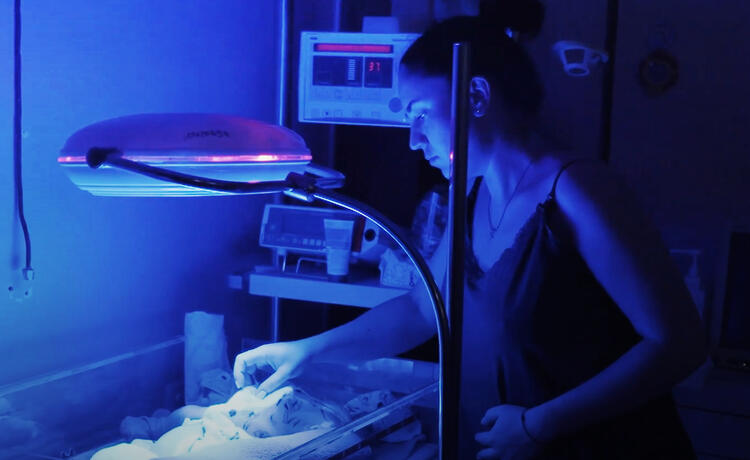
KHERSON/KYIV, Ukraine – In a neonatal unit at Kyiv Hospital, Anton* rests in a mobile incubator. He was born premature three days earlier, an occurrence that health workers say has become increasingly common.
“Many of the women coming here are under immense stress,” obstetrician Dr. Heintz told UNFPA, the UN sexual and reproductive health agency, which provides mobile incubators to the hospital. “The fear, the uncertainty, the travel – all of it contributes to complications in pregnancy.”
The violence, stress and displacement have had devastating consequences for pregnant women and newborns in Ukraine, with a 37 per cent rise in maternal death rates from 2023 to 2024, according to the latest data from the World Health Organization (WHO) and partners.
“We’ve seen a rise in premature births, and these babies depend on ventilators, on drugs that help them breathe, and on the staff who stay even during shelling,” added the doctor, himself displaced from his home in Donetsk.
Frequent electricity cuts, infrastructure damage and stock-outs of supplies and equipment mean many premature babies like Anton rely on humanitarian supplies and equipment from organizations like UNFPA.
“It’s the difference between life and death in some cases,” explained Dr. Heintz. “When the shelling starts, we just keep going [on with our duties].”
Healthcare under attack
In early October 2025, a missile struck a UNFPA-supported maternity hospital in the city of Sumy, in northeast Ukraine. More than 160 pregnant women and new mothers, newborns and healthcare workers made it to a basement shelter just before impact.
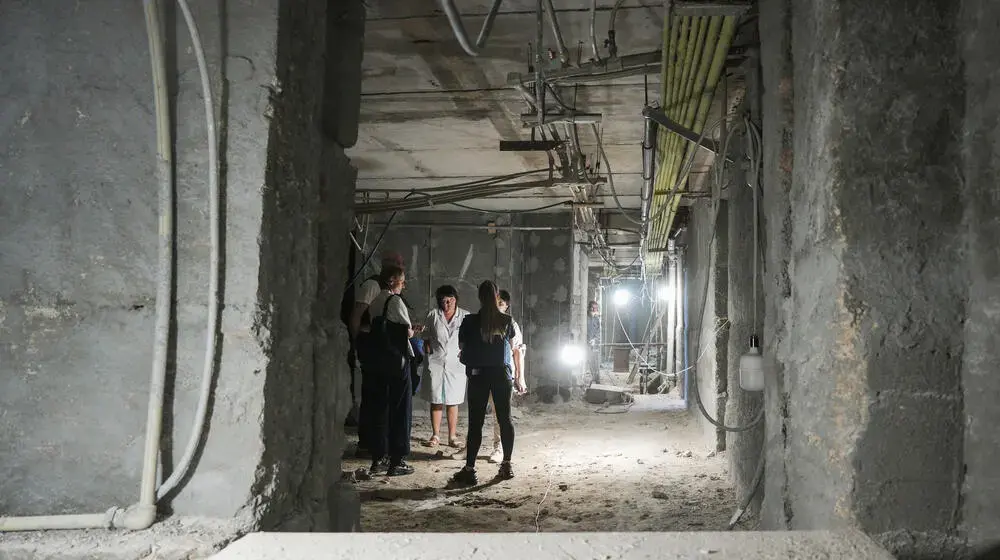
And just last week, a maternity hospital in Kherson supported by UNFPA was damaged in an attack. Health workers and patients once again took shelter in the basement unit, which was constructed with UNFPA’s support. The Kherson City Perinatal Centre is just 1.5 km from active front lines and remains under constant threat from artillery and drone attacks. Luckily, no one was injured – and a baby girl was even safely delivered underground.
Many hospitals have relocated delivery rooms to underground facilities, adjusting to terrifying conditions that few healthcare systems globally could withstand.
“When the shelling starts, we just keep going” – Dr. Heintz
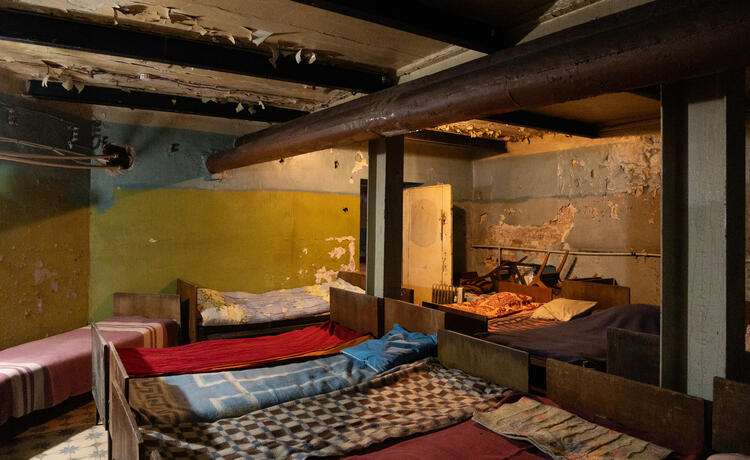
For health workers, these interventions are part of a daily reality that has redefined what it means to provide maternal care. The country’s doctors and midwives now operate in wards where electricity can fail at any moment, where air-raid sirens interrupt deliveries.
The attacks are part of a broader pattern of terror across Ukraine, where more than 80 maternity and neonatal care facilities have been damaged or destroyed since Russia’s full-scale invasion began in February 2022 – among over 2,500 healthcare sites hit nationwide.
War, stress and lack of access to medical services
Each new assault adds to a deepening national exhaustion. Mental health needs in Ukraine are soaring, with a recent survey revealing that almost 60 per cent of Ukrainians now experience anxiety and intense stress linked to the constant shelling, displacement and loss. Experts have warned that millions of people are at risk of developing a mental health condition as a result of the war.
Doctors have also linked the chronic stress, displacement and frequent disruption of medical services to rising pregnancy complications, especially among women living in combat zones.
In Kherson, UNFPA estimates the number of preterm births to have reached 11.8 per cent – almost twice the national average – and the region also has the highest stillbirth rate in the country.
Many towns and villages in Kherson remain partially cut off from electricity, heating and medical care, making the currently high rates of Caesarean section deliveries even more perilous. The latest report also states that the average rate of Caesarean section births across Ukraine stands at over 28 per cent – well above WHO’s recommended 10 to 15 per cent – with some of the highest levels near the front line, up to 46 per cent in Kherson.
The right to give birth in safety and dignity
UNFPA provides hospitals across Ukraine with essentials like mobile incubators, sterile neonatal equipment and life-saving medicines for premature newborns. Among these medicines are Curosurf and Peyona, which can be instrumental in helping premature babies breathe more easily at such a vulnerable stage of their lives.
“It’s the difference between life and death in some cases” – Dr. Heintz.
UNFPA is also supporting the construction and refurbishment of underground maternity hospitals that allow women to give birth safely, even under bombardment. In the Kherson City Perinatal Centre, the underground ward registered a total of 118 deliveries underground in 2024, with 110 deliveries so far in 2025.
A similar facility is operating in Sumy and two additional centres are underway in Kharkiv, which are supported by the Government of Ireland.
Despite the harsh conditions, maternal health workers emphasize the need for stability and continuity of care. The ability to safely deliver children, they told UNFPA, is not just a medical necessity but a sign that community life can still exist amid the war.


