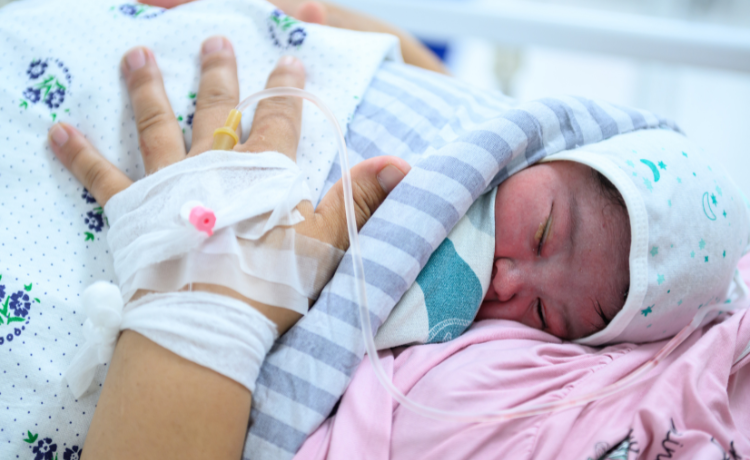
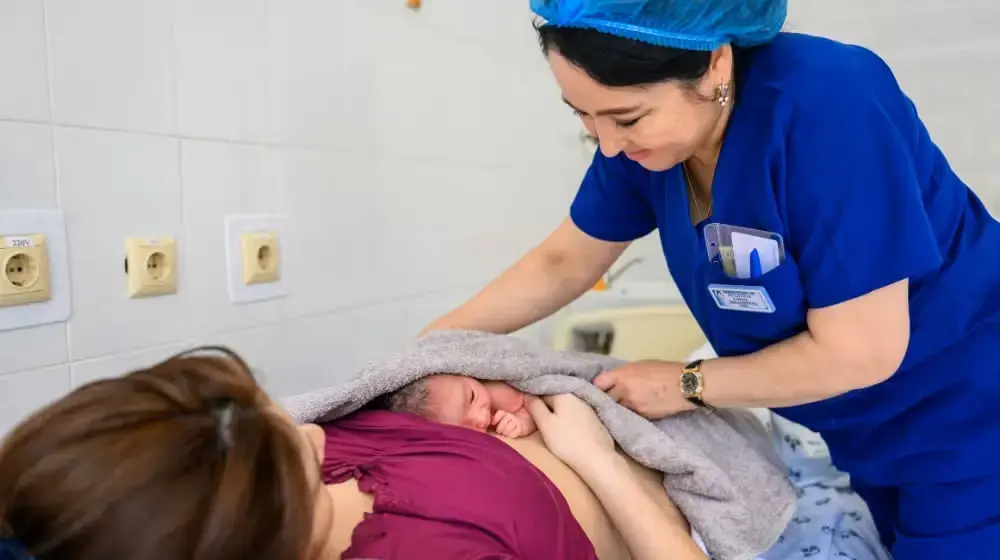
TASHKENT, Uzbekistan – “When they placed a warm bundle on my chest and said, ‘It’s a girl,’ I couldn’t hold back the tears,” said 24-year-old Gulirano from Uzbekistan’s capital city, Tashkent. “That was my Khadicha.”
For Gulirano, behind the joy of seeing her baby for the first time was a sense of relief, following the anxiety of the final days before the birth.
During the last of her prenatal visits, doctors at Tashkent’s Maternity Complex No. 7 had advised Gulirano to stay at the hospital because of her dangerously high blood pressure. “I didn’t fully grasp how serious it could become,” she said. “But when the contractions began, the fear became real. My blood pressure started rising again.”
High blood pressure disorders in pregnancy are the world’s third leading cause of maternal death.
“I was trembling inside, afraid for myself and for my baby.”
Gulirano was placed on a motorized bed and connected to a machine that could continuously monitor her baby’s heart rate. “It was fast, quiet – but strong,” she described. “It calmed me. My baby was really there. Alive. Waiting for me.”
Modernizing maternity care
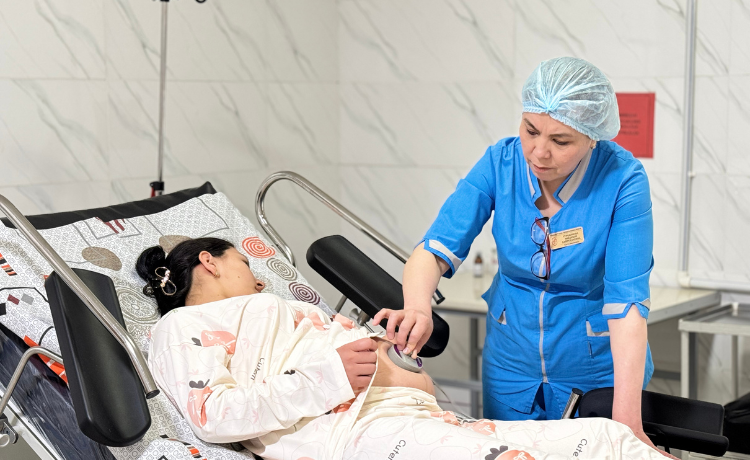
The equipment used to treat Gulirano had recently been supplied by UNFPA, the United Nations sexual and reproductive health agency. UNFPA has delivered more than 2,300 items of life-saving equipment to 230 maternity hospitals across Uzbekistan, including fetal heart monitors, operating tables and other obstetric essentials, all of which come with a two-year warranty and a two-year supply of spare parts and disposables.
“I was trembling inside, afraid for myself and for my baby” – Gulirano
These upgrades are part of an effort launched in October 2023 by UNFPA, the Ministry of Health and other UN agencies to modernize the country’s maternal and newborn care system. Significant progress has been made, with the maternal mortality ratio decreasing by almost 7 per cent from 2023 to 2024, according to the latest government data. Newborn deaths also fell, while survival rates for babies with the lowest birthweights improved by five per cent in just two years.
In addition to the modern equipment, Gulirano’s delivery was eased by the presence of Shoira, a midwife trained by UNFPA. “We breathed together, and I trusted her completely. She guided me during labour and everything went well.”
But suddenly Gulirano noticed the doctors’ expressions change. They had detected a postpartum haemorrhage – severe bleeding after childbirth that is the leading cause of maternal death worldwide. Immediately, everyone in the room launched into action.
“I was given anaesthesia – I don’t recall the exact medical details, but I do remember how swiftly they started the procedure,” said Gulirano.
The bed was moved to position Gulirano for treatment, without needing to transfer her to a separate operating table: “Shoira later told me that those crucial minutes saved my life.”
“I was not alone through this”
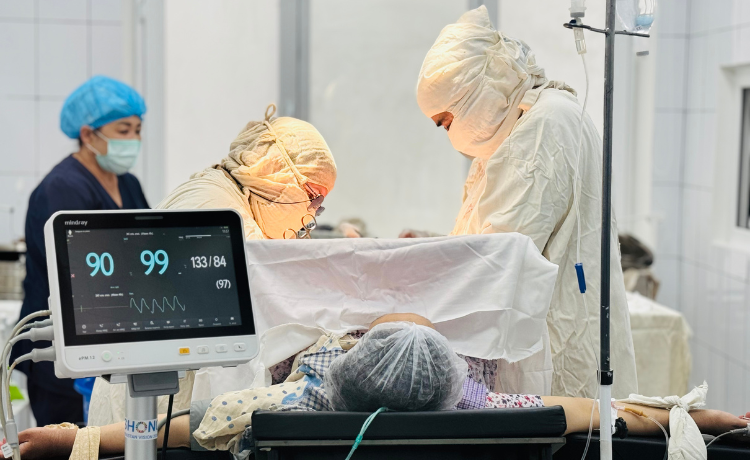
From 2024 to 2025, UNFPA trained over 18,000 doctors, midwives and other healthcare providers across Uzbekistan, increasing their capacity to safely handle obstetric emergencies and save lives.
“The midwife later told me that those crucial minutes saved my life” – Gulirano
After the doctors’ rapid response stopped the bleeding, Gulirano was able to hold her baby once more. Through tears, she breastfed her daughter for the first time.
“Despite all my fears, I was not alone through this,” she told UNFPA. “My midwife and the doctors were with me all the time. I was crying not out of fear, but from deep gratitude.”
Through supplies, training and essential equipment, UNFPA is committed to ensuring every woman can give birth safely and, like Gulirano, have a healthy journey into motherhood.