
UNITED NATIONS, New York – As the world goes digital, so does the ancient practice of child marriage.
Even as the Internet delivers knowledge about human rights directly to people’s screens, even as countries issue criminal penalties for enabling child marriage, the practice persists around the world. More than half a billion women and girls live today are, or were, child brides. Among young adult women aged 20 to 24, one in five were married before age 18.
But that doesn’t mean that child marriage has stayed the same. There has been gradual progress in ending child marriage (around a decade ago, one in four women were married under 18). And technology is playing a growing role, both in cases where girls say “I do” and in cases where they say “I don’t”.
Below are five ways technology has changed the face of child marriage – and how we can use these same tools to disrupt it for good.
1- Child marriages are increasingly being initiated online, mostly through social media.
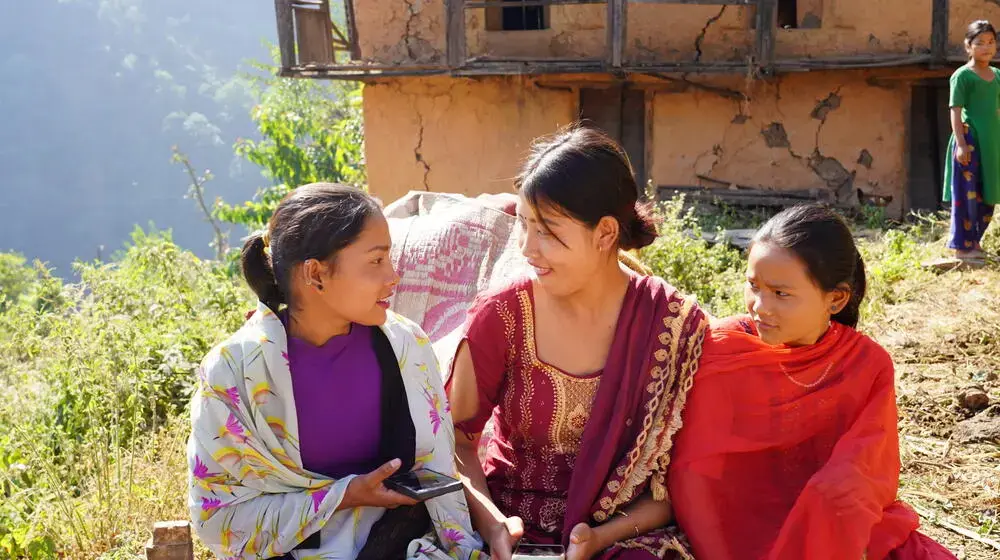
There isn’t much data on how child spouses are introduced, but what there is shows a strong trend of Internet- and social media-led relationships. In 2020, UNFPA, the United Nations Population Fund, which is the UN’s sexual and reproductive health agency, launched a study on child marriage in humanitarian settings – which along with poverty and persecution are known drivers of child marriage. The study covered roughly 1,400 adolescents in Nepal across two districts affected by a devastating earthquake in 2015; of those who were married as children, about a third said they had met their spouses through social media – by far the most common way of meeting.
“In our generation, there was practice of asking [for a] girl’s hand for marriage. These days, they use Facebook,” a mother in Nepal’s Sindhupalchowk District told researchers.
It also became clear that those who meet on social media tend to get married at a younger age than those in family-arranged unions.
A recent Plan International study also noted that across Asia and Latin America, “girls consistently reported meeting their future husbands on social media platforms”.
2- Parents and communities aren’t keeping up with how young people are using technology.
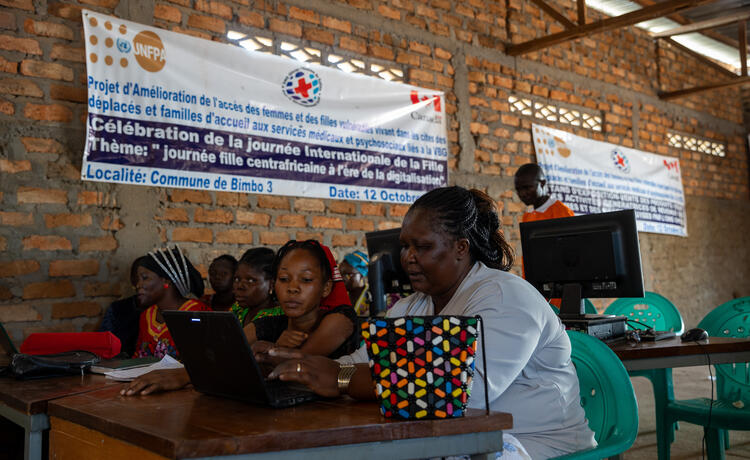
While adults tend to view their online offline lives as separate, for young people the distinction is much blurrier. They’re forming their opinions, friendships and even whole identities online – a fact that parents, teachers, law enforcement and policymakers haven’t really caught on to. As a result, these adults aren’t then informed enough to guide young people or protect them from emerging digital dangers.
“The digital world has altered how we perceive relationships. Sometimes, we might feel close to someone simply because we interact online, when in reality the relationship is less substantial,” a young woman in Bangui, in the Central African Republic, told UNFPA.
“Some adults in my life have tried to protect me from abusive online behaviour…[but] what would be truly helpful is not for them to forbid or criticize us, but for them to try to understand the platforms we use, to talk to us instead of lecturing us, and to help us find a good balance between freedom and safety online.”
In fact, adults often blame technology itself, rather than trying to grasp online social dynamics. In the Rohingya displacement camps of Bangladesh, for example, parents were found to regard their children’s communication with members of the opposite sex via mobile phones and social media as a sign they were ready for marriage.
“Children have taken up the wrong path,” an official in Nepal said. “They have misused technology.”
3- Young people have more agency in choosing a partner than before – but their choices are still shaped by stigmas and gender inequalities.
There are signs that adolescents’ fluency with technology is changing some fundamental social norms. For example, communities report that when adolescents meet their spouses online, they are more likely to suggest marriage themselves. As a result, young people who meet online are more likely to have so-called “love marriages”, rather than arranged marriages.
Many are rejecting dowry traditions as well, researchers find.
Yet these changes don’t represent a wholesale rejection of traditional values. In fact, they are often a response to deeply rooted and unequal gender norms, such as the view that younger girls are more marriageable, or that premarital relationships – sexual or not – threaten a girl’s reputation, or her family’s.
And technology has not changed girls’ vulnerability to predatory behaviour: “Girls are often ‘choosing’ to marry under the illusion of love and security offered by much older partners online,” Plan International reports. Additionally, many girls and boys who marry before reaching adulthood are seeking an escape from neglect, violence or insecurity at home, UNFPA’s research shows.
Nor do these marriages necessarily lead to the freedom adolescents are seeking: Child brides are more vulnerable to domestic and intimate partner violence. They are more likely to drop out of school, become pregnant early, and experience poverty, pregnancy-related disabilities or even death. Boys who marry before age 18, though they are comparatively fewer, also experience negative consequences, including heavy economic responsibilities.
![A close-up photo shows a woman’s hand holding a delicate white flower. In the background is another woman also holding a white flower.]](/sites/default/files/inline-images/UP12N59%20750x460.jpg)
4- As technology enables new forms of shaming and exploitation, forced marriage is still treated as a remedy to “preserve honour”.
As technologies creating new avenues for socialization and romance, they also create new tools for perpetrating sexual harassment, violence and exploitation.
“A 40-year-old creep on Instagram tried to convince me to be with him,” a Syrian woman, 18, told UNFPA. “I ended up blocking him… but then he kept coming back from different accounts.”
Fraud and misrepresentation are also common. “I fell in love with someone online, but after a while, it turned out they were a fake person and didn’t exist in our world,” a young woman in Aden, Yemen, told UNFPA.
Young people are often convinced to share intimate images with online contacts. Even innocent pictures can be transformed into deepfake pornography with AI.
Tragically, this kind of technology-facilitated gender-based violence is seldom prosecuted by authorities. Instead, it is often the victim who bears the consequences – which can include child marriage.
“I have heard and seen disturbing things in my community that happened because of social media,” a 22-year-old Syrian man told UNFPA.
“The girl gets to know a young man and, after gaining her trust, [she] sends him ordinary or unusual pictures of her, and he exposes her… it is possible that the girl will be killed by her family under the pretext of preserving honour, or in the best case scenario, they will marry her off as a minor.”
5- Technology is also key to disrupting child marriage.
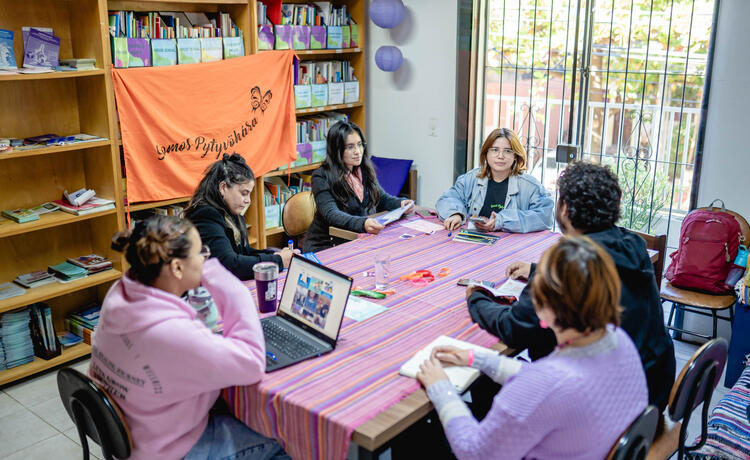
As parents, teachers, police and policymakers become aware of the dangers of technology, they often respond by inhibiting young people’s access to digital tools – which to adolescents means distancing themselves from the world of opportunities and connections they have come to rely on.
“My parents tried to keep me safe by telling me to limit my screen time and 'just ignore' the trolls,” a young woman in Tashkent, Uzbekistan, told UNFPA. “I wish they understood that the internet is not a separate, imaginary world… Simply 'unplugging' isn't an option because digital spaces are where we socialize, learn, and organize.”
In fact, these digital spaces offer one of the most powerful remedies to child marriage: Knowledge.
UNFPA’s research in Bangladesh found that more than 30 per cent of adolescent Rohingya refugees surveyed had learned about the harms of child marriage through social media.
Researchers in Indonesia have also found that Internet access can have a protective effect – but only if family environments are supportive. Access to the Internet does not by itself reduce the incidence of child marriage; instead it often facilitates it. However, marriage is delayed when families and schools engage with young people’s digital lives, ensuring these tools are a source of education rather than a pathway towards exploitation.
Unfortunately, adolescents report that they get more help from one another than from parents or policymakers.
“We also remind each other that it's not our fault,” the woman from Tashkent said. Leaders must encourage digital literacy in schools, she said, “teaching us not just how to use tools, but how to be safe and respectful citizens online.”


