
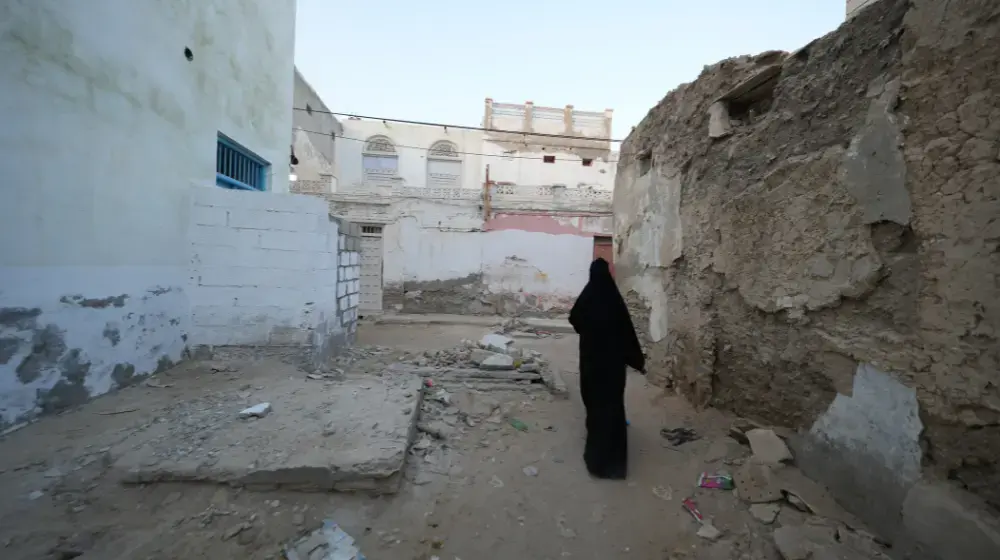
HADRAMAWT GOVERNORATE, Yemen – “One night I was a girl with a home, school and dreams,” said Lutfia*, now 20. “The next morning I became a displaced child who carried responsibilities and fears that were far bigger than her age.”
Lutfia and her family fled their home town of Ta’iz, in the highlands of southwest Yemen, as conflict surrounded them. Her parents moved to the coastal city of Al-Shihr, in Hadramawt Governorate, but it was a life of hardship.
“Many times I left school and returned again depending on whether my parents could afford the costs,” she told UNFPA, the United Nations sexual and reproductive health agency.
After more than a decade of conflict and instability in Yemen, over 18 million people face severe hunger, and more than 6 million women and adolescent girls are at high risk of domestic violence, exploitation and child marriage – vulnerabilities that grow in crisis settings.
Lutfia knows this all too well. In her new environment, she was repeatedly harassed by a group of local boys. Her family felt unable to defend her, as they were displaced, impoverished and faced discrimination in the area.
One day, as she went to buy some groceries near her home, Lutfia was abducted. Four young men took her to an isolated location and held her captive for a week until authorities found her.
“They abused me and left me destroyed, both physically and mentally,” said Lutfia. “When I returned home I was not the same person. I couldn’t speak. I couldn’t sleep. I used to wake up in the middle of the night crying.”
As she fell into psychological distress, Lutfia’s family tried everything they could – sending her to hospitals and private clinics – but her condition spiralled. Eventually, she tried the only option she could think of to end her pain.
“They abused me and left me destroyed, both physically and mentally” – Lutfia
From trauma to entrepreneurship
Social worker Amira* was called to visit Lutfia, and learned to her horror that she had tried to hang herself. Lutfia was swiftly transferred to a UNFPA safe space, where she received psychological and medical care and was monitored by a female psychiatrist.
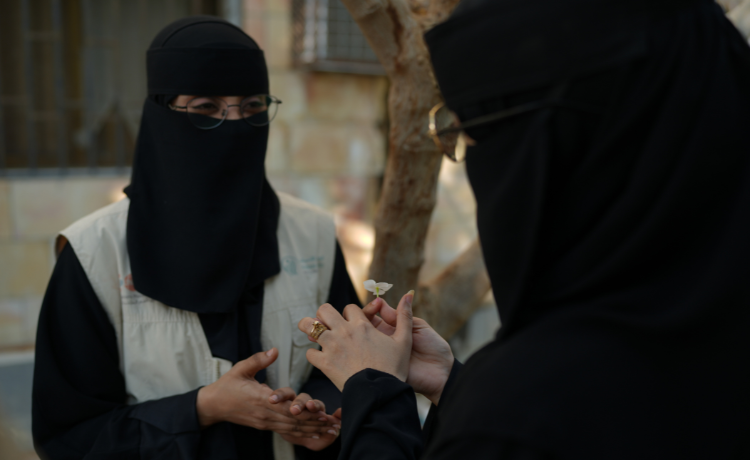
Her condition was fragile, but she said, “I felt something I had not felt in a long time – safety.”
“They treated me as a person, not as a burden or a mistake. Slowly, I learned how to breathe again during panic attacks and how to return to the present when past memories tried to pull me away.”
The safe space also offered vocational training, and Lutfia joined a design and sewing workshop, later selling the clothes she made at a local market. “At the beginning I was shy and anxious, but every small sale gave me more confidence,” she told UNFPA.
“I felt something I had not felt in a long time – safety” – Lutfia*
At the market she met a young man who would become her husband and business partner. “He didn’t look at me as a broken person, but saw me as someone strong who had survived. Over time we developed a relationship and I chose to marry him when I felt ready.”
Together they opened a shop selling the dresses she made. “I want to give hope to others,” she said. “What saved me was many things working together: safety, therapy, being believed, having a skill and having people who supported me instead of judging me.”
Lutfia is one of hundreds of women and girls to have attended the safe space, which was established in late 2019. But these services are at risk as the reality of funding shortages sets in, which could lead to devastating consequences.
Empowerment key to recovery
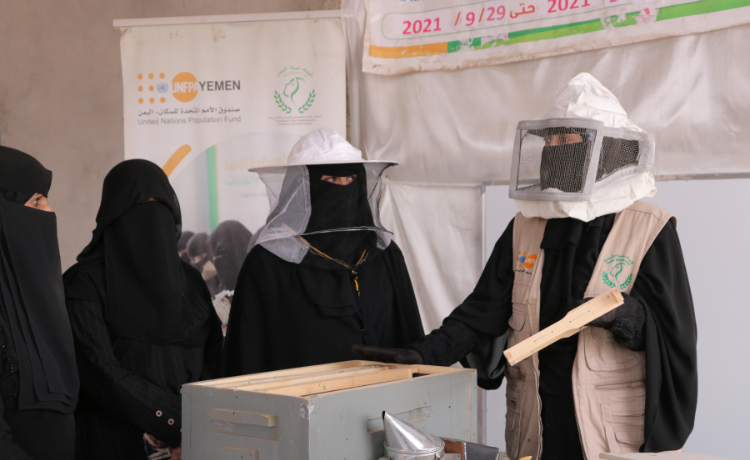
For many survivors of violence, earning their own living can be instrumental in their recovery. At a UNFPA safe space in Ibb Governorate women and girls can take lessons in beekeeping – from types of honey to the appropriate medications and feeding, right up to project management, marketing and selling their wares.
Afterwards, the women receive a full set of equipment to launch and manage their own businesses independently.
“My husband abused me in every possible way” – Sameera*
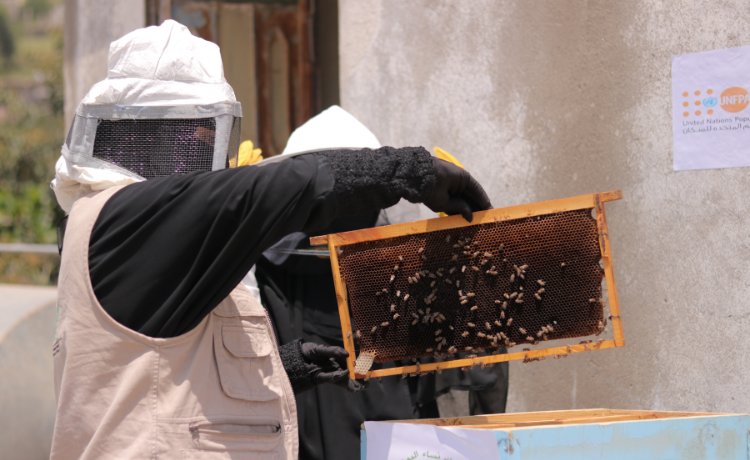
One of these women is Sameera*, now 35, who had been forcibly married at 16 years old. “My husband abused me in every possible way,” she told UNFPA. “He controlled my money, my movements, until one day he threw me out, leaving me with nothing.”
Sameera added, “I had no skills, no income and no sense of self worth. I called my mother and she travelled almost 150 km just to bring me home.”
She was referred to the safe space in Ibb and admitted for specialized care. Then she heard about the beekeeping programme. “At first I was confused – I thought bees were dangerous, not a way to live. But I learned about how to care for hives, how to process honey and how to sell it.”
Sameera fought through her nerves to thrive in her new profession. “I opened my first hive with shaking hands. Every time I made progress I felt like I was reclaiming a little piece of myself. The first time I sold honey in the market I cried when I left the stall. Not because of money, but because someone valued something I made.”
She now works with other survivors, explaining, “The project changed the way I lived and the way I saw myself. I now lead awareness sessions for other women and I talk openly about psychological healing and economic independence. I always tell them that trauma does not define who we are.”
Lifelines cut short
UNFPA supports women and girls across Yemen through a network of safe spaces, shelters and mental health centres, currently funded by Austria, Iceland, Norway, the European Union’s humanitarian office and the Yemen Humanitarian Fund.
UNFPA previously supported mobile outreach teams for displaced women and girls, but these have now stopped due to a lack of funding, which has also led to the closure so far of ten women’s and girls’ safe spaces and one mental health centre.
“I’m still healing, but I’m no longer powerless. I have a purpose” – Rinad*
Despite these setbacks, since January 2025 UNFPA managed to reach more than 200,000 women and girls in Yemen with psychological support services, medical assistance and legal aid, and nearly 10,000 women and girls learned essential life skills and vocational training.
“The safe space and what I learned as a beekeeper did not erase my past, but it gave me a future,” said Rinad*, a survivor in Ibb. “I’m still healing, but I’m no longer powerless. I support myself. I have a purpose.”
*Names changed for privacy and protection


