
The kNOwVAWdata initiative
The kNOwVAWdata initiative supports countries around the world in conducting safe and ethical research on the prevalence of violence against women, and supports the interpretation and use of this key data by decision-makers, practitioners and policymakers. It was launched by UNFPA and partners in 2016 and expanded in 2020.
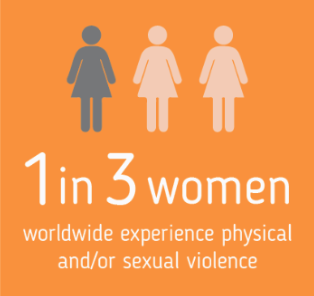 Nearly 1 in 3 women – an estimated 840 million globally – have experienced partner or sexual violence during their lifetime, a figure that has barely changed since 2000, according to a landmark report released in November 2025 by the World Health Organization and UN partners, including UNFPA. Violence against women remains one of the world’s most persistent and under-addressed human rights crises.
Violence against women – a human rights violation
Violence against women is a manifestation of persistent, deep-rooted gender inequalities. A violation of human rights, it seriously inhibits women’s ability to enjoy rights and freedoms on an equal basis with men. Be it physical, sexual or psychological, such violence is a symptom of women’s subordinate status and has serious consequences. It is a global public health crisis.
Reliable, comparable data on the proportion of women who experience different forms of violence are critical to informing and monitoring the effectiveness of actions to stop violence against women.
To that end, UNFPA, in partnership with the Australian Government, launched the kNOwVAWdata initiative in 2016 to provide technical support and capacity building to enable countries across the Asia and Pacific region to undertake studies on the prevalence of violence against women. Since 2020, the initiative, with the continued support of UNFPA and investment from the EU through the Spotlight Initiative, has expanded across regions including Africa, Eastern Europe and Central Asia, Latin America and the Caribbean, and the Middle East.
In each of these regions, the kNOwVAWdata course – a curriculum developed by UNFPA and the University of Melbourne to help countries build capacity to measure prevalence of violence against women and to improve data literacy – is being translated, contextualized and adapted to reflect local realities for women. The initiative has been expanded with the support of partners including the American University of Central Asia and the American University in Cairo.
Highlights of the kNOwVAWdata course
- Develops the skills of practitioners to understand and measure violence against women.
- Integrates coursework with hands-on, practical learning experiences.
- In addition to being available to practitioners, the course is embedded in post-graduate programmes at the University of Melbourne, with more potential institutions to come.
- Supplements training with mentoring to ensure participants are supported beyond the course itself.
Click on one section to learn more about it


