
This evaluation assesses UNFPA's capacity and performance in humanitarian action during the challenging 2019-2025 period. This era was defined by escalating and prolonged conflicts, a deepening climate crisis, and a dramatic reduction in international humanitarian funding, which necessitated a global system-wide "humanitarian reset”.
The evaluation specifically examines how UNFPA's ability to prepare for and respond to emergencies has evolved since 2019, and the integration of its humanitarian work with development efforts. The key lessons derived from this evaluation will guide the organization's future humanitarian action, particularly in the implementation of the UNFPA Strategic Plan 2026-2029 and its engagement with the global humanitarian reset.
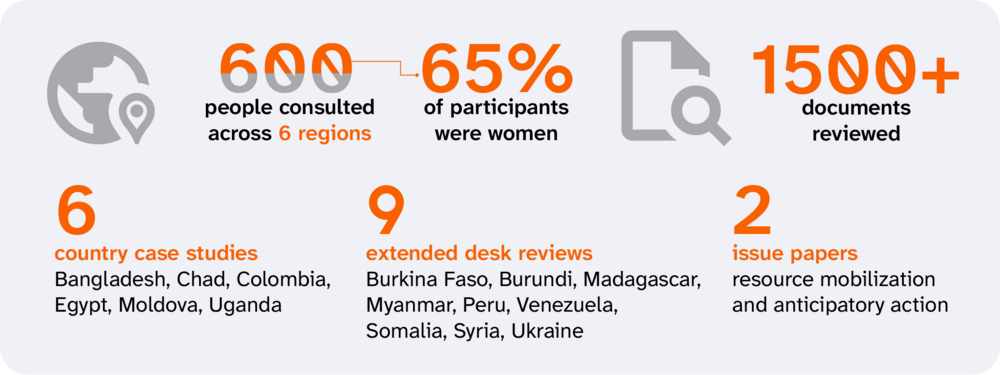
Quick facts
The evaluation finds that UNFPA demonstrates a strong commitment to its humanitarian mandate and has made gains in coordinating and delivering high-quality Sexual and Reproductive Health (SRH) and Gender-Based Violence (GBV) services. However, its strategic positioning as a global humanitarian actor is still consolidating, with service coverage insufficient to meet the scale of need. Operational efficiency has improved, yet this progress is slowed by persistent supply chain delays, human resources processes, and an over-reliance on unstable earmarked funding. Although UNFPA is increasingly linking its work to preparedness and the humanitarian-development-peace (HDP) continuum, the consistency of this integrated approach and equitable localization efforts are hindered by a lack of clear corporate guidance.
The evaluation recommends that UNFPA should elevate its strategic and leadership role by developing a dedicated humanitarian strategy to unify internal approaches and strengthen its external positioning. The organization must focus on sustaining and coordinating targeted, high-quality SRH and GBV services for the most vulnerable populations. To enhance operational agility and investment in its people, UNFPA should optimize supply chain management, revise policies for protracted crises, and establish a stable humanitarian workforce. Furthermore, UNFPA must improve accountability and localization efforts by integrating systematic community feedback and participatory decision-making. Finally, the organization should strengthen its work across the HDP continuum including climate adaptation and the youth, peace and security agenda, and develop a unified humanitarian data strategy to measure outcomes for sexual and reproductive health and rights and GBV in humanitarian settings.
